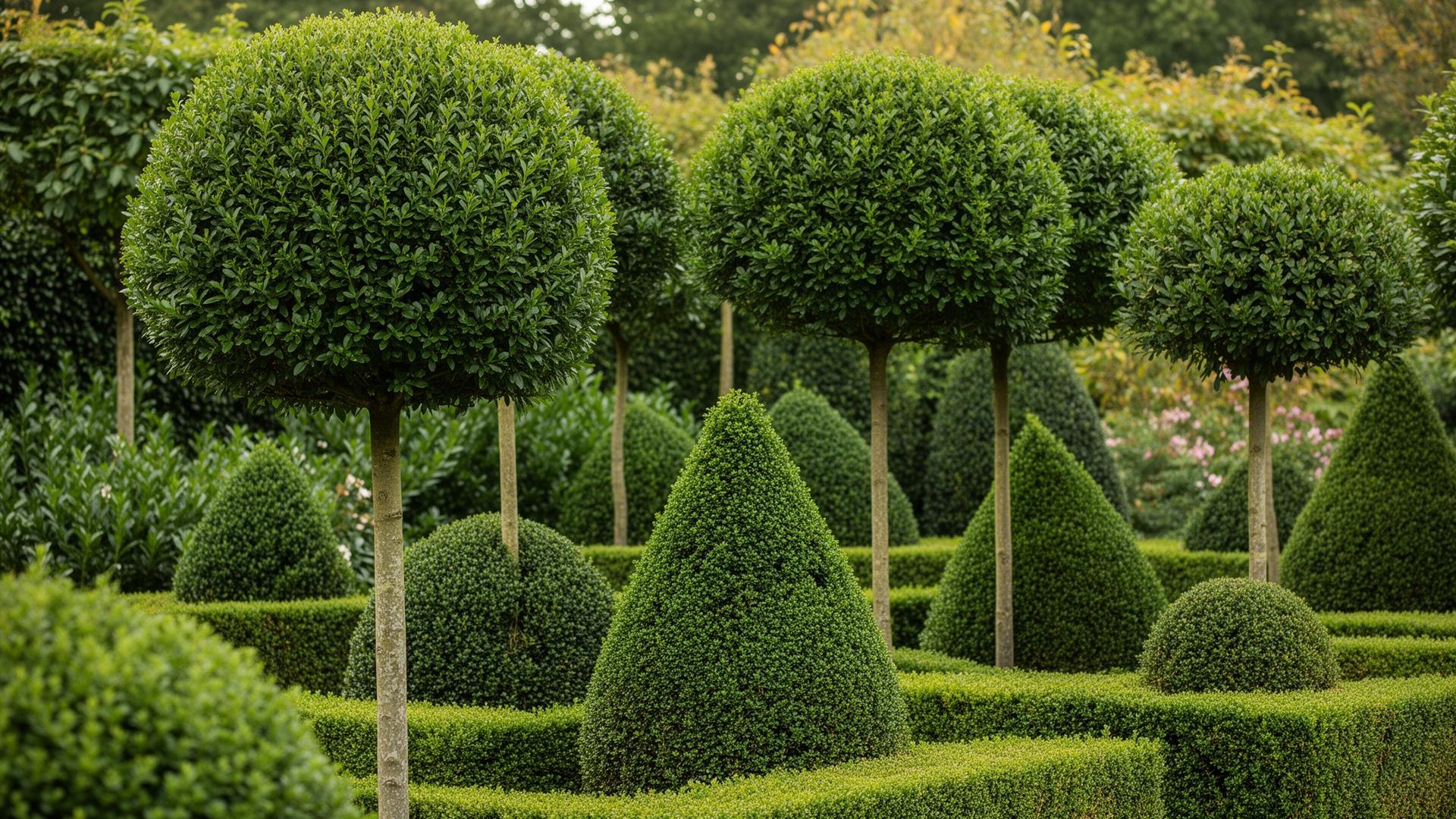
- Original guide
- Beginner friendly
- Updated 2026
- Affiliate disclosed
What makes a good topiary plant?
A good topiary plant is not chosen for its shape, but for the way it grows. Small leaves let a clipped surface read as a clean line. Dense branching means there are no thin patches when light hits the form from an angle. A slow to moderate growth rate keeps the work to a manageable level once a season, rather than a chase every two weeks. Resilience matters too. The plant needs to recover from regular cuts, ideally for years, without burning out or thinning at the base.
Climate is the other half of the choice. A plant that suits a sheltered courtyard in a mild region may struggle on an exposed cold corner. A shrub that thrives in open ground may sulk in a small pot, and the other way around. Check your local conditions, the mature size and the kind of pruning the plant tolerates before you commit. The list later in this guide groups plants by use so you can match the right plant to the right job.
A good topiary plant should have
- Dense growth that fills in to a solid surface when clipped.
- Small leaves or fine foliage so cut edges read cleanly.
- Good regrowth after pruning, with no bald patches.
- Suitable hardiness for your local climate.
- Manageable mature size for the spot you have.
- Shape compatibility — the right habit for the form you want.
- Reasonable maintenance level, ideally one or two clips a year.
- A healthy root system, especially important for plants in pots.
Best plants for topiary at a glance
This table covers the most widely grown topiary plants, side by side. Use it to scan by setting, light and difficulty, then read the deeper sections below for the plants that match your conditions. On mobile the table becomes stacked cards so nothing scrolls sideways.
| Plant | Best for | Setting | Evergreen | Light | Water | Level | Why it works |
|---|---|---|---|---|---|---|---|
| Boxwood | Formal balls, low hedges, classic structure | Outdoor / pots | Yes | Sun/Part shade | Even | Easy | Tight small dark leaves and a dense habit that holds shape between cuts. |
| Yew | Heirloom cones, columns and large shapes | Outdoor | Yes | Sun/Part shade | Even | Easy | Tolerates hard pruning, lives for decades, accepts shade. |
| Japanese holly | Boxwood substitute, low domes and balls | Outdoor / pots | Yes | Sun/Part shade | Even | Easy | Small dark leaves that mimic boxwood and resist box blight. |
| Privet | Hedging and quick structural shapes | Outdoor | Semi | Sun | Even | Easy | Fast, cheap and forgiving when kept tightly clipped. |
| Bay laurel | Standards, mopheads and pyramids in pots | Both | Yes | Sun/Part shade | Even | Easy | Classic clipped standard with aromatic kitchen leaves as a bonus. |
| Myrtle | Potted balls and standards in mild climates | Both | Yes | Sun | Even | Moderate | Small glossy leaves and a tidy habit that suits formal pots. |
| Rosemary | Small standards and low rounded forms in pots | Both | Yes | Sun | Dry to even | Moderate | Aromatic and decorative, but does not regrow well from bare wood. |
| Eugenia | Patio standards and balls in warm climates | Both | Yes | Sun/Part shade | Even | Moderate | Glossy leaves, neat habit and good response to regular clipping. |
| Juniper | Spirals, columns and architectural conifer shapes | Outdoor | Yes | Sun | Dry to even | Moderate | Upright habit and dense needled foliage that holds a spiral well. |
| Lemon cypress | Bright cone-shaped patio and entrance plants | Both | Yes | Sun | Even | Moderate | Naturally conical with chartreuse foliage that brightens a doorway. |
| Olive | Mediterranean-style standards in warm climates | Outdoor / pots | Yes | Sun | Dry to even | Moderate | Silvery foliage and twisted trunks suit clipped balls and standards. |
| Lavender | Small clipped standards in pots and sunny borders | Outdoor / pots | Semi | Sun | Dry | Moderate | Pretty short-life topiary if trimmed lightly and never into bare wood. |
| Ivy on a frame | Quick shapes indoors or in shaded pots | Both | Yes | Part shade | Even | Easy | Trains quickly over a wire frame for ball, animal or globe shapes. |
| Small-leaved holly | Larger formal pyramids and standards | Outdoor | Yes | Sun/Part shade | Even | Easy | Slow, long-lived and tolerant of clipping, with winter berries on female plants. |
| Dwarf conifer | Low cones and small structural shapes | Outdoor / pots | Yes | Sun | Even | Easy | Naturally compact habit that needs only light shaping to keep a tidy form. |
| Germander | Low edging topiary where suitable | Outdoor | Semi | Sun | Dry to even | Moderate | Small-leaved boxwood alternative for low hedges and parterres in suitable climates. |
Boxwood
Sun/Part shade- Best for
- Formal balls, low hedges, classic structure
- Setting
- Outdoor / pots
- Evergreen
- Yes
- Water
- Even
- Level
- Easy
- Why it works
- Tight small dark leaves and a dense habit that holds shape between cuts.
Yew
Sun/Part shade- Best for
- Heirloom cones, columns and large shapes
- Setting
- Outdoor
- Evergreen
- Yes
- Water
- Even
- Level
- Easy
- Why it works
- Tolerates hard pruning, lives for decades, accepts shade.
Japanese holly
Sun/Part shade- Best for
- Boxwood substitute, low domes and balls
- Setting
- Outdoor / pots
- Evergreen
- Yes
- Water
- Even
- Level
- Easy
- Why it works
- Small dark leaves that mimic boxwood and resist box blight.
Privet
Sun- Best for
- Hedging and quick structural shapes
- Setting
- Outdoor
- Evergreen
- Semi
- Water
- Even
- Level
- Easy
- Why it works
- Fast, cheap and forgiving when kept tightly clipped.
Bay laurel
Sun/Part shade- Best for
- Standards, mopheads and pyramids in pots
- Setting
- Both
- Evergreen
- Yes
- Water
- Even
- Level
- Easy
- Why it works
- Classic clipped standard with aromatic kitchen leaves as a bonus.
Myrtle
Sun- Best for
- Potted balls and standards in mild climates
- Setting
- Both
- Evergreen
- Yes
- Water
- Even
- Level
- Moderate
- Why it works
- Small glossy leaves and a tidy habit that suits formal pots.
Rosemary
Sun- Best for
- Small standards and low rounded forms in pots
- Setting
- Both
- Evergreen
- Yes
- Water
- Dry to even
- Level
- Moderate
- Why it works
- Aromatic and decorative, but does not regrow well from bare wood.
Eugenia
Sun/Part shade- Best for
- Patio standards and balls in warm climates
- Setting
- Both
- Evergreen
- Yes
- Water
- Even
- Level
- Moderate
- Why it works
- Glossy leaves, neat habit and good response to regular clipping.
Juniper
Sun- Best for
- Spirals, columns and architectural conifer shapes
- Setting
- Outdoor
- Evergreen
- Yes
- Water
- Dry to even
- Level
- Moderate
- Why it works
- Upright habit and dense needled foliage that holds a spiral well.
Lemon cypress
Sun- Best for
- Bright cone-shaped patio and entrance plants
- Setting
- Both
- Evergreen
- Yes
- Water
- Even
- Level
- Moderate
- Why it works
- Naturally conical with chartreuse foliage that brightens a doorway.
Olive
Sun- Best for
- Mediterranean-style standards in warm climates
- Setting
- Outdoor / pots
- Evergreen
- Yes
- Water
- Dry to even
- Level
- Moderate
- Why it works
- Silvery foliage and twisted trunks suit clipped balls and standards.
Lavender
Sun- Best for
- Small clipped standards in pots and sunny borders
- Setting
- Outdoor / pots
- Evergreen
- Semi
- Water
- Dry
- Level
- Moderate
- Why it works
- Pretty short-life topiary if trimmed lightly and never into bare wood.
Ivy on a frame
Part shade- Best for
- Quick shapes indoors or in shaded pots
- Setting
- Both
- Evergreen
- Yes
- Water
- Even
- Level
- Easy
- Why it works
- Trains quickly over a wire frame for ball, animal or globe shapes.
Small-leaved holly
Sun/Part shade- Best for
- Larger formal pyramids and standards
- Setting
- Outdoor
- Evergreen
- Yes
- Water
- Even
- Level
- Easy
- Why it works
- Slow, long-lived and tolerant of clipping, with winter berries on female plants.
Dwarf conifer
Sun- Best for
- Low cones and small structural shapes
- Setting
- Outdoor / pots
- Evergreen
- Yes
- Water
- Even
- Level
- Easy
- Why it works
- Naturally compact habit that needs only light shaping to keep a tidy form.
Germander
Sun- Best for
- Low edging topiary where suitable
- Setting
- Outdoor
- Evergreen
- Semi
- Water
- Dry to even
- Level
- Moderate
- Why it works
- Small-leaved boxwood alternative for low hedges and parterres in suitable climates.
Best evergreen topiary plants
Evergreens are the classic choice for topiary because they keep colour and structure through winter, and hold their shape between cuts. They also tend to recover well from regular clipping, which matters more for a topiary plant than any other shrub. The shrubs and small trees below cover the most widely grown evergreen topiary subjects in temperate gardens. Always check local hardiness and disease pressure before you commit, since the same plant can be a star in one garden and a disappointment in another.
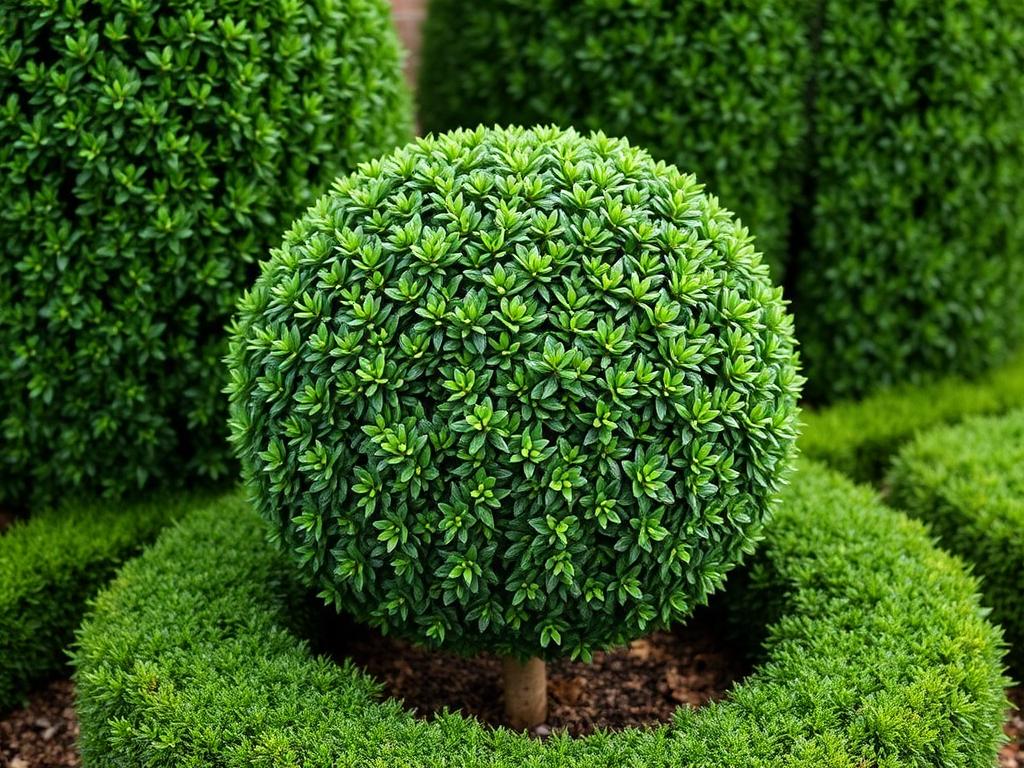
Boxwood
Buxus sempervirens
- Best for
- Formal beds, low parterres and pot topiary
- Light
- Sun to part shade
- Water
- Even, free-draining
- Foliage
- Evergreen
- Hardiness
- Widely hardy in temperate gardens
- Best shapes
- Balls, low hedges, small standards
Why it works. Tight small leaves and dense growth produce the smoothest clipped surface of any common topiary plant.
Beginner note. Choose healthy plants from a trusted source and check whether box blight is a known issue in your area before planting in numbers.
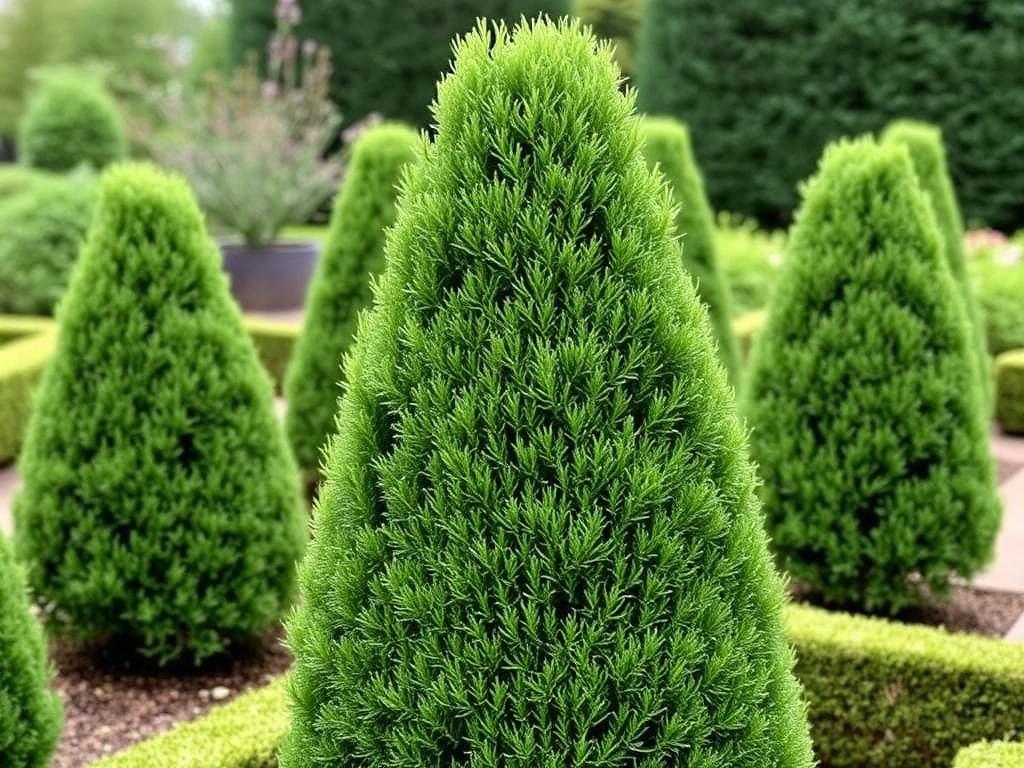
Yew
Taxus baccata
- Best for
- Heirloom topiary, large shapes and architectural columns
- Light
- Sun to deep part shade
- Water
- Even, free-draining
- Foliage
- Evergreen
- Hardiness
- Very hardy in temperate climates
- Best shapes
- Cones, columns, large balls, complex shapes
Why it works. Tolerates hard pruning, regrows reliably from old wood and lives for many decades.
Beginner note. Slow but extremely forgiving. Wear gloves when pruning, since all parts of yew are toxic.
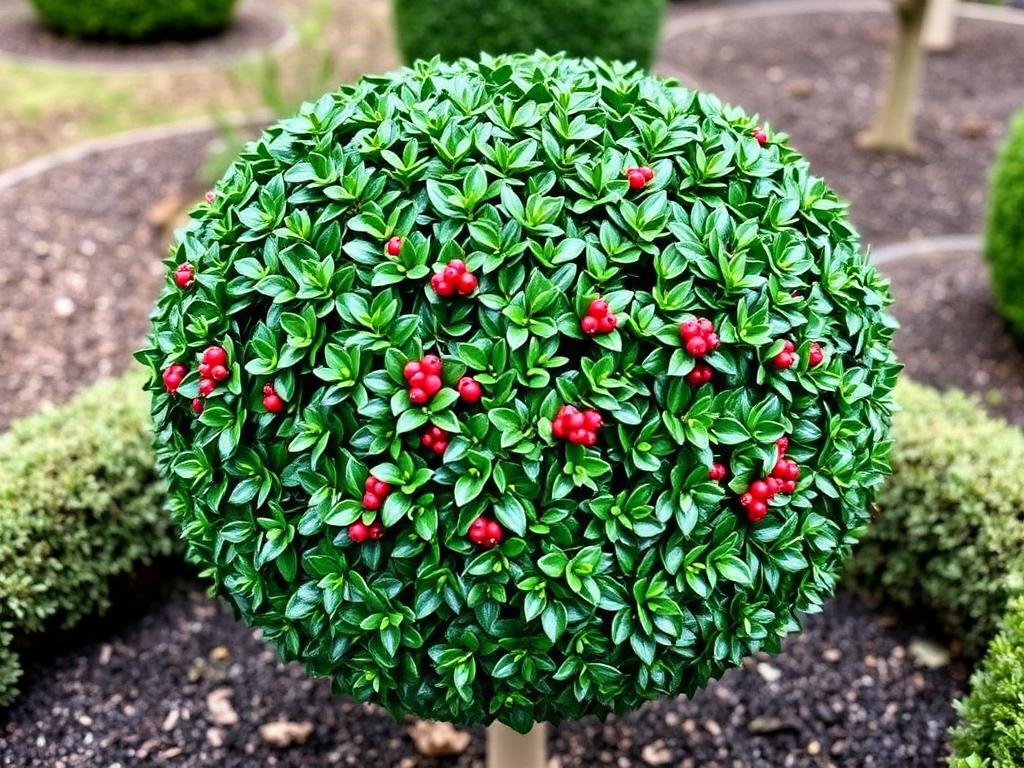
Japanese holly
Ilex crenata
- Best for
- Boxwood alternative for low formal topiary and pots
- Light
- Sun to part shade
- Water
- Even
- Foliage
- Evergreen
- Hardiness
- Hardy in most temperate gardens
- Best shapes
- Balls, low hedges, small domes
Why it works. Small dark leaves and dense growth look almost identical to boxwood, but it is not affected by box blight.
Beginner note. One of the easiest substitutes for boxwood. Slightly slower, so be patient with new plantings.
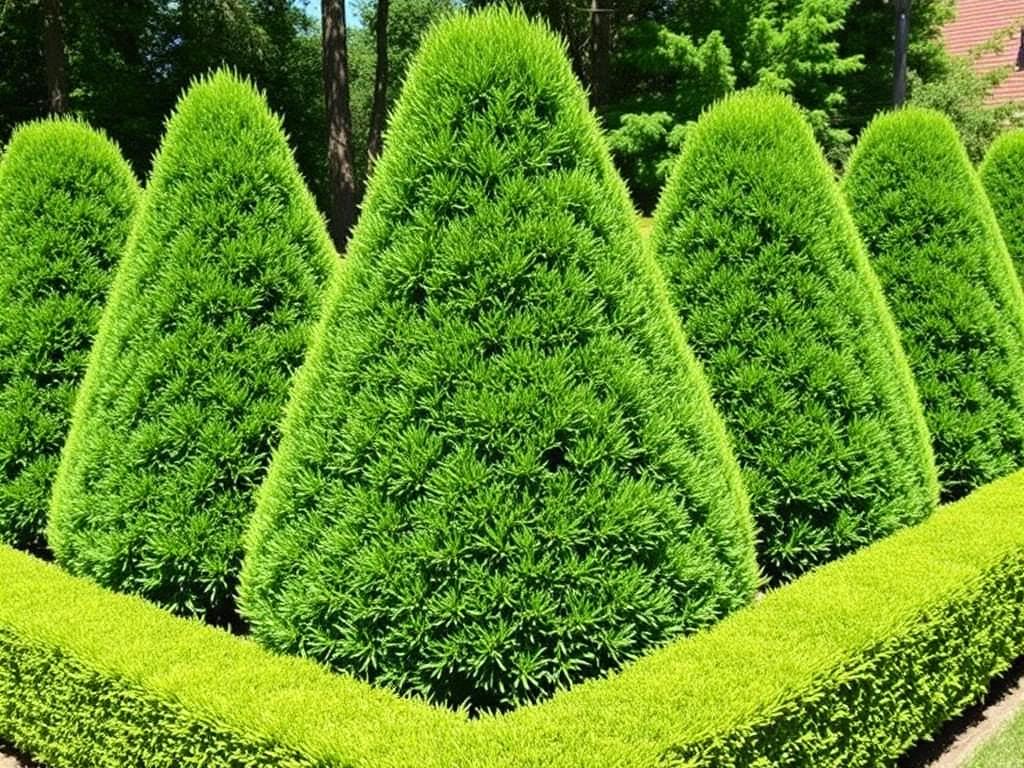
Privet
Ligustrum ovalifolium and similar
- Best for
- Hedging topiary, fast structural shapes
- Light
- Full sun for the densest growth
- Water
- Even garden soil
- Foliage
- Semi-evergreen in mild winters
- Hardiness
- Widely hardy
- Best shapes
- Cones, blocks, hedges, simple standards
Why it works. Fast, vigorous and surprisingly elegant when kept tightly clipped.
Beginner note. Expect to clip twice a year. Privet is unforgiving of neglect because it grows so quickly.
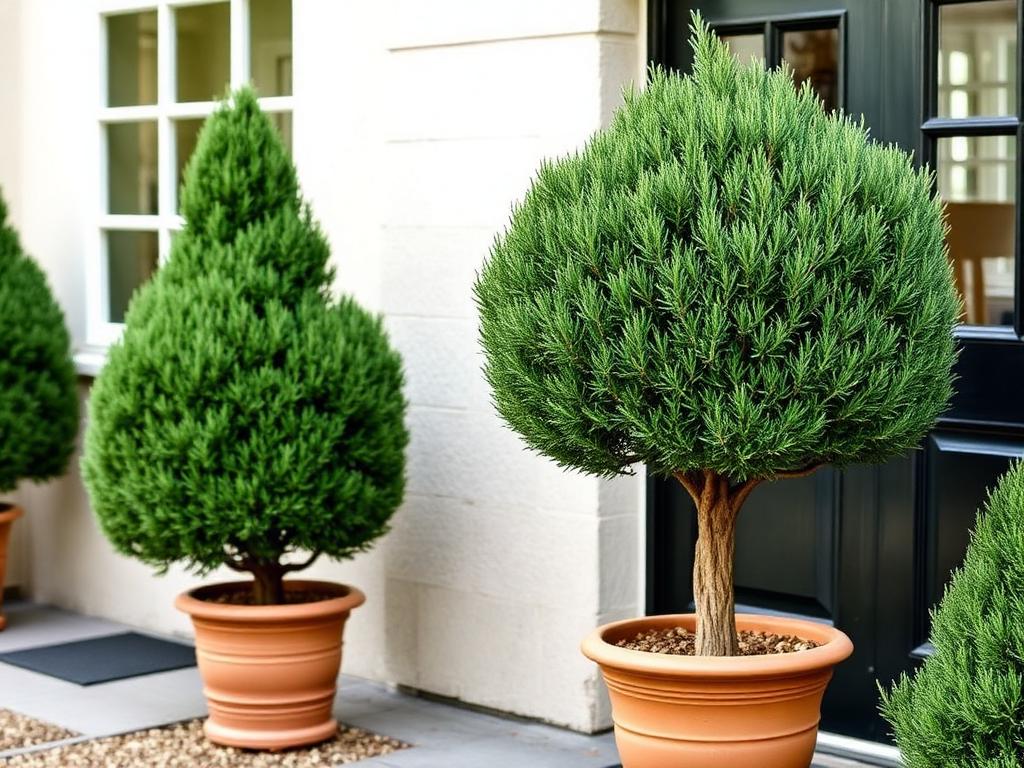
Bay laurel
Laurus nobilis
- Best for
- Standards in pots and large clipped shrubs in mild gardens
- Light
- Sun to part shade in milder regions
- Water
- Even, never waterlogged
- Foliage
- Evergreen
- Hardiness
- Best in mild temperate climates; protect in hard frost
- Best shapes
- Mopheads, pyramids, ball standards
Why it works. Aromatic glossy leaves, an upright habit and a long history as a kitchen plant.
Beginner note. Plant in a sheltered spot. In cold winters, move potted bays under cover or wrap them.
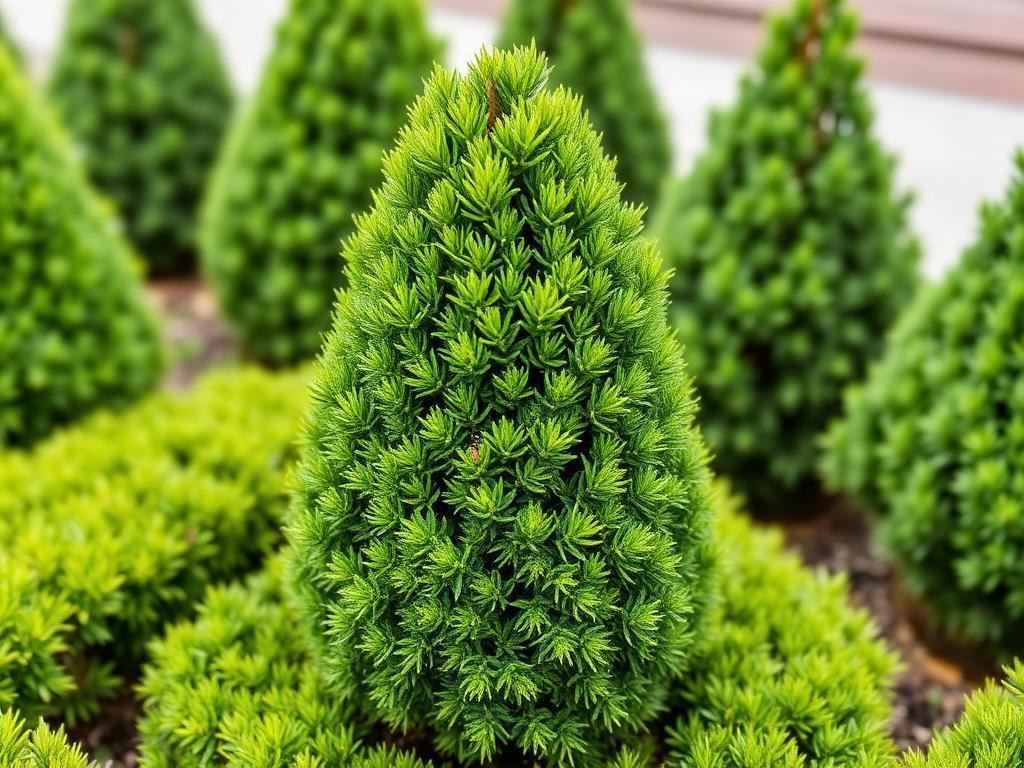
Dwarf conifer
Various Picea, Thuja and Chamaecyparis
- Best for
- Low cones and structural pot plants
- Light
- Full sun
- Water
- Even
- Foliage
- Evergreen
- Hardiness
- Check the cultivar against your local climate
- Best shapes
- Cones, low columns, simple shapes
Why it works. Naturally tight habit that needs only light shaping to keep a clean form.
Beginner note. Start with a cultivar already shaped as a cone. Most conifers will not regrow from bare brown wood.
Best shrubs for topiary
Shrubs are usually easier than trees for beginners. They sit closer to the ground, they tend to fill in faster and they offer a wider range of shapes from balls and domes to low hedges and small standards. Most of the shrubs listed below are happy in a border or in a generous pot, which makes them flexible for small gardens, courtyards, balconies and entrances.
If you want a forgiving first shrub, choose Japanese holly, boxwood where healthy or yew. For a quick, cheap result, privet is hard to beat. Myrtle and small-leaved holly suit slightly more advanced shapes and pot work. Germander can be used as a low boxwood alternative in suitable climates, although it is less hardy than the others and needs more attention to stay tidy. Bay can be grown as a clipped shrub rather than a standard if you prefer a denser low form.
Treat lavender as a short-life topiary
Best topiary trees and standards
Topiary trees and standards need a strong stem or trunk, a balanced head and regular trimming to keep their shape. They are useful as pairs flanking a doorway, as focal points in formal beds and as portable patio centrepieces. Most of the trees and standards below are grown in pots, but some can also go in the ground in suitable climates. Many topiary trees sold in pots are living plants, not permanent indoor decorations. They still need light, water, air movement and sometimes winter protection.
Bay tree topiary
Laurus nobilis
- Best for
- Pairs at a doorway or as a patio focal point
- Light
- Sun to part shade
- Water
- Even, never waterlogged
- Foliage
- Evergreen
- Hardiness
- Mild temperate; protect in hard winters
- Best shapes
- Mophead standards, pyramid standards
Why it works. Classic clipped tree with aromatic foliage, equally at home in pots and the ground in mild gardens.
Beginner note. Bring potted bays in or against a sheltered wall during long cold spells.
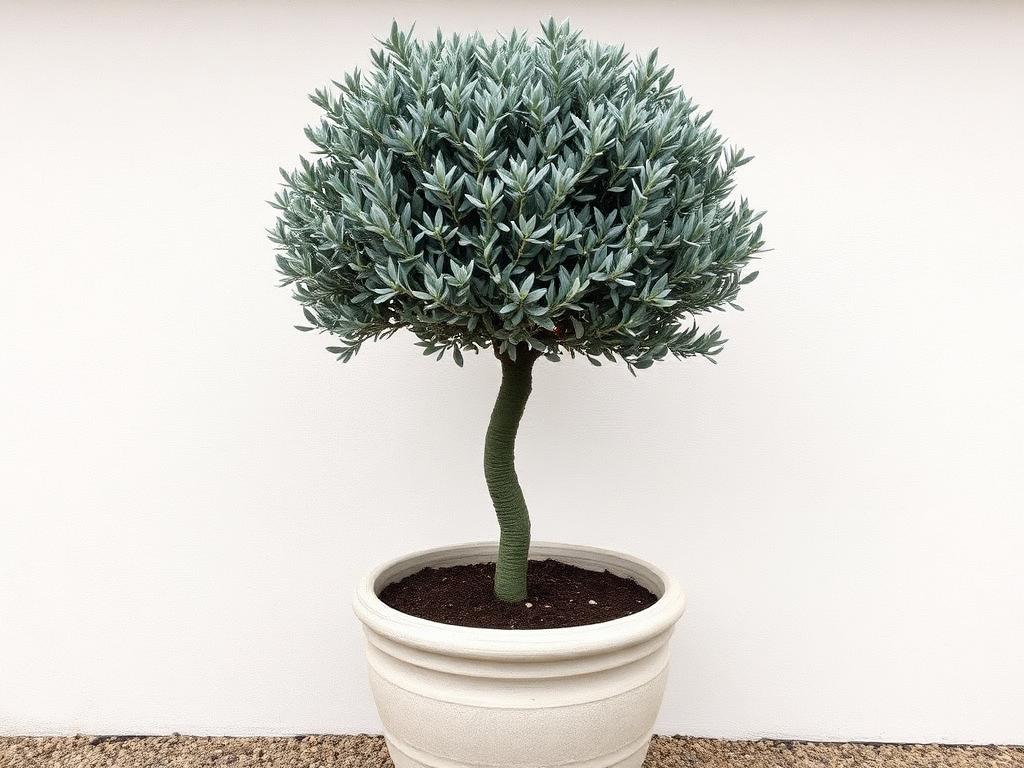
Olive tree topiary
Olea europaea
- Best for
- Mediterranean-style entrances and warm patios
- Light
- Full sun
- Water
- Dry to even, free-draining
- Foliage
- Evergreen
- Hardiness
- Warm sheltered climates only
- Best shapes
- Ball standards, dome heads
Why it works. Silver-green foliage and twisted trunks bring a relaxed Mediterranean feel to a clipped form.
Beginner note. Use a free-draining mix. Olives hate cold wet soil far more than they hate dry summers.
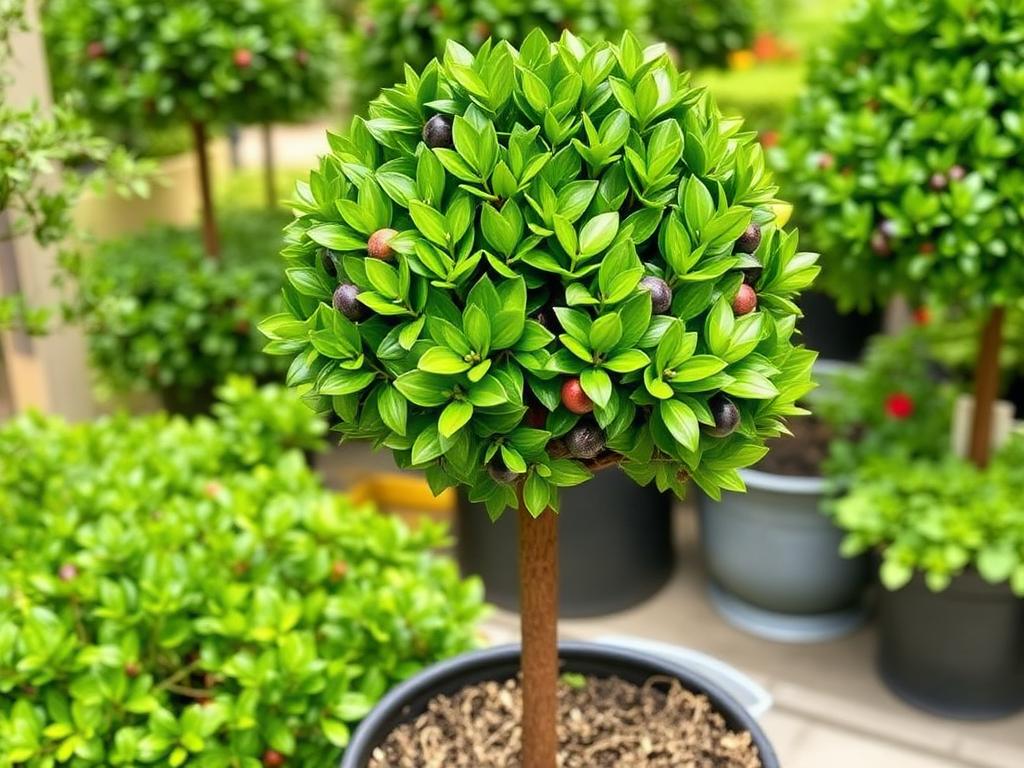
Eugenia topiary
Syzygium paniculatum and similar
- Best for
- Warm patios, conservatories and sheltered entrances
- Light
- Sun to part shade
- Water
- Even
- Foliage
- Evergreen
- Hardiness
- Warm climates only; tender in frost
- Best shapes
- Standards, balls, cones
Why it works. Glossy small leaves and dense growth take to regular clipping cleanly.
Beginner note. Treat eugenia as tender outside warm regions. Indoors it needs the brightest spot in the room.
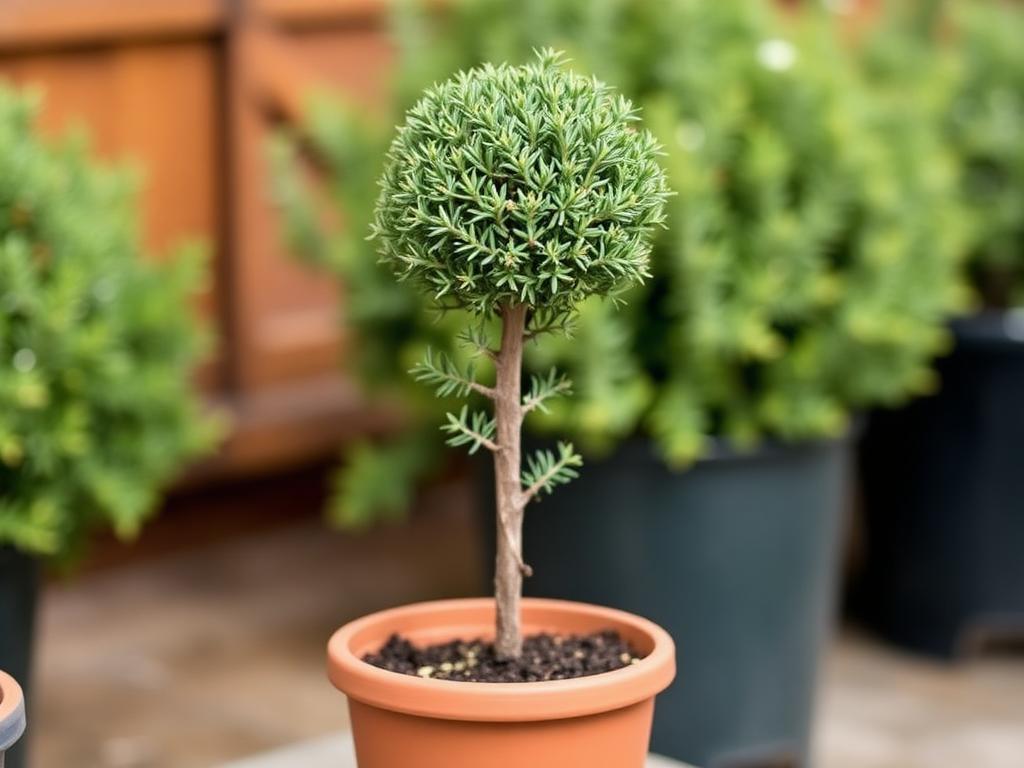
Rosemary standard
Rosmarinus officinalis
- Best for
- Sunny pots and herb gardens
- Light
- Full sun
- Water
- Dry to even
- Foliage
- Evergreen
- Hardiness
- Mild temperate
- Best shapes
- Small standards, low rounded heads
Why it works. Aromatic, decorative and useful in the kitchen, with a small enough head to suit a modest pot.
Beginner note. Never cut into bare old wood. Trim lightly during the growing season instead.
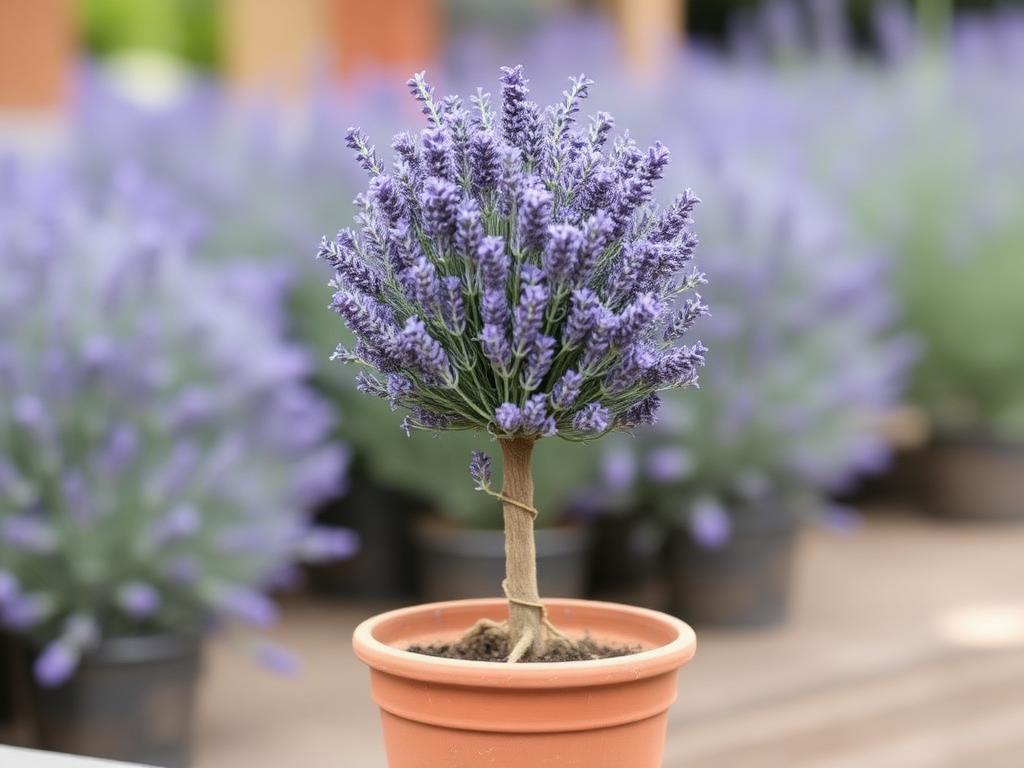
Lavender standard
Lavandula angustifolia and similar
- Best for
- Sunny pots and front-of-border accents
- Light
- Full sun
- Water
- Dry
- Foliage
- Semi-evergreen
- Hardiness
- Sun-warm temperate
- Best shapes
- Small standards and low domes
Why it works. Pretty flowering standards for a short-life decorative plant, especially in pots.
Beginner note. Replace tired plants rather than trying to rejuvenate hard-pruned old wood.
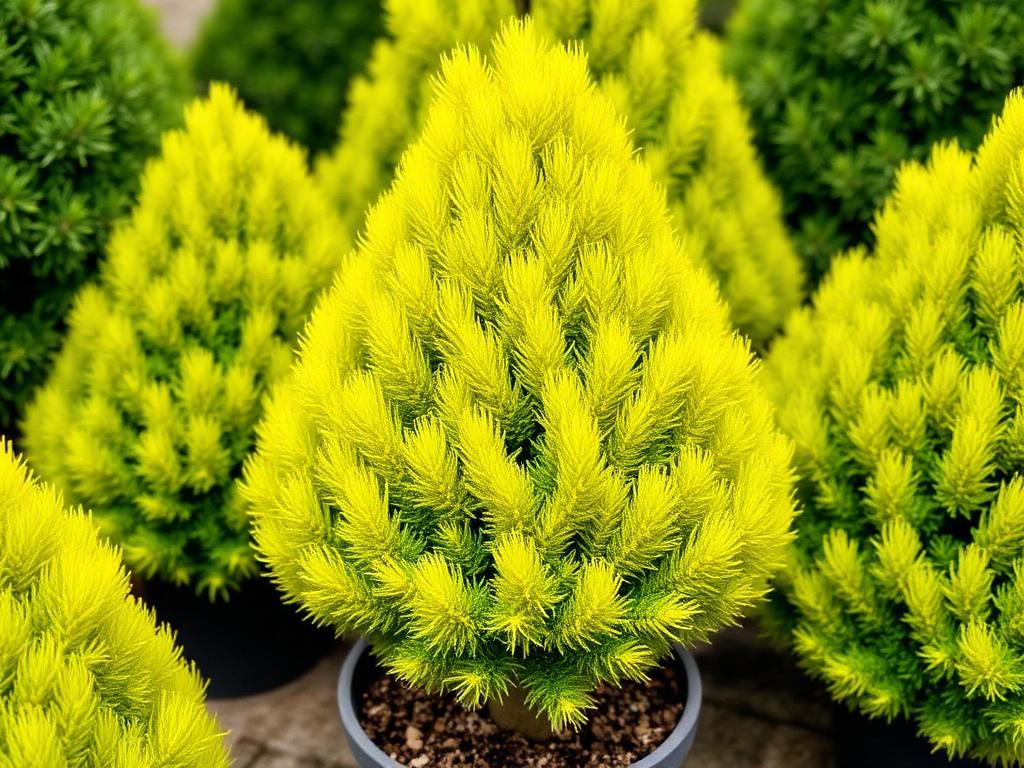
Lemon cypress
Cupressus macrocarpa 'Goldcrest'
- Best for
- Bright doorway and patio cones
- Light
- Full sun
- Water
- Even
- Foliage
- Evergreen
- Hardiness
- Mild climates; protect in cold winters
- Best shapes
- Cones, slim columns
Why it works. Naturally conical with bright chartreuse foliage that lifts an entrance or a quiet corner.
Beginner note. Water consistently in pots. Lemon cypress will brown if it dries out repeatedly.
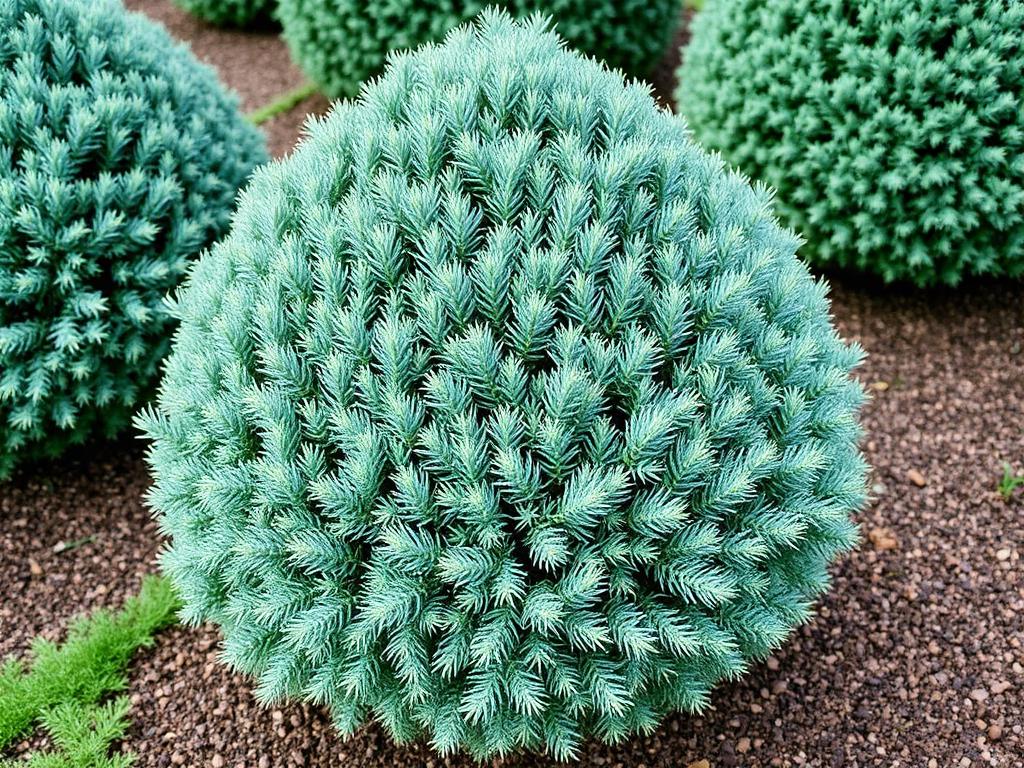
Juniper spiral
Juniperus chinensis and similar
- Best for
- Architectural points in open gardens and large pots
- Light
- Full sun
- Water
- Dry to even
- Foliage
- Evergreen
- Hardiness
- Hardy in most temperate gardens
- Best shapes
- Spirals, columns, cones
Why it works. Upright habit and dense needled foliage that holds a spiral cleanly once trained.
Beginner note. Buy a juniper already trained as a spiral and maintain the shape rather than cutting one from scratch.
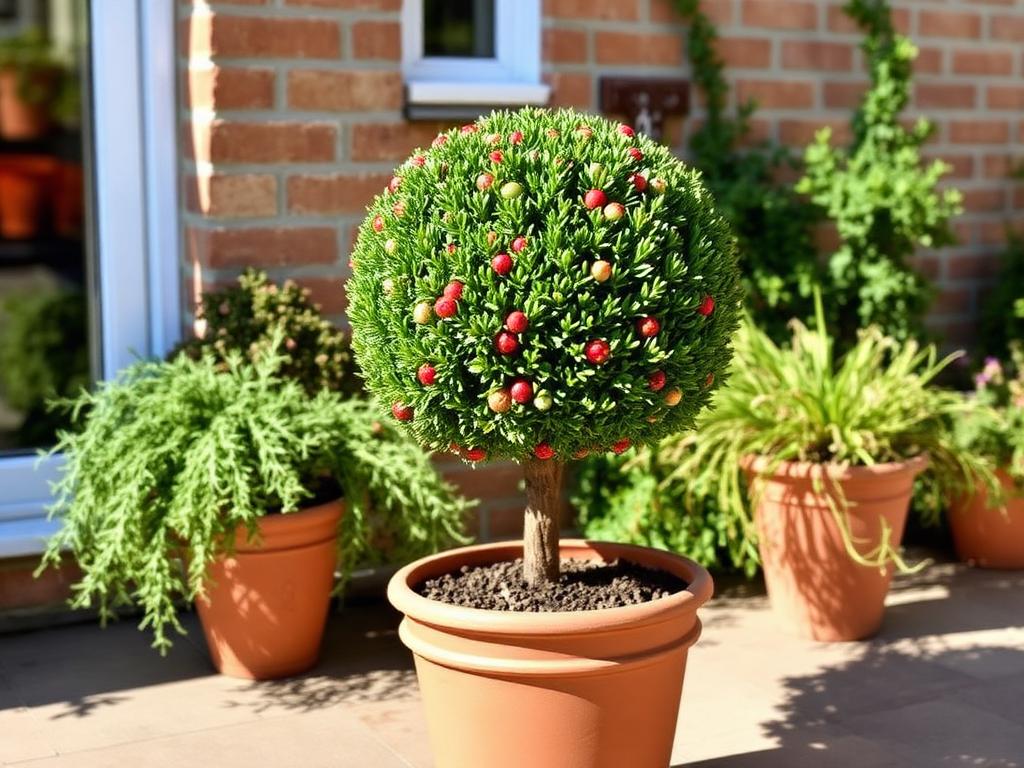
Myrtle standard
Myrtus communis
- Best for
- Sunny pots and sheltered patios
- Light
- Full sun
- Water
- Even
- Foliage
- Evergreen
- Hardiness
- Mild temperate; protect in hard frost
- Best shapes
- Ball standards, small clipped balls
Why it works. Small glossy aromatic leaves and a tidy habit make myrtle one of the most elegant potted topiaries.
Beginner note. Move under cover during long cold spells. Myrtle is happier with a little winter protection than with full exposure.
Best plants for topiary balls, cones and spirals
Plant choice and shape choice are connected. A plant with the wrong habit will fight a complex shape and look uneven even with careful clipping. The short lists below match plants to the most common topiary forms. They are deliberately conservative; almost every plant that suits a complex shape also suits a simpler one.
- Balls. Boxwood, Japanese holly, yew, privet and dwarf conifers are the most reliable choices. Myrtle and eugenia work well in pots.
- Cones. Yew, boxwood, bay, dwarf conifers and lemon cypress all hold a cone cleanly. Privet works too if you keep on top of the clipping.
- Spirals. Juniper is the classic. Boxwood, yew, cypress, bay and privet can also be spiralled, although the work to start and maintain a spiral is significant.
- Standards. Bay, rosemary, olive, myrtle, eugenia and lavender are the most popular. Boxwood and Japanese holly also make crisp small standards.
For shape-led ideas and step-by-step suggestions, see the future shapes guide at topiary shapes worth trying. This page focuses on the plant rather than the form.
Best topiary plants for pots
Potted topiary suits entrances, patios, balconies and small gardens. It is also flexible. You can move pots in winter to protect tender plants, swap a pair of bays in and out around an event, or change a planting completely when one shape stops earning its place. Pots dry out faster than open ground and roots have less protection in cold weather, so a few extra container habits make a real difference to how well a potted topiary holds up over years.
Rosemary
Rosmarinus officinalis
- Best for
- Sunny patios and herb pots
- Light
- Full sun
- Water
- Dry to even
- Foliage
- Evergreen
- Hardiness
- Mild temperate
- Best shapes
- Small standards and low rounded heads
Why it works. Useful in the kitchen and decorative, with a small enough head to suit modest pots.
Beginner note. Avoid waterlogging. Rosemary roots rot fast in cold wet compost.
Bay
Laurus nobilis
- Best for
- Doorways, patios and formal pot pairs
- Light
- Sun to part shade
- Water
- Even, never waterlogged
- Foliage
- Evergreen
- Hardiness
- Mild temperate; protect in hard winters
- Best shapes
- Mopheads and pyramid standards
Why it works. Reliable, long-lived and elegant once trained.
Beginner note. Wipe pests like bay sucker off the underside of leaves early. They spread fast on stressed plants.
Myrtle
Myrtus communis
- Best for
- Sheltered patios and entrance pots
- Light
- Full sun
- Water
- Even
- Foliage
- Evergreen
- Hardiness
- Mild temperate; protect in hard frost
- Best shapes
- Small standards and balls
Why it works. Small glossy leaves take to clipping cleanly and a mature myrtle is genuinely beautiful in a pot.
Beginner note. Water consistently. Myrtle dislikes both drought and waterlogging.
Eugenia
Syzygium paniculatum
- Best for
- Warm patios and conservatories
- Light
- Sun to part shade
- Water
- Even
- Foliage
- Evergreen
- Hardiness
- Tender outside warm climates
- Best shapes
- Standards and small balls
Why it works. Glossy small leaves and a tidy habit suit a formal pot topiary.
Beginner note. Move pots out of frost. Eugenia is often sold in cold regions but does not survive hard winters outside.
Olive
Olea europaea
- Best for
- Sun-warm patios and entrances
- Light
- Full sun
- Water
- Dry to even
- Foliage
- Evergreen
- Hardiness
- Warm sheltered climates
- Best shapes
- Ball standards and dome heads
Why it works. Silver-green foliage and a relaxed character that lifts a formal pot pair.
Beginner note. Use a gritty mix. Avoid placing olives in cold wet sites without drainage.
Lemon cypress
Cupressus macrocarpa 'Goldcrest'
- Best for
- Bright doorways and small patios
- Light
- Full sun
- Water
- Even
- Foliage
- Evergreen
- Hardiness
- Mild climates; protect in cold winters
- Best shapes
- Cones and slim columns
Why it works. Bright chartreuse foliage that lifts a planting without flowers.
Beginner note. Never let the pot dry out completely. Brown patches from drought do not regrow.
Boxwood
Buxus sempervirens
- Best for
- Pot balls, low formal hedges and standards
- Light
- Sun to part shade
- Water
- Even
- Foliage
- Evergreen
- Hardiness
- Widely hardy
- Best shapes
- Balls and small standards
Why it works. The classic small-leaved pot topiary where the plant is healthy.
Beginner note. Watch for blight and caterpillars. Catching problems early matters more than any clipping schedule.
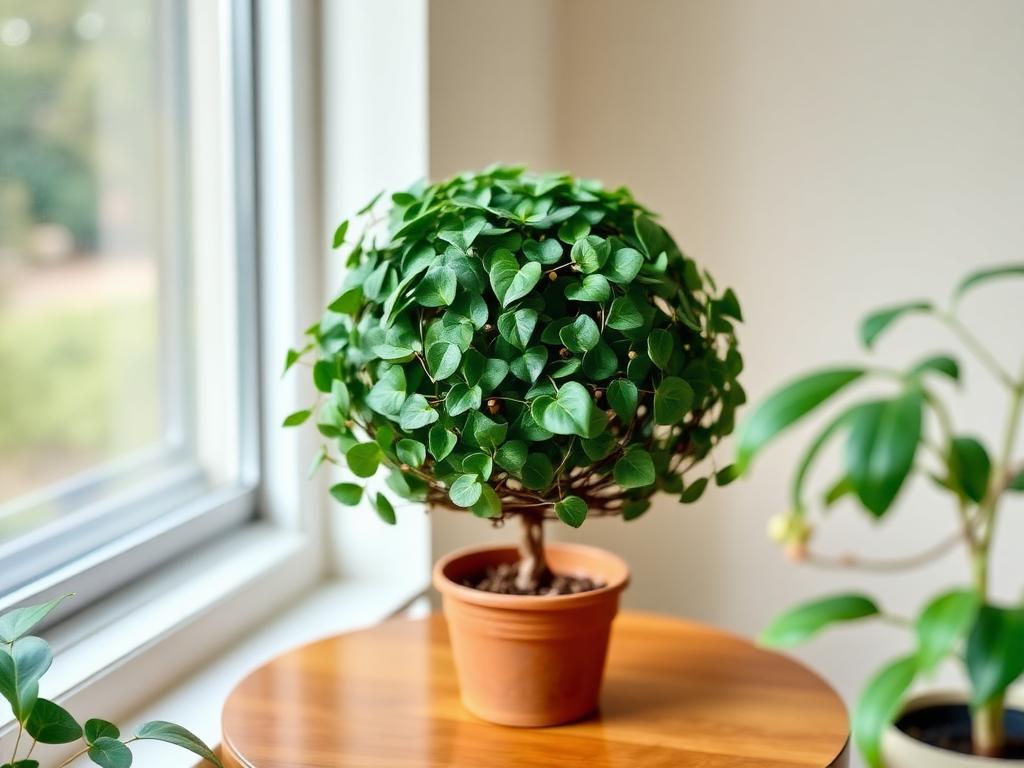
Ivy on a frame
Hedera helix
- Best for
- Indoors or shaded pots outside
- Light
- Bright part shade
- Water
- Even
- Foliage
- Evergreen
- Hardiness
- Hardy outdoors in temperate gardens
- Best shapes
- Balls, animals and globes on wire frames
Why it works. Trains quickly over a wire form for a soft green topiary look in spots most other plants would refuse.
Beginner note. Keep the frame visible while you train. Once stems cover it the shape is set.
Container basics for topiary
- Use a heavy pot so the plant does not topple when the head grows out.
- Use drainage holes and never sit the pot in a permanently full saucer.
- Water before the root ball dries completely, especially in summer.
- Rotate the pot every few weeks so light reaches all sides evenly.
- Protect tender potted topiary in winter, under cover or against a sheltered wall.
- Feed lightly during active growth, not heavily, so growth stays tight.
Indoor topiary plants
Most topiary plants are happier outdoors. Indoor topiary is possible, but only with bright light, careful watering and realistic expectations. The plants that cope best indoors are those used to a Mediterranean or warm climate outside, paired with a window that gets several hours of strong light. Rosemary, myrtle, ivy on a frame, eugenia and lemon cypress are the most reliable indoor choices, with a small bay tree as an option in very bright rooms.
Indoor topiary fails most often because it is treated like a piece of decor rather than a plant. Centrally heated rooms are dry. Light levels indoors are far lower than they look. Watering rhythms drift, and the plant sits in the same dim corner for months. Move indoor topiary into the brightest spot you have, water based on the weight of the pot rather than the calendar and put it outside in warm weather where possible to keep it healthy.
Indoor topiary is still a living plant
Outdoor topiary plants
Outdoor topiary should be chosen by climate first and shape second. Boxwood works in many temperate gardens but check whether blight is a known issue locally before planting in numbers. Japanese holly is a strong substitute. Yew is the heirloom choice for cold gardens with patient owners. Privet handles wind and exposure well. Dwarf conifers and small-leaved holly cope with most temperate conditions, and bay can sit outdoors in milder regions if given a sheltered spot.
Wind, winter cold, summer heat, soil drainage and deer pressure can all affect which topiary plant works best in a given garden. Talk to a local nursery if you are unsure, since plants that look fine in a national plant book may not actually thrive where you live. Hardiness ratings are a starting point, not a guarantee.
Boxwood topiary and the best alternatives
Boxwood is the classic choice for a reason. The tight small leaves, dense habit and slow growth all suit a tightly clipped form, and a well-grown boxwood lasts for decades. The problem in recent years is disease and pest pressure. Box blight, a fungal disease, can defoliate whole plants in damp conditions, and the box tree caterpillar can strip a hedge in days. In many regions those pressures are now part of the picture, so it makes sense to consider alternatives even if boxwood remains your first choice for healthy sites.
The table below compares boxwood with the four most widely used alternatives in formal topiary. Japanese holly is the closest visual match, yew is the most heirloom choice, privet is the fastest and bay is the best choice for larger clipped shapes in mild climates. Other options worth knowing include myrtle in pots and germander for low formal edging where the climate suits.
| Plant | Best use | Leaf size | Growth rate | Clipping tolerance | Climate notes | Beginner friendly |
|---|---|---|---|---|---|---|
| Boxwood | Formal balls and low hedges | Very small | Slow | Excellent, regrows well | Watch for blight and caterpillars | Yes, where healthy |
| Japanese holly | Boxwood substitute balls and domes | Very small | Slow | Excellent | Hardy in most temperate gardens | Yes |
| Yew | Cones, columns and large heirloom shapes | Needle, fine | Slow | Excellent, regrows from old wood | Hardy, tolerates shade | Yes |
| Privet | Hedges and quick structural shapes | Small to medium | Fast | Good, may need two clips a year | Tough and adaptable | Yes |
| Bay | Larger clipped shapes and standards | Medium | Medium | Good, regrows reliably | Best in mild climates | Yes in pots |
Boxwood
- Best use
- Formal balls and low hedges
- Leaf size
- Very small
- Growth rate
- Slow
- Clipping
- Excellent, regrows well
- Climate
- Watch for blight and caterpillars
- Beginner
- Yes, where healthy
Japanese holly
- Best use
- Boxwood substitute balls and domes
- Leaf size
- Very small
- Growth rate
- Slow
- Clipping
- Excellent
- Climate
- Hardy in most temperate gardens
- Beginner
- Yes
Yew
- Best use
- Cones, columns and large heirloom shapes
- Leaf size
- Needle, fine
- Growth rate
- Slow
- Clipping
- Excellent, regrows from old wood
- Climate
- Hardy, tolerates shade
- Beginner
- Yes
Privet
- Best use
- Hedges and quick structural shapes
- Leaf size
- Small to medium
- Growth rate
- Fast
- Clipping
- Good, may need two clips a year
- Climate
- Tough and adaptable
- Beginner
- Yes
Bay
- Best use
- Larger clipped shapes and standards
- Leaf size
- Medium
- Growth rate
- Medium
- Clipping
- Good, regrows reliably
- Climate
- Best in mild climates
- Beginner
- Yes in pots
Topiary plants to avoid in the wrong place
Every plant on this page can look stunning in the right spot and miserable in the wrong one. The list below is really a do-not-put-it-here list rather than a do-not-grow-it list.
Rosemary in a dark indoor room
Why it causes problems. Rosemary needs strong sun. In a low-light room it stretches, drops leaves and turns thin.
Better approach. Grow rosemary outside in a sunny pot, or keep it on the brightest windowsill you have and move it out in warm weather.
Lavender cut hard into old wood
Why it causes problems. Lavender does not regrow well from bare brown wood. A hard cut often kills the plant.
Better approach. Trim lavender lightly and often during the growing season, and replace plants when they get tired.
Boxwood in a site with repeated disease problems
Why it causes problems. Box blight and box tree caterpillar can return year after year and damage new plants quickly.
Better approach. Plant Japanese holly or yew where boxwood has struggled, and keep new boxwood away from infected sites.
Bay in a freezing exposed climate without protection
Why it causes problems. Bay tolerates mild winters but suffers in hard frost, drying winds and prolonged cold.
Better approach. Plant in a sheltered spot, move pots under cover in long cold spells, or wrap plants with horticultural fleece.
Olive topiary in cold wet soil
Why it causes problems. Olives hate cold waterlogged roots even more than they dislike summer drought.
Better approach. Use a free-draining mix in a generous pot, raise the pot off the ground in winter and choose a sheltered sunny spot.
Eugenia outdoors in cold climates
Why it causes problems. Eugenia is tender and does not survive hard winters outside in most temperate regions.
Better approach. Grow eugenia in a pot you can move under cover, or choose a hardier alternative such as Japanese holly or boxwood.
Fast-growing shrubs that need constant clipping
Why it causes problems. A vigorous shrub trained into a precise shape soon outpaces the gardener and loses its outline.
Better approach. Match the growth rate to your time. Pick yew or boxwood for precision, privet for forgiving speed and never the wrong way around.
Large conifers in small pots
Why it causes problems. A vigorous conifer fills a small pot too fast and dries out repeatedly, leading to brown patches that do not regrow.
Better approach. Use a generous pot with plenty of drainage and choose a dwarf cultivar grown for container use.
Any topiary in a pot without drainage
Why it causes problems. Standing water rots roots within weeks, especially in winter.
Better approach. Always use a pot with drainage holes and a free-draining mix, and lift the pot slightly off solid ground.
Indoor topiary treated like decoration instead of a living plant
Why it causes problems. Without light, water and air, even tough indoor topiary plants slowly decline and brown.
Better approach. Place indoor topiary in the brightest spot in the home, water by feel and move it outside during warm weather.
The wrong plant makes topiary frustrating
How to plant and care for topiary
Topiary care is not complicated, but it is consistent. Most topiary needs only a small list of jobs done well rather than a long list done sometimes. The notes below cover the basics across most of the plants in this guide.
Light
Most topiary plants need good light. Outdoor formal evergreens such as boxwood and Japanese holly accept sun or part shade, while yew is one of the few that genuinely tolerates deeper shade. Mediterranean plants such as rosemary, olive, myrtle and lavender need full sun. Indoor topiary should always go in the brightest suitable spot.
Watering
Potted topiary dries faster than topiary in the ground, so check the root ball rather than the surface. In hot or windy weather, container plants may need water every day. Plants in the ground usually only need watering during long dry spells once they are established. Avoid letting any topiary go fully dry and then drowning it; consistency matters more than volume.
Feeding
Feed lightly during the active growth season. Avoid pushing too much soft new growth, which produces a loose form and more work at clipping time. A balanced slow-release feed once or twice a year is plenty for most topiary.
Pruning and clipping
Clip little and often rather than hard and rarely. For most evergreens, one or two clips a year is enough, usually in late spring or summer once new growth has firmed up. Avoid hot dry weather, which can scorch fresh cut surfaces. Do not cut into bare old wood on plants that do not regrow well, including most conifers, rosemary and lavender.
Pot size and drainage
Use heavy, stable pots with drainage holes. A pot that topples in wind or sits in water shortens the life of any topiary. Refresh the top few centimetres of compost each spring and pot on into a larger container when roots fill the existing one.
Winter care
Protect tender topiary and pots in cold climates. Bay, myrtle, eugenia, olive and lemon cypress are all happier with shelter in the coldest weeks of the year. Check local hardiness ratings before planting any topiary outdoors permanently, and move pots against a sheltered wall or under cover during long cold spells.
Pest and disease checks
Inspect dense foliage for pests, dieback, dryness or disease before problems spread. For boxwood, check for caterpillars and webbing as well as the dropped leaves typical of blight. For bay, watch for sucker damage on the underside of leaves. Catching problems early is almost always easier than fixing them later.
Useful supplies for growing topiary plants
Best choices for beginners
Beginners should start simple. A ball, a low dome, a cone or a small standard are all forgiving shapes that look intentional even when slightly uneven. The lists below are the safest starting points for first topiary projects.
Best outdoor beginners
- Japanese holly. Forgiving, dense and resistant to box blight.
- Boxwood. Where local conditions are healthy.
- Yew. Slow but tolerates almost any cut.
- Privet. Quick result for a confident first project.
- Dwarf conifers. Naturally compact and easy to keep tidy.
Best potted beginners
- Rosemary. Useful and decorative in a sunny pot.
- Bay. Classic clipped standard for entrances.
- Myrtle. Elegant small-leaved pot topiary in mild climates.
- Lemon cypress. Bright cone for doorways.
- Boxwood. Tidy ball in a generous pot.
Best simple shapes
- Boxwood or Japanese holly balls. The forgiving classic.
- Yew cones. Hard to get wrong with patience.
- Bay standards. One pair flanking a door.
- Rosemary standards. Small and useful.
- Juniper spirals. Only if climate and maintenance suit.
Start with a simple ball, cone or small standard before trying complex spirals or animal shapes. Each shape teaches you how the plant responds to your clipping, and that knowledge is what makes the next project look better than the first.
Frequently asked questions
What are the best plants for topiary?
What shrubs are best for topiary?
What evergreen plants are suitable for topiary?
Is boxwood the best plant for topiary?
What is a good alternative to boxwood for topiary?
What plants are best for topiary balls?
What plants are best for spiral topiary?
Can topiary plants grow in pots?
Can topiary plants grow indoors?
How often should you trim topiary?
What is the easiest topiary plant for beginners?
Can rosemary be used for topiary?
Can lavender be used for topiary?
Why is my topiary turning brown?
Final advice
- Choose the plant before the shape. The plant decides what is possible.
- Small leaves and dense growth make shaping easier and the result cleaner.
- Evergreens are best for year-round formal topiary.
- Potted topiary needs stable pots, drainage and careful watering.
- Indoor topiary is possible, but it needs bright light and realistic care.
- Start with simple balls, cones or standards before trying spirals or complex shapes.
- The best topiary plant is the one that suits your climate, space and maintenance level.
Related reads
Keep reading
- HubGarden design ideasBorders, focal points and structure for gardens of every size.Read guide
- HubAll plant guidesIndoor and outdoor planting ideas grouped by topic and situation.Read guide
- HubTools and productsPractical kit recommendations for everyday gardening jobs.Read guide
- Garden designTopiary shapes to tryBalls, cones, spirals and standards explained for first projects.Read guide
- PlantsLime green plantsChartreuse shrubs and foliage that brighten clipped evergreen forms.Read guide
- PlantsPlants with large leavesBold-leaf plants for contrast against tight formal topiary.Read guide
This guide was written and reviewed for Blooming Lucky's refreshed gardening archive. We use original writing, practical gardening research and clear plant-care guidance. We do not copy old archived articles or claim personal testing unless stated.