- Original guide
- Beginner friendly
- Updated 2026
- Affiliate disclosed
What counts as a lime green or chartreuse plant?
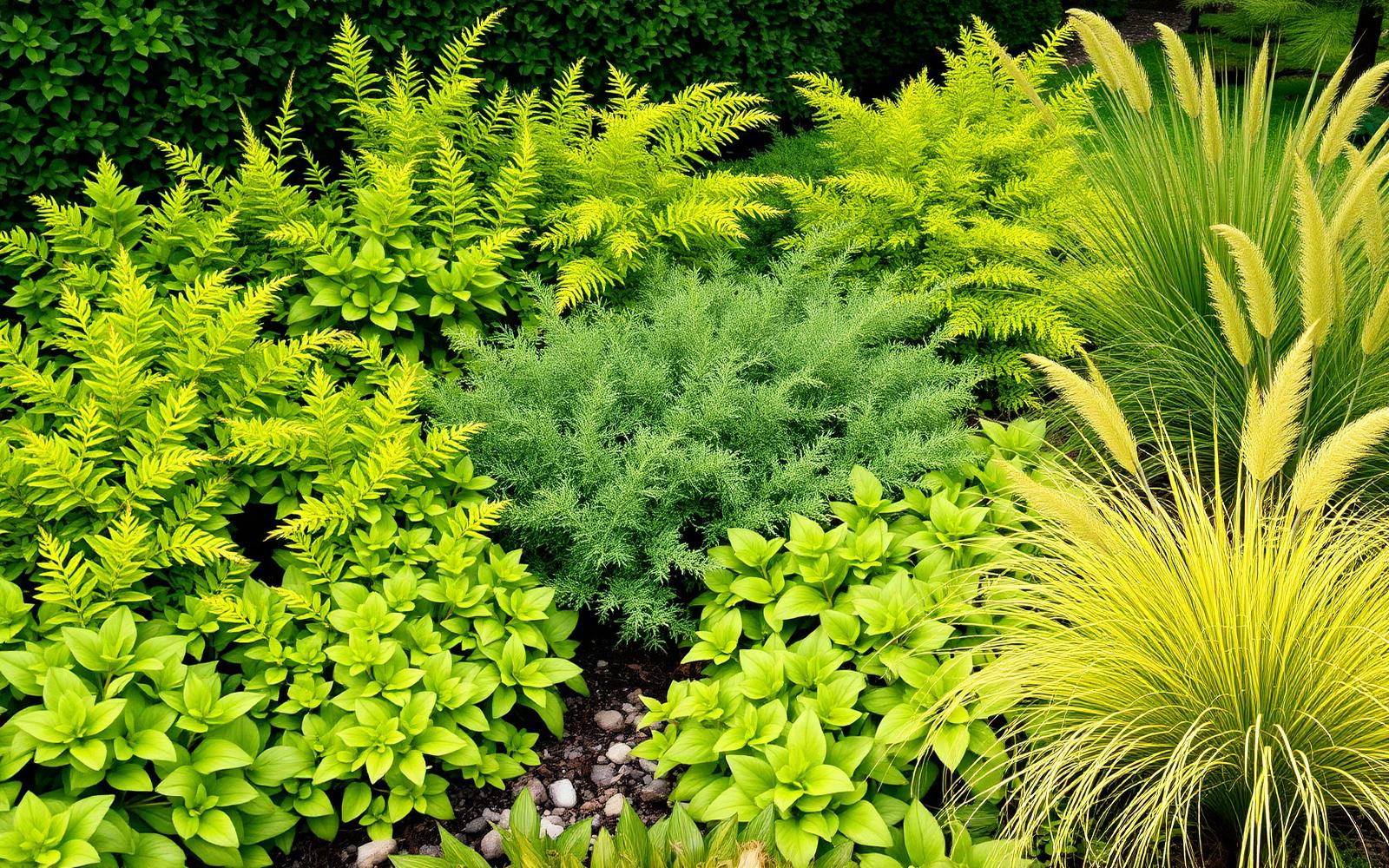
Lime green and chartreuse describe the same bright yellow-green tone in gardening. Some plants carry the colour in their foliage all season, some show it in flowers or bracts, and some open bright in spring then settle into a calmer green by midsummer. The trick is to understand which type you are buying so the plant earns its place all year, not just for the first few weeks.
Light changes how a lime plant reads. Many chartreuse leaves look brightest in dappled or part shade because the colour glows against the cool background. The same plant in full midday sun can bleach, scorch or simply look harsh. Soil moisture, cultivar choice, season and local climate all shift the final shade you see, so check the plant label and ask your nursery how a cultivar behaves in your conditions.
A good lime green plant should match
- Sun or shade level in the planting spot.
- Soil moisture, including how reliably it stays damp.
- The garden role you need: shrub, flower, foliage, container or accent.
- Mature size, both height and spread.
- Seasonal colour and whether the plant fades later in summer.
- Winter hardiness for your local climate.
- Maintenance level you actually want to commit to.
- Neighbouring plant colours, especially other yellows.
Best lime green plants at a glance
Use the table below to scan the most useful lime and chartreuse plants by light, type and difficulty. Match the location and role first, then read across to why each one works. On mobile the table becomes stacked cards so nothing scrolls sideways.
| Plant | Best for | Light | Type | Moisture | Level | Why it works |
|---|---|---|---|---|---|---|
| Choisya ternata Sundance | Sunny evergreen shrub border | Sun/Part shade | Shrub | Even | Easy | Aromatic golden foliage with a tidy rounded habit and occasional white flowers. |
| Spiraea Goldmound | Bright low shrub mass | Sun | Shrub | Even | Easy | Mounded chartreuse leaves with small pink summer flowers. |
| Nandina Lemon Lime | Lime accent in mild gardens | Sun/Part shade | Shrub | Even | Easy | Tidy upright shrub with lime green new growth. |
| Golden euonymus | Evergreen winter colour | Sun/Part shade | Shrub | Even | Easy | Variegated gold and green leaves that hold colour year-round. |
| Golden privet | Hedging and bright structure | Sun | Shrub | Even | Easy | Vigorous hedging with bright yellow-green foliage. |
| Lime green hosta | Shaded borders and pots | Shade | Perennial | Moist | Easy | Big bright leaves that lift dark shade corners. |
| Heuchera lime cultivars | Front of border and pots | Part shade | Perennial | Even | Easy | Ruffled chartreuse mounds that work in soil or containers. |
| Hakonechloa All Gold | Flowing shade edge | Part shade | Grass | Even | Easy | Soft cascading chartreuse grass for shade and pots. |
| Lady's mantle | Path edges and cottage borders | Part shade | Perennial | Even | Easy | Frothy lime green flowers above scalloped leaves. |
| Euphorbia | Sunny gravel and Mediterranean borders | Sun | Perennial | Dry to even | Easy | Striking chartreuse bracts in spring and early summer. |
| Carex Everillo | Year-round evergreen sedge | Sun/Part shade | Grass | Even | Easy | Cascading bright lime blades that hold colour through the year. |
| Coleus | Containers and shaded patios | Part shade | Container | Even | Easy | Vivid summer foliage in many lime cultivars. |
| Sweet potato vine | Trailing container colour | Sun/Part shade | Container | Even | Easy | Trailing chartreuse heart-shaped leaves for pot edges. |
| Nicotiana Lime Green | Cutting and evening borders | Sun/Part shade | Flower | Even | Easy | Pale green star-shaped flowers from summer into autumn. |
| Bells of Ireland | Cut flower beds | Sun | Flower | Even | Moderate | Tall spikes of green calyx flowers for fresh and dried use. |
| Green zinnia | Sunny annual borders | Sun | Flower | Even | Easy | Unusual chartreuse zinnia blooms for arrangements. |
| Green hellebore | Woodland edges | Part shade | Flower | Even | Easy | Pale green winter and early spring flowers in shade. |
| Hydrangea Limelight | Large summer focal shrub | Sun/Part shade | Shrub | Even | Easy | Huge lime green panicles that age to soft pink. |
Choisya ternata Sundance
Sun/Part shade- Best for
- Sunny evergreen shrub border
- Sun / shade
- Sun/Part shade
- Plant type
- Shrub
- Moisture
- Even
- Difficulty
- Easy
- Why it works
- Aromatic golden foliage with a tidy rounded habit and occasional white flowers.
Spiraea Goldmound
Sun- Best for
- Bright low shrub mass
- Sun / shade
- Sun
- Plant type
- Shrub
- Moisture
- Even
- Difficulty
- Easy
- Why it works
- Mounded chartreuse leaves with small pink summer flowers.
Nandina Lemon Lime
Sun/Part shade- Best for
- Lime accent in mild gardens
- Sun / shade
- Sun/Part shade
- Plant type
- Shrub
- Moisture
- Even
- Difficulty
- Easy
- Why it works
- Tidy upright shrub with lime green new growth.
Golden euonymus
Sun/Part shade- Best for
- Evergreen winter colour
- Sun / shade
- Sun/Part shade
- Plant type
- Shrub
- Moisture
- Even
- Difficulty
- Easy
- Why it works
- Variegated gold and green leaves that hold colour year-round.
Golden privet
Sun- Best for
- Hedging and bright structure
- Sun / shade
- Sun
- Plant type
- Shrub
- Moisture
- Even
- Difficulty
- Easy
- Why it works
- Vigorous hedging with bright yellow-green foliage.
Lime green hosta
Shade- Best for
- Shaded borders and pots
- Sun / shade
- Shade
- Plant type
- Perennial
- Moisture
- Moist
- Difficulty
- Easy
- Why it works
- Big bright leaves that lift dark shade corners.
Heuchera lime cultivars
Part shade- Best for
- Front of border and pots
- Sun / shade
- Part shade
- Plant type
- Perennial
- Moisture
- Even
- Difficulty
- Easy
- Why it works
- Ruffled chartreuse mounds that work in soil or containers.
Hakonechloa All Gold
Part shade- Best for
- Flowing shade edge
- Sun / shade
- Part shade
- Plant type
- Grass
- Moisture
- Even
- Difficulty
- Easy
- Why it works
- Soft cascading chartreuse grass for shade and pots.
Lady's mantle
Part shade- Best for
- Path edges and cottage borders
- Sun / shade
- Part shade
- Plant type
- Perennial
- Moisture
- Even
- Difficulty
- Easy
- Why it works
- Frothy lime green flowers above scalloped leaves.
Euphorbia
Sun- Best for
- Sunny gravel and Mediterranean borders
- Sun / shade
- Sun
- Plant type
- Perennial
- Moisture
- Dry to even
- Difficulty
- Easy
- Why it works
- Striking chartreuse bracts in spring and early summer.
Carex Everillo
Sun/Part shade- Best for
- Year-round evergreen sedge
- Sun / shade
- Sun/Part shade
- Plant type
- Grass
- Moisture
- Even
- Difficulty
- Easy
- Why it works
- Cascading bright lime blades that hold colour through the year.
Coleus
Part shade- Best for
- Containers and shaded patios
- Sun / shade
- Part shade
- Plant type
- Container
- Moisture
- Even
- Difficulty
- Easy
- Why it works
- Vivid summer foliage in many lime cultivars.
Sweet potato vine
Sun/Part shade- Best for
- Trailing container colour
- Sun / shade
- Sun/Part shade
- Plant type
- Container
- Moisture
- Even
- Difficulty
- Easy
- Why it works
- Trailing chartreuse heart-shaped leaves for pot edges.
Nicotiana Lime Green
Sun/Part shade- Best for
- Cutting and evening borders
- Sun / shade
- Sun/Part shade
- Plant type
- Flower
- Moisture
- Even
- Difficulty
- Easy
- Why it works
- Pale green star-shaped flowers from summer into autumn.
Bells of Ireland
Sun- Best for
- Cut flower beds
- Sun / shade
- Sun
- Plant type
- Flower
- Moisture
- Even
- Difficulty
- Moderate
- Why it works
- Tall spikes of green calyx flowers for fresh and dried use.
Green zinnia
Sun- Best for
- Sunny annual borders
- Sun / shade
- Sun
- Plant type
- Flower
- Moisture
- Even
- Difficulty
- Easy
- Why it works
- Unusual chartreuse zinnia blooms for arrangements.
Green hellebore
Part shade- Best for
- Woodland edges
- Sun / shade
- Part shade
- Plant type
- Flower
- Moisture
- Even
- Difficulty
- Easy
- Why it works
- Pale green winter and early spring flowers in shade.
Hydrangea Limelight
Sun/Part shade- Best for
- Large summer focal shrub
- Sun / shade
- Sun/Part shade
- Plant type
- Shrub
- Moisture
- Even
- Difficulty
- Easy
- Why it works
- Huge lime green panicles that age to soft pink.
Best lime green shrubs
Shrubs are the most reliable way to add long-lasting lime or chartreuse colour to a garden because they give structure even when flowers are not in season. A single bright shrub can anchor a corner, while a small group can carry the colour through a whole border. Most of the shrubs below prefer a sunny or lightly shaded spot to keep their chartreuse tone bright, and most settle into a slightly calmer green if planted in deep shade.
Choisya ternata Sundance
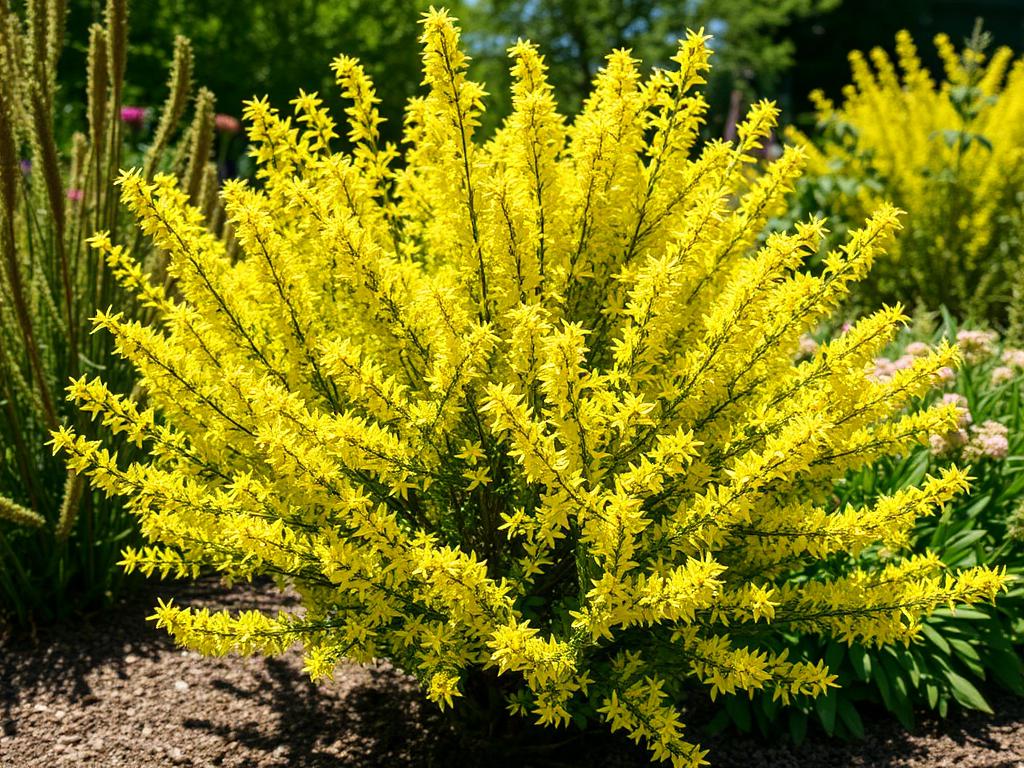
Choisya ternata 'Sundance'
- Best for
- Sunny evergreen border or near a doorway
- Light
- Sun to part shade in milder gardens
- Moisture
- Even, free-draining
- Mature size
- Around 1.5 to 2 metres tall and wide
- Foliage
- Evergreen in mild climates
Why it works. Golden aromatic foliage that lifts a planting all year and carries occasional white spring flowers.
Beginner note. Plant in a sheltered spot. Cold exposed sites can bronze or burn winter leaves.
Spiraea Goldmound
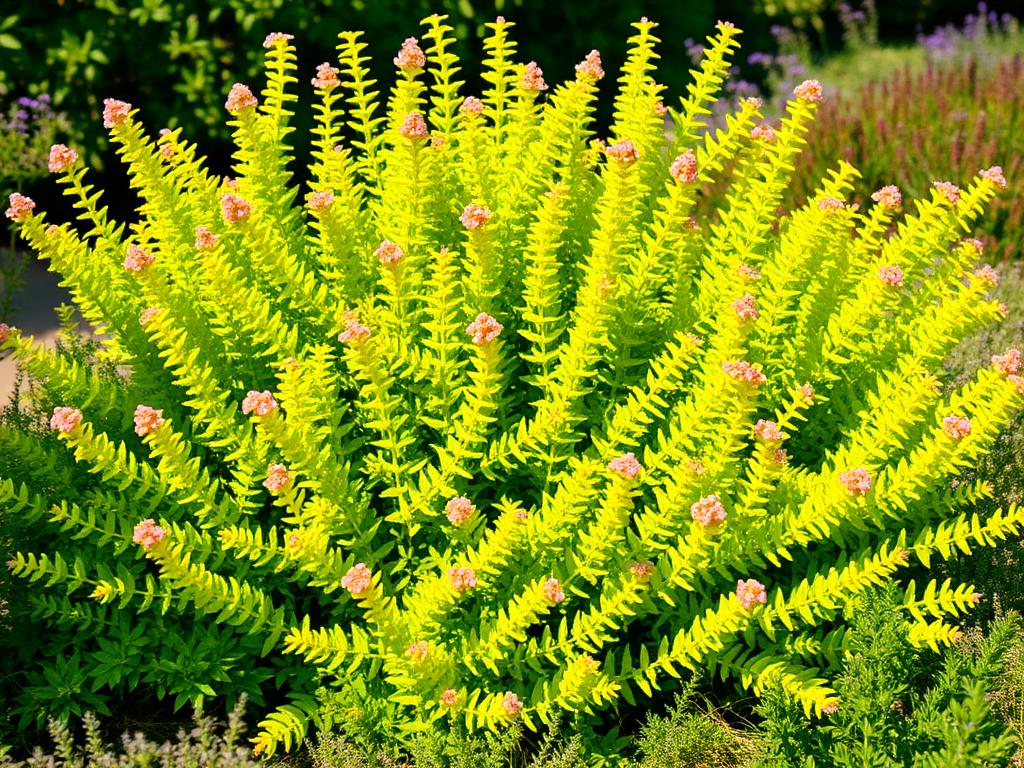
Spiraea japonica 'Goldmound' or 'Goldflame'
- Best for
- Sunny low border mass or front of shrub planting
- Light
- Full sun for the brightest colour
- Moisture
- Even garden soil
- Mature size
- 60 to 90 cm tall and wide
- Foliage
- Deciduous, with bronze tints in autumn
Why it works. Reliable mound of chartreuse leaves topped with small pink flowers in summer.
Beginner note. Prune lightly in late winter for fresh bright spring growth.
Nandina Lemon Lime
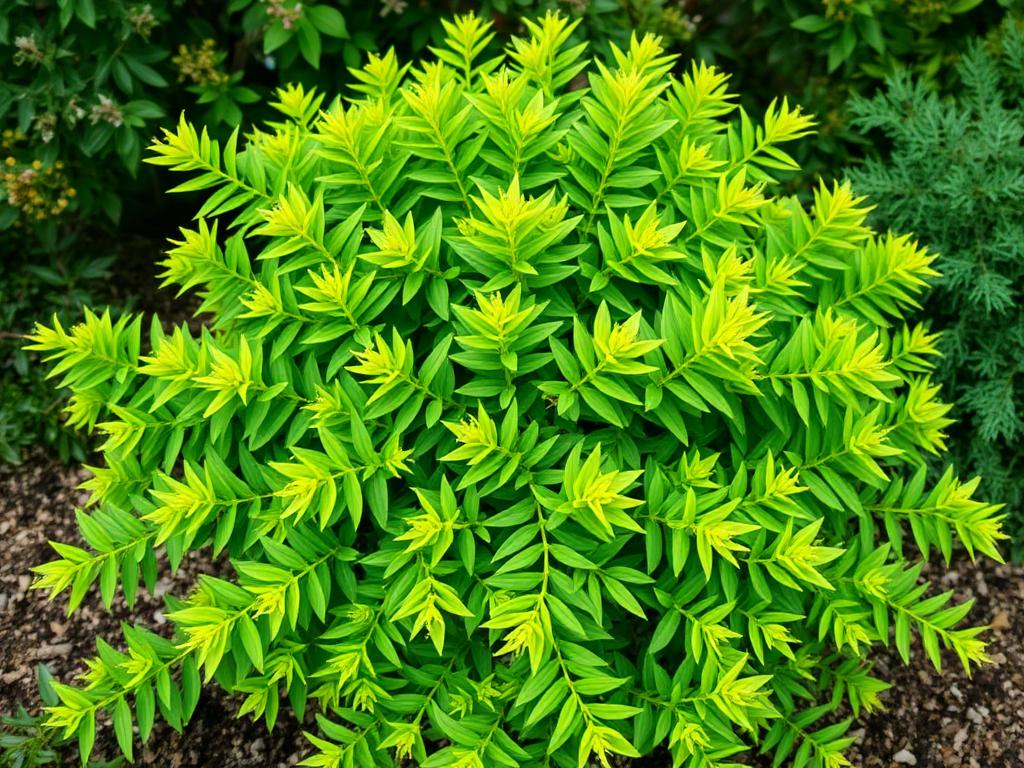
Nandina domestica 'Lemon Lime'
- Best for
- Lime accent in mild-climate borders or large pots
- Light
- Sun to part shade
- Moisture
- Even
- Mature size
- Around 1 metre tall and wide
- Foliage
- Evergreen in mild gardens
Why it works. Tidy upright shrub that keeps a lime green tone on new growth without flowering colour.
Beginner note. Check your local climate. Cold hardiness varies between cultivars.
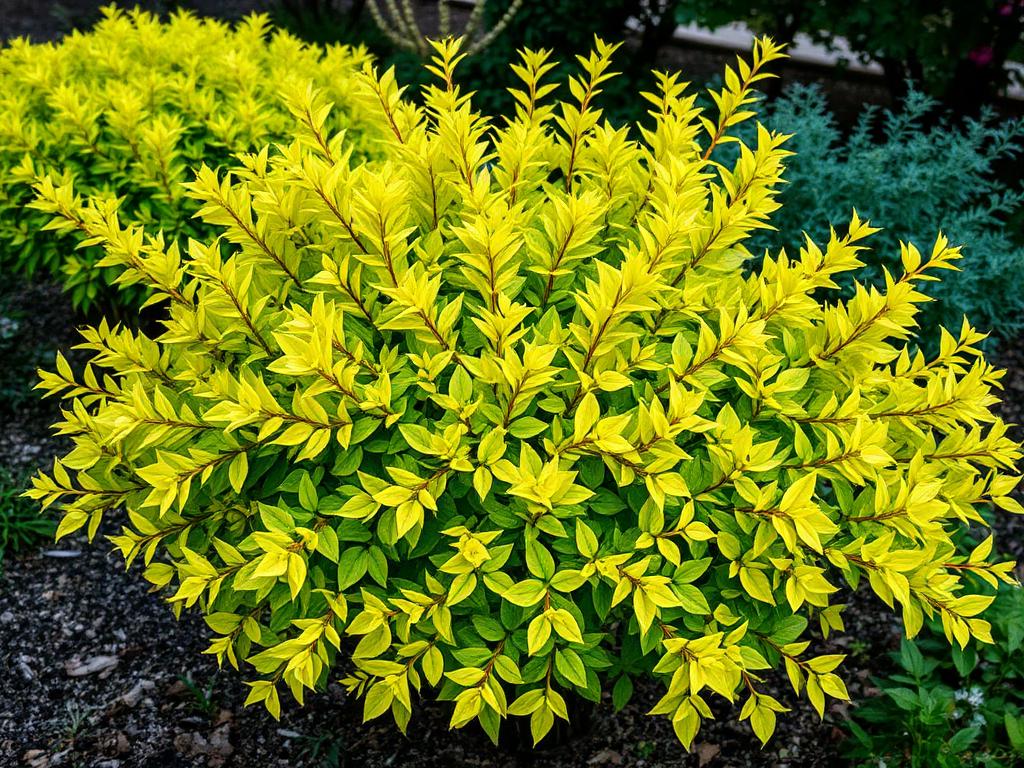
Golden euonymus
Euonymus japonicus 'Aureus' or similar
- Best for
- Evergreen winter colour, hedging and accent shrubs
- Light
- Sun to part shade
- Moisture
- Even
- Mature size
- 1 to 1.5 metres tall and wide
- Foliage
- Evergreen
Why it works. Variegated gold and green leaves that hold colour right through winter when little else is bright.
Beginner note. Trim lightly to keep the shape neat. Sport branches reverting to plain green should be removed.
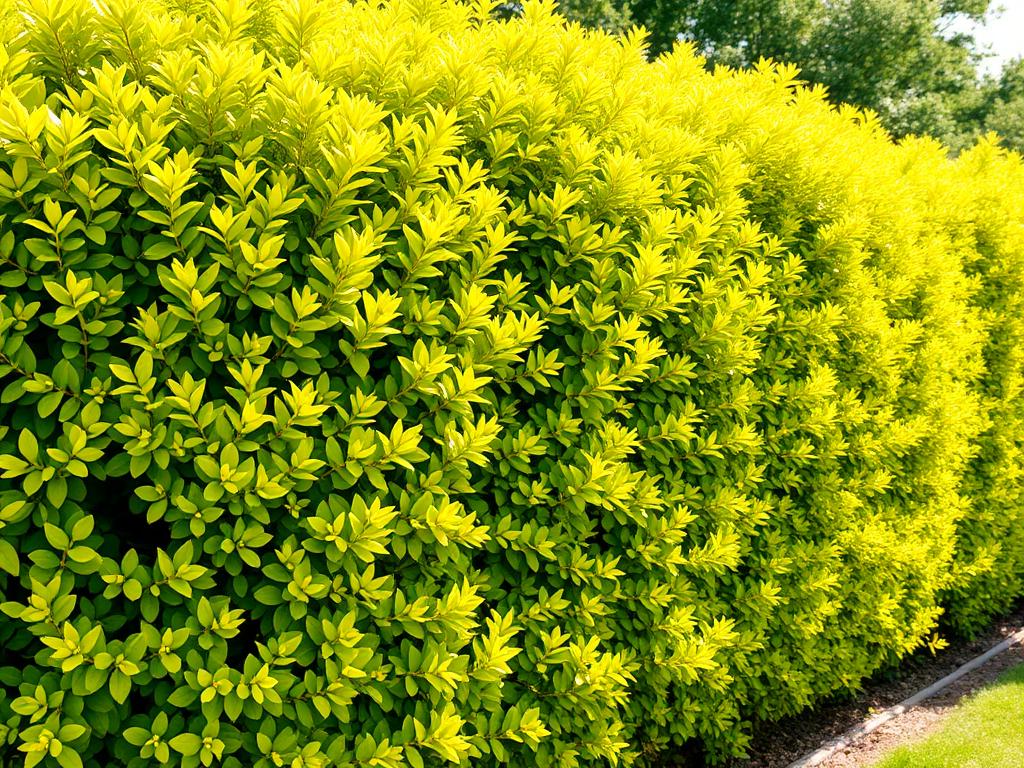
Golden privet
Ligustrum ovalifolium 'Aureum'
- Best for
- Hedging or bright structural backdrop
- Light
- Sun for the brightest leaves
- Moisture
- Even garden soil
- Mature size
- Hedging shrub, easily 1.5 to 2.5 metres
- Foliage
- Semi-evergreen in mild winters
Why it works. Fast vigorous hedging with bright yellow-green foliage that brightens a long boundary.
Beginner note. Clip twice a year to keep it dense. Roots can be hungry, so feed nearby borders well.
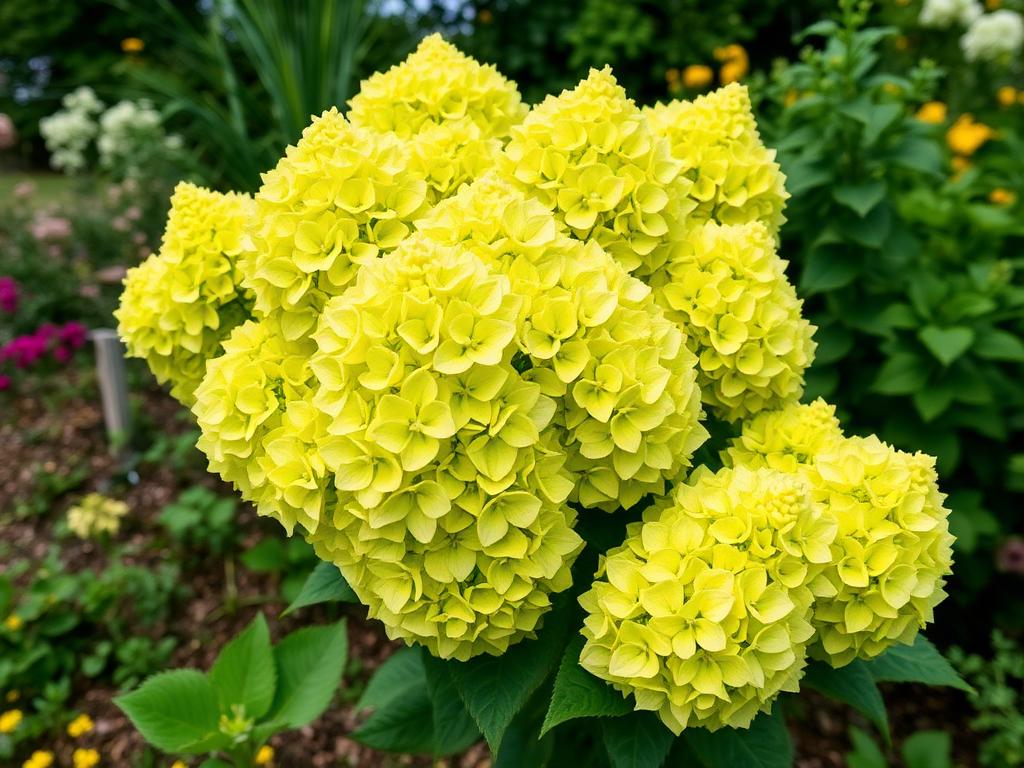
Hydrangea Limelight
Hydrangea paniculata 'Limelight'
- Best for
- Large focal shrub for summer borders
- Light
- Sun to part shade
- Moisture
- Even, moisture-retentive
- Mature size
- 1.5 to 2.5 metres tall and wide
- Foliage
- Deciduous
Why it works. Huge cone-shaped lime green flower panicles that age to soft cream and pink through autumn.
Beginner note. Prune in late winter to encourage strong flowering wood. Mulch generously each spring.
Lime green evergreen shrubs
Evergreen lime green shrubs are useful because they keep some colour through the year, but they still need the right light and climate to look their best. Choisya Sundance is the most popular choice in mild temperate gardens, with golden aromatic foliage that holds through winter in sheltered spots. Golden euonymus carries variegated gold and green leaves all year and works well as a low hedge or accent shrub. Golden privet stays semi-evergreen in mild winters and brightens long hedging runs. In colder gardens, look for dwarf golden conifers and chartreuse-leaved boxwood alternatives, and always check the hardiness rating against your local climate before planting.
Evergreen colour usually reads best with darker evergreen plants nearby. Pair a Choisya Sundance with deep green yew or holly behind it, or set a golden euonymus against a darker neighbour so the chartreuse stands out instead of fading into the background. Avoid putting two bright variegated evergreens next to each other in a small bed, since the eye loses the contrast that makes lime green plants worth growing.
Use evergreen lime as winter relief
Best lime green flowers
True lime green flowers are less common than lime foliage, but they can look striking in containers, cut flower beds and fresh green-white planting schemes. The flowers below cover the seasons, from early spring hellebores to summer nicotiana and zinnias. Use them as accents alongside calmer green or white blooms rather than building a whole border around them.
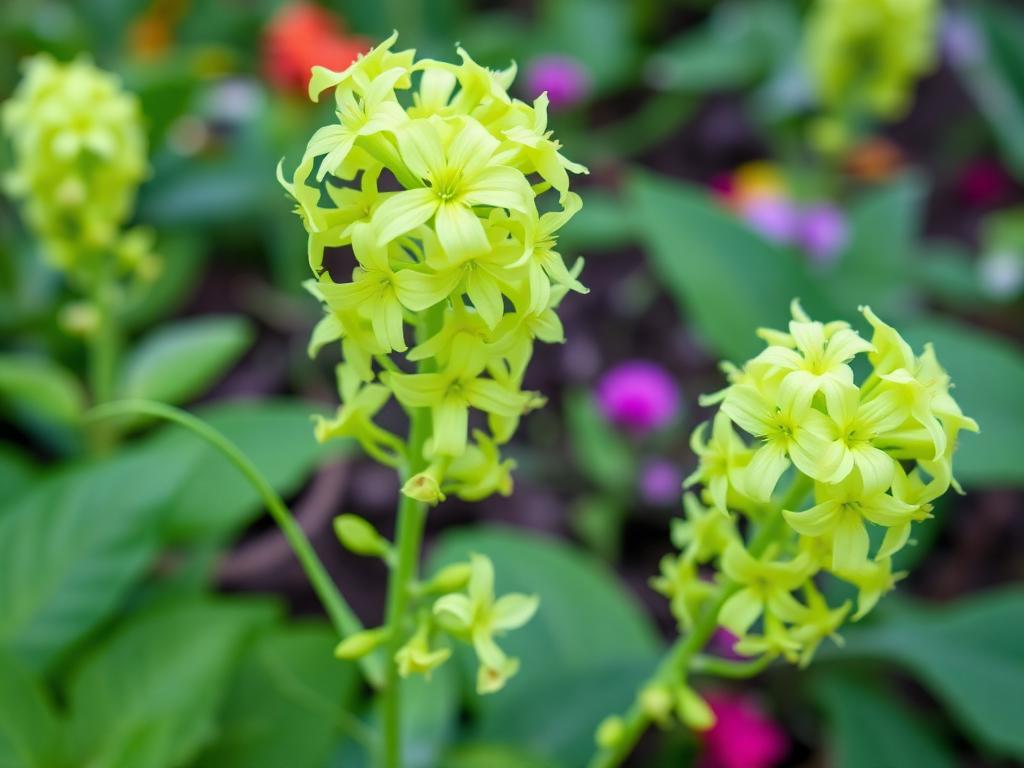
Nicotiana Lime Green
Nicotiana 'Lime Green'
- Best for
- Cutting beds, evening borders and pots
- Light
- Sun to part shade
- Moisture
- Even
- Mature size
- 60 to 90 cm tall in flower
- Foliage
- Half-hardy annual
Why it works. Pale chartreuse star-shaped flowers on slim stems that carry on from summer into early autumn.
Beginner note. Sow indoors in spring and plant out after the last frost. Deadhead to extend flowering.
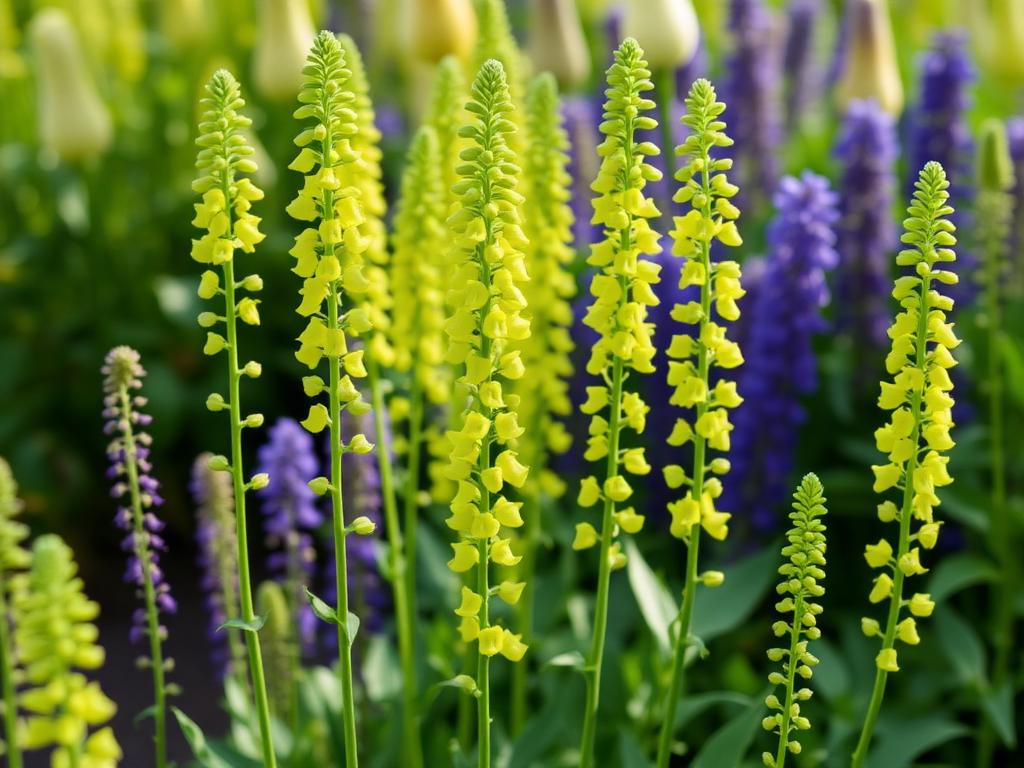
Bells of Ireland
Moluccella laevis
- Best for
- Cut flower beds and structural summer borders
- Light
- Full sun
- Moisture
- Even, free-draining
- Mature size
- 60 to 90 cm tall spikes
- Foliage
- Hardy annual
Why it works. Tall stems of bright green calyx flowers that hold their colour both fresh and dried.
Beginner note. Sow directly after the last frost. Stake taller stems in exposed gardens.
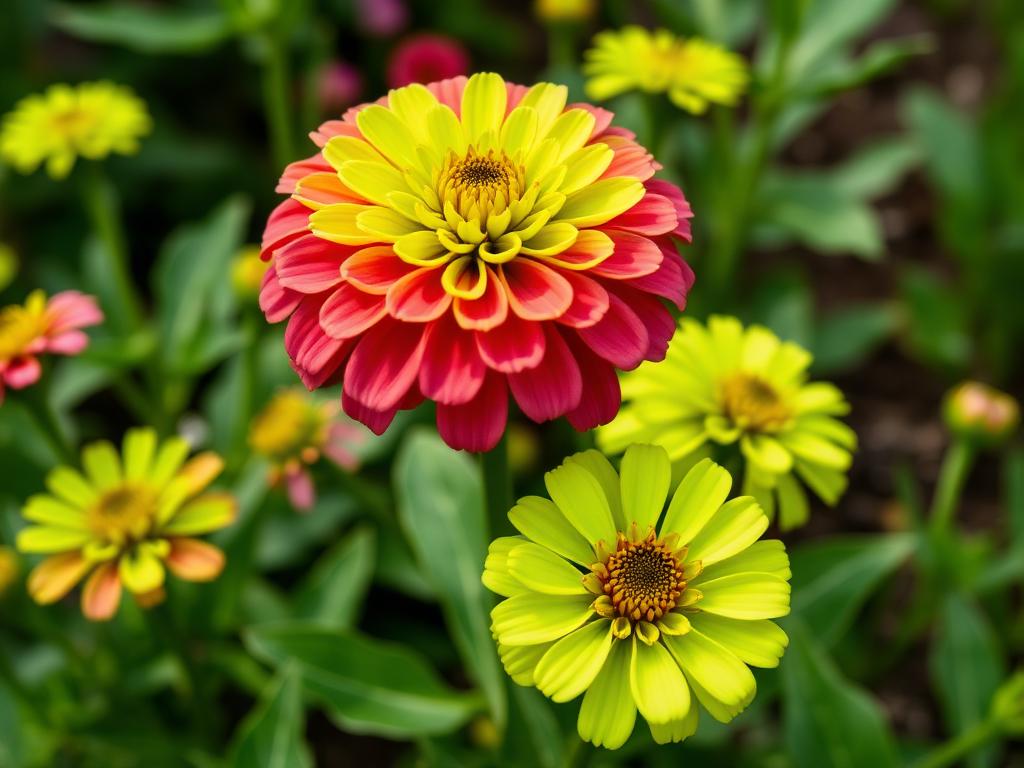
Green Envy zinnia
Zinnia elegans 'Envy'
- Best for
- Sunny annual beds and cut flower rows
- Light
- Full sun
- Moisture
- Even
- Mature size
- 60 to 75 cm tall
- Foliage
- Half-hardy annual
Why it works. Unusual chartreuse zinnia blooms that pair beautifully with hot summer colours.
Beginner note. Pinch out growing tips early to encourage branching and more flowers.
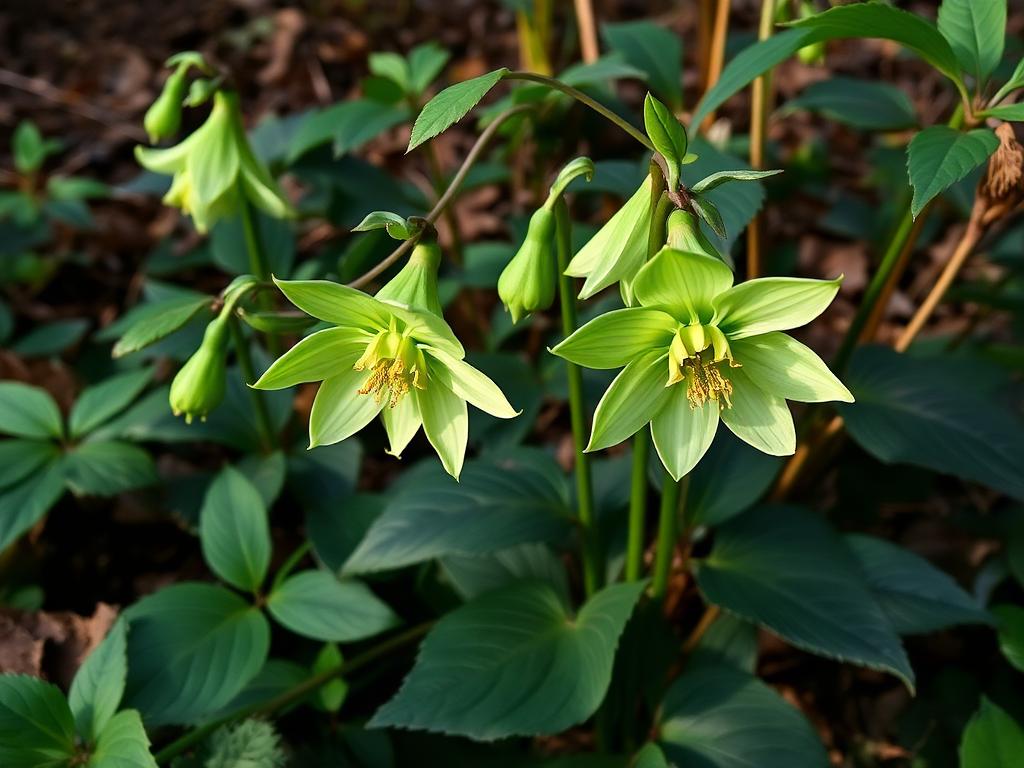
Green hellebore
Helleborus argutifolius and similar
- Best for
- Woodland edges and shaded borders
- Light
- Part shade
- Moisture
- Even, moisture-retentive
- Mature size
- 30 to 60 cm
- Foliage
- Evergreen foliage
Why it works. Pale green winter and early spring flowers that hold up in cold weather.
Beginner note. Mulch in autumn. Cut back tired older leaves in late winter so new flowers stand out.
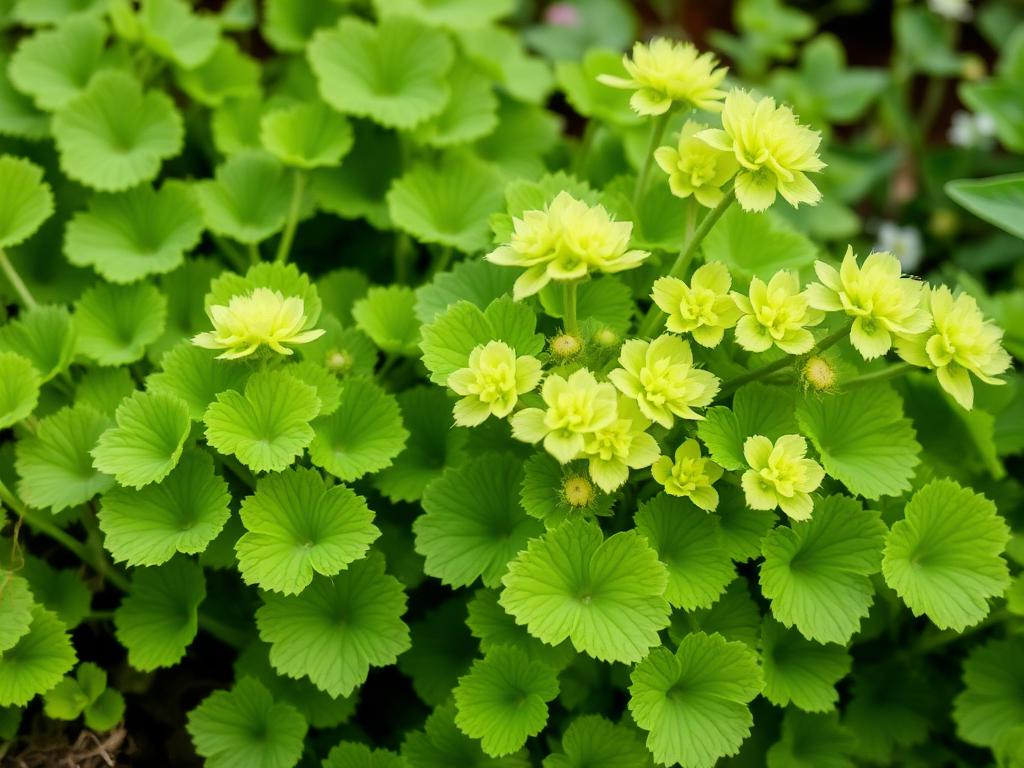
Lady's mantle
Alchemilla mollis
- Best for
- Path edges, cottage borders, pot edges
- Light
- Sun to part shade
- Moisture
- Even
- Mature size
- 30 to 45 cm tall and wide
- Foliage
- Herbaceous perennial
Why it works. Frothy chartreuse flowers above soft scalloped leaves that hold raindrops beautifully.
Beginner note. Cut back hard after flowering for a fresh second flush of leaves.
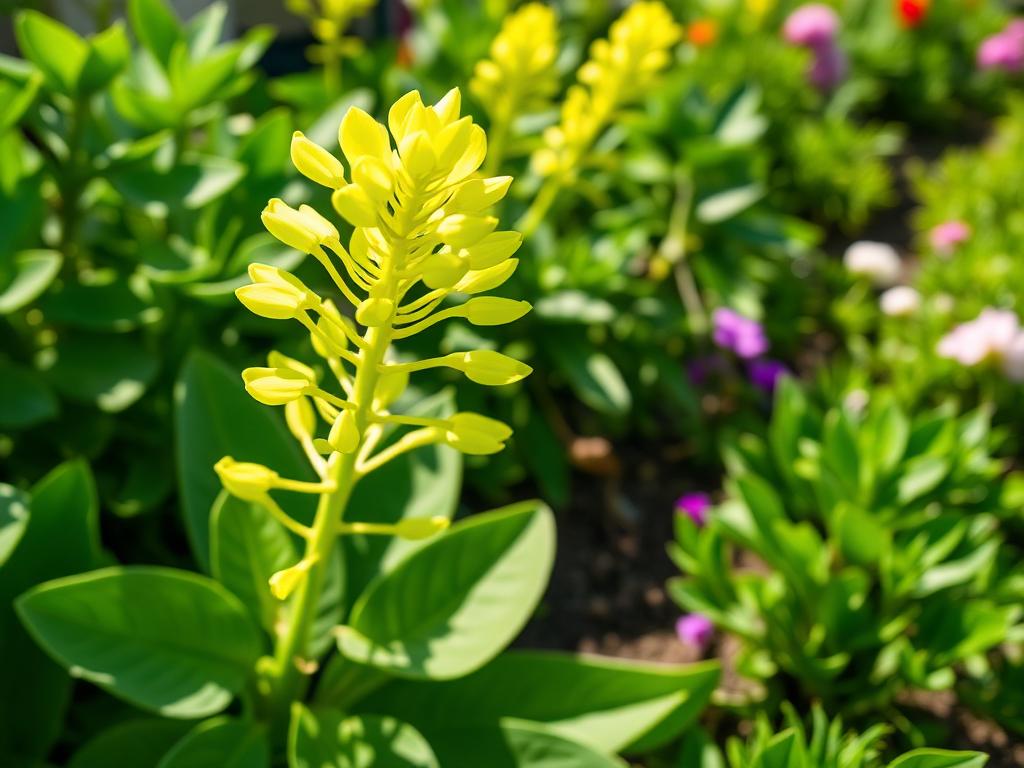
Euphorbia
Euphorbia characias and similar
- Best for
- Sunny gravel and Mediterranean borders
- Light
- Full sun
- Moisture
- Dry to even, free-draining
- Mature size
- 60 cm to 1.2 metres depending on species
- Foliage
- Evergreen perennial
Why it works. Architectural shape with bright chartreuse flower bracts in spring and early summer.
Beginner note. Wear gloves when cutting. The milky sap can irritate skin and eyes.
Lime green foliage plants and perennials
Foliage is usually more reliable than flowers if you want a long lime green effect. Foliage carries the colour for months rather than weeks, and many of the best chartreuse perennials and grasses look as good in late summer as they did in spring. Use these as the workhorses of a lime planting scheme, then add lime flowers as seasonal accents.
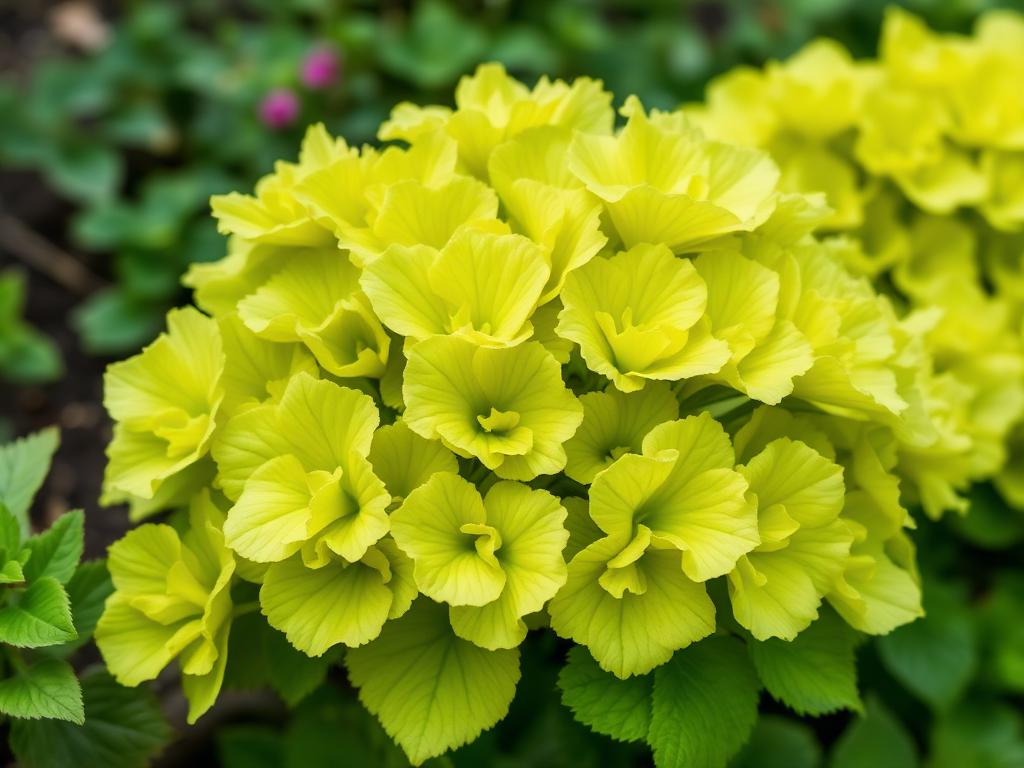
Heuchera Lime Marmalade
Heuchera 'Lime Marmalade' and similar
- Best for
- Front of borders and shaded pots
- Light
- Part shade for the cleanest colour
- Moisture
- Even, well-drained
- Mature size
- 25 to 30 cm tall and wide
- Foliage
- Semi-evergreen in mild gardens
Why it works. Ruffled chartreuse mounds that hold colour through most of the season and work in soil or containers.
Beginner note. Lift and replant every few years to keep the crown vigorous.
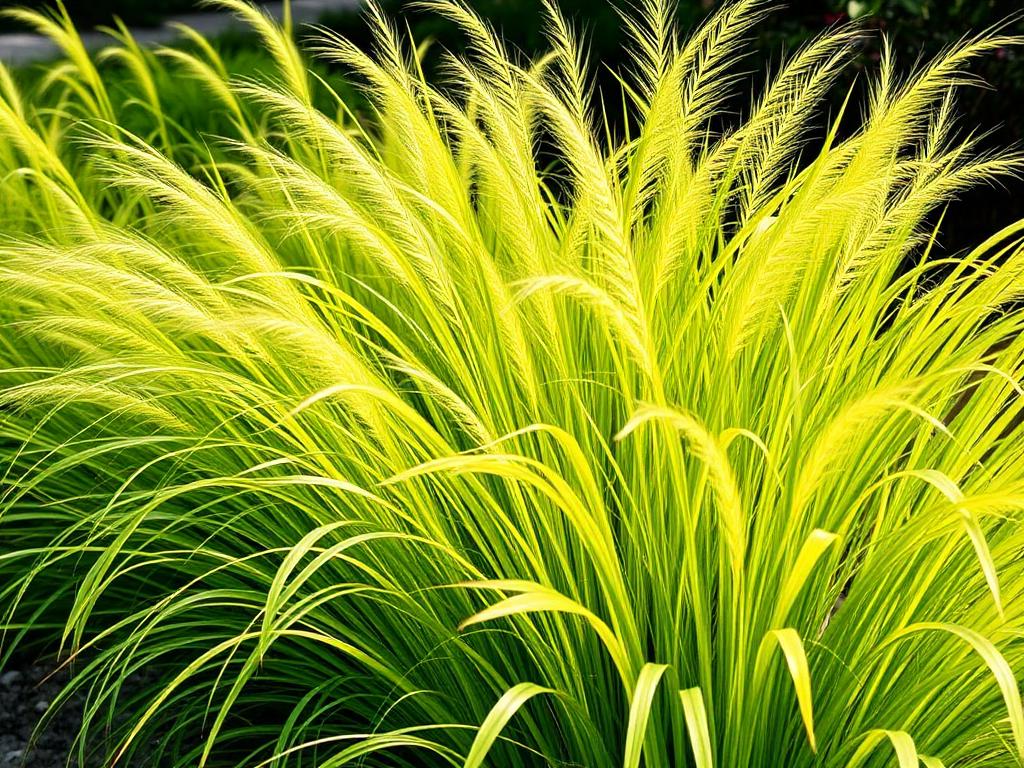
Hakonechloa All Gold
Hakonechloa macra 'All Gold'
- Best for
- Edges of shaded borders, pots, beside paths
- Light
- Part shade
- Moisture
- Even, moisture-retentive
- Mature size
- 30 to 40 cm tall, slowly spreading
- Foliage
- Deciduous grass
Why it works. Soft cascading chartreuse blades that move beautifully in the slightest breeze.
Beginner note. Cut back old growth in early spring before new shoots appear.
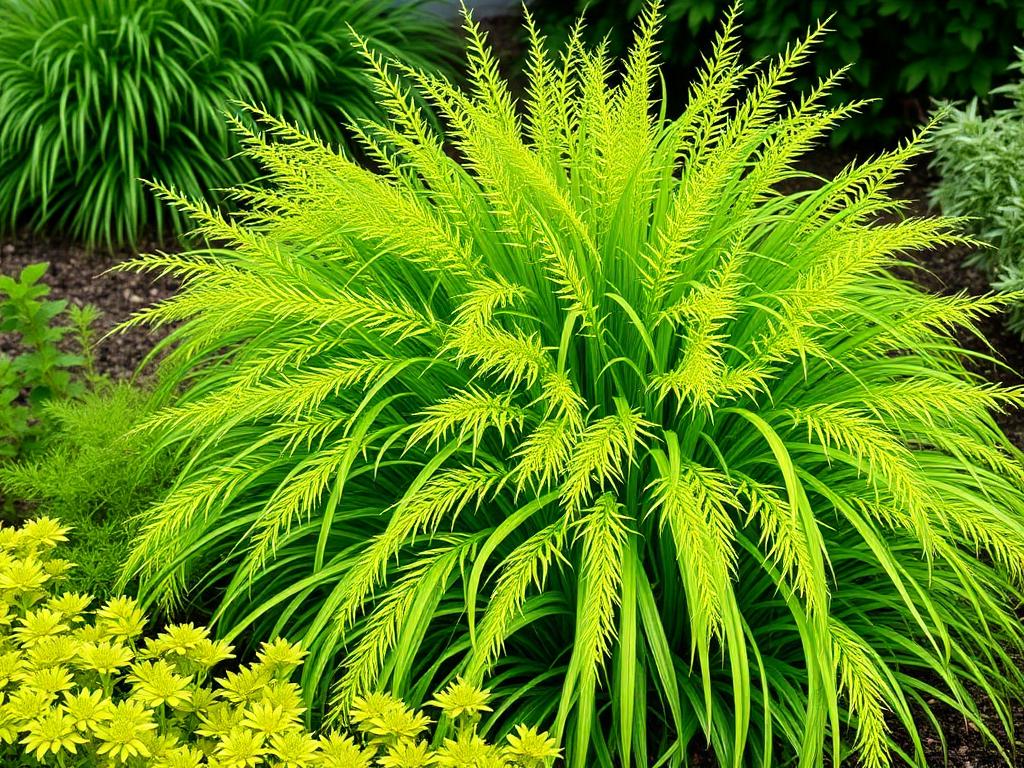
Carex Everillo
Carex oshimensis 'Everillo'
- Best for
- Year-round evergreen edging and pots
- Light
- Sun to part shade
- Moisture
- Even
- Mature size
- 40 to 50 cm tall and wide
- Foliage
- Evergreen sedge
Why it works. Cascading bright lime blades that hold colour through almost the whole year.
Beginner note. Comb out old or browned blades by hand in spring rather than cutting hard.
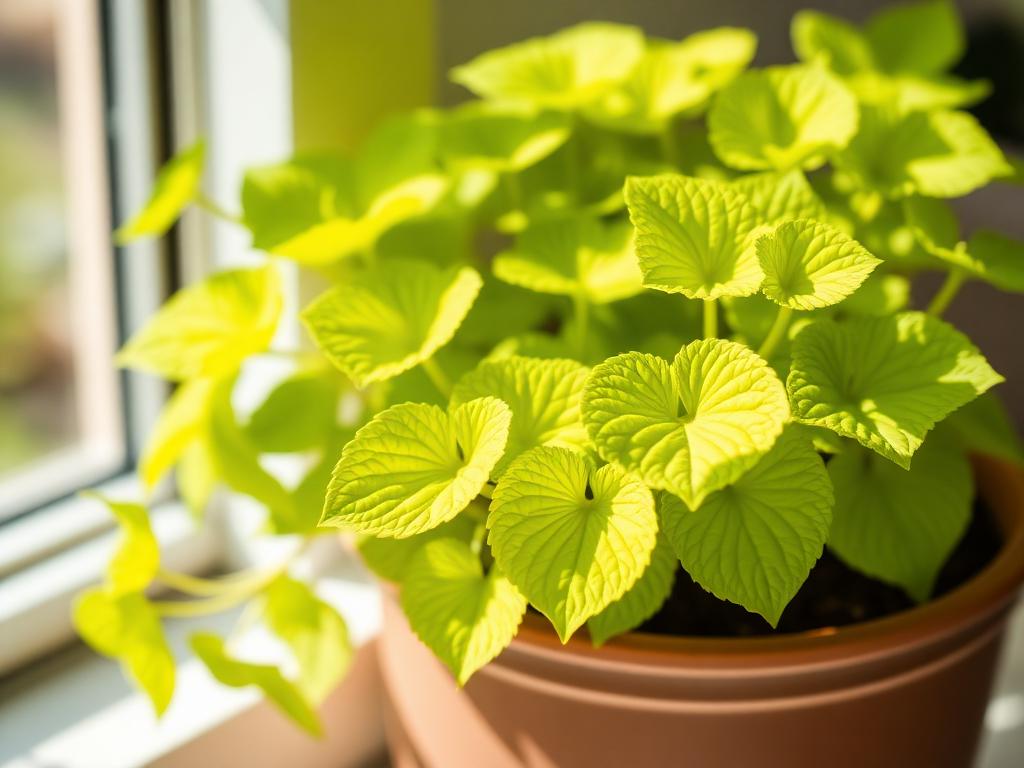
Coleus
Coleus scutellarioides
- Best for
- Containers, shaded patios and seasonal bedding
- Light
- Part shade for most cultivars; some tolerate sun
- Moisture
- Even
- Mature size
- 30 to 60 cm tall
- Foliage
- Tender perennial; grown as annual outdoors
Why it works. Vivid summer foliage in many lime and chartreuse cultivars.
Beginner note. Pinch out flower spikes to keep the focus on the leaves.
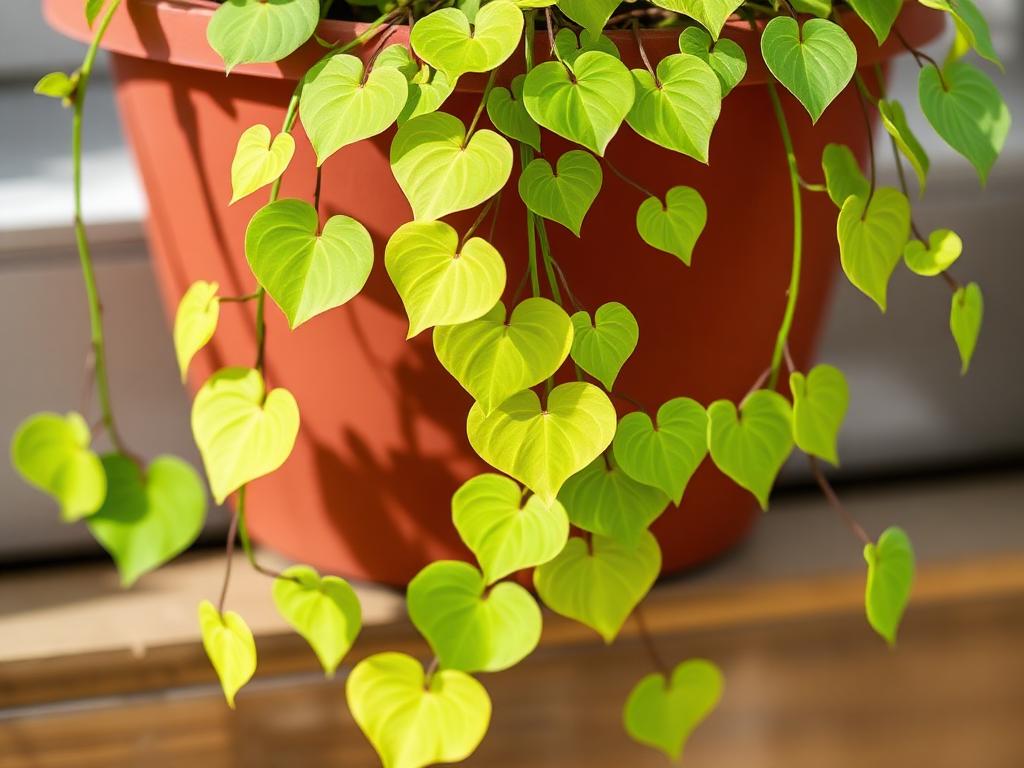
Sweet potato vine
Ipomoea batatas 'Marguerite'
- Best for
- Trailing edges of pots and hanging baskets
- Light
- Sun to part shade
- Moisture
- Even
- Mature size
- Trailing to 60 cm or more
- Foliage
- Tender, grown as a seasonal annual
Why it works. Bold trailing chartreuse heart-shaped leaves that finish a container instantly.
Beginner note. Watch for vigorous growth. Trim regularly so it does not swamp neighbours in a mixed pot.
Other useful lime foliage perennials include brunnera as a softer companion plant, and a handful of golden groundcovers such as golden oregano or Creeping Jenny. Both of these can spread vigorously in the right conditions, so check local behaviour before planting and consider keeping them in containers if you are unsure.
Be careful with vigorous lime groundcovers
Lime green hostas
Hostas are one of the easiest ways to add lime green or chartreuse foliage to a shaded garden, but they need the right conditions to look their best. They want partial shade or bright shade rather than hot dry sun, consistent soil moisture and a little protection from slugs and snails. In return they deliver some of the biggest, brightest lime leaves of any hardy perennial.
Hosta Sum and Substance is one of the largest chartreuse cultivars and reads from across a garden. Hosta Fire Island, Hosta August Moon and Hosta Stained Glass all carry strong lime tones with different leaf shapes. For pots and edges, smaller cultivars like Hosta Lemon Lime stay neat and easy to manage. Pair lime hostas with blue hostas, dark green ferns, heuchera or purple-leaved companions like dark heuchera or Heucherella to give the colour something to push against.
Slug-proof a lime hosta planting
Lime green plants for shade
Shade is where chartreuse foliage can be most useful, because the colour reflects light and makes dark corners feel fresher. A lime hosta, a clump of Hakonechloa All Gold and a few lime heucheras can transform a north-facing border that was previously all dark green. Add evergreen carex Everillo to hold the colour through winter, and a fatsia japonica behind for bold shaded structure where the climate suits.
Brunnera macrophylla is a useful companion, with heart-shaped leaves that carpet the front of a shaded border without competing for attention. Ferns with bright new growth, such as shuttlecock ferns, add a contrasting texture that stops a lime planting from feeling flat. Shade does not mean drought tolerant, though. Most of these plants still need consistent soil moisture, particularly in summer, so a generous spring mulch with garden compost makes a big difference.
Lime green plants for full sun
Full sun can intensify lime foliage but can also bleach or scorch some leaves, so soil moisture and cultivar choice matter. Spiraea Goldmound, Nandina Lemon Lime in mild climates, euphorbia and carex Everillo all cope well with sun where the ground stays evenly moist. Sun-tolerant coleus cultivars and canna with bright foliage bring summer colour to sunny patios and pots. Sweet potato vine handles sun beautifully in a container as long as it is watered often.
Golden oregano can hold its colour in a sunny gravel bed but spreads steadily, so plan for that or grow it in a pot. Avoid placing a lime plant in the hottest dry spot in the garden and expecting it to keep looking fresh. Even sun-loving chartreuse plants appreciate a little afternoon shade in very hot regions, and a deep mulch helps keep their roots cool.
Lime green plants for pots and containers
Containers are one of the most flexible ways to use lime green plants. A pot lets you place a bright accent exactly where you want it, move tender chartreuse plants out of harsh weather, and combine plants that would not normally share a border. Heuchera, carex, coleus, sweet potato vine, small hostas, euphorbia, lime nicotiana and green zinnias all suit containers. Small golden conifers extend the look into winter pots when most flowers have finished.
Container basics for lime green plants
- Use a pot with proper drainage holes and a saucer.
- Combine lime foliage with dark purple, white, silver or deep green for contrast.
- Water containers more often in summer; bright foliage transpires quickly.
- Avoid pairing very thirsty and very dry-loving plants in the same pot.
- Use a quality peat-free potting mix rather than garden soil.
- Refresh the top few centimetres of compost each spring for long-term pots.
How to use lime green plants in garden design
Lime green plants are powerful, which is exactly why they need to be placed with care. The most elegant chartreuse plantings use the colour as a thread rather than a wallpaper, repeating it lightly through a border so the eye links one part of the garden to another.
Use lime as an accent
One or two well-placed lime plants can lift a whole border. A single Choisya Sundance at a path corner or a clump of Hakonechloa All Gold next to a darker shrub draws the eye in a way that a row of bright plants never quite manages.
Pair lime with dark foliage
Burgundy, purple, near-black and deep green make chartreuse foliage stand out. A lime hosta next to a purple heuchera, or a golden euonymus against a dark yew, gives both plants more presence than either would alone.
Use lime in shade
Lime foliage brightens dark corners more effectively than any white flower. A small group of lime hostas, hakonechloa and lime heuchera can turn a forgotten shaded bed into the most interesting part of the garden.
Repeat the colour lightly
Repeat lime in small touches across a planting so the colour feels intentional. Three lime carex clumps spaced down a border read as designed, while a single bright plant in isolation can feel accidental.
Avoid too much brightness
Too much chartreuse in full sun can look harsh and tiring to look at. Use calmer mid-green plants in between so the bright moments stand out. Avoid placing two yellows side by side; both colours often mute each other.
Mix texture, not just colour
Pair fine grasses like hakonechloa with bold hostas, rounded shrubs and airy flowers. Mixing leaf shapes keeps a lime planting from feeling one-note even when most of the plants share the same colour family.
Lime green plants to avoid in the wrong place
Every plant on this page can look stunning in the right spot and miserable in the wrong one. The list below is really a "do not put it here" list rather than a "do not grow it" list.
Lime hosta in hot dry sun
Why it causes problems. Bright chartreuse leaves scorch quickly in strong midday sun and the plant sulks for the rest of the season.
Better approach. Plant in part shade or bright shade with consistently moist soil, ideally on the cooler side of the garden.
Tender coleus left outside in frost
Why it causes problems. Coleus collapses at the first hard frost and rarely recovers.
Better approach. Treat it as a summer container plant, take cuttings in late summer, or move pots indoors before night temperatures fall.
Sweet potato vine where it cannot be controlled
Why it causes problems. In warm gardens it can romp away and swamp smaller container companions in a single season.
Better approach. Use it in a large pot of its own, or trim it back regularly when mixed with other plants.
Golden oregano where spreading is a concern
Why it causes problems. It creeps steadily through moist borders and can crowd out slower neighbours.
Better approach. Grow it in a container or against a hard edge that limits how far it can travel.
Choisya Sundance in harsh exposed cold
Why it causes problems. Foliage can bronze, burn or drop in cold wind and hard frosts.
Better approach. Plant in a sheltered sunny corner near a wall, or use a hardier evergreen lime alternative in colder gardens.
Lime foliage next to too many other bright yellows
Why it causes problems. Two yellows beside each other mute the contrast and the planting can feel flat.
Better approach. Set lime plants against dark, calm or deep green neighbours so the chartreuse reads cleanly.
Moisture-loving shade plants in dry soil
Why it causes problems. Hostas, hakonechloa, lady's mantle and rodgersia-style plants scorch and look ragged the moment the soil dries.
Better approach. Mulch deeply each spring, choose a position with consistent moisture, or grow them in pots you can water reliably.
Full-sun shrubs planted in deep shade
Why it causes problems. Spiraea Goldmound, golden privet and Choisya Sundance lose much of their lime colour and lean toward the light.
Better approach. Move the plant to a sunnier spot or swap to a shade-tolerant lime such as hakonechloa, hosta or carex.
Any lime plant bought for colour without checking mature size
Why it causes problems. Hydrangea Limelight, golden privet and large hostas can grow far bigger than expected and dominate small borders.
Better approach. Read the plant label, allow for full mature size and pick a smaller cultivar if space is tight.
Lime green foliage is powerful
Useful supplies for growing lime green plants
Best choices for beginners
Beginners should start with one plant role first, such as a lime shrub for structure, a lime hosta for shade, or a lime container combination for seasonal colour. The lists below are the safest starting points.
Best beginner shrubs
- Spiraea Goldmound. Reliable, neat and bright in sun.
- Nandina Lemon Lime. Tidy shape in mild gardens.
- Golden euonymus. Year-round evergreen colour.
- Choisya Sundance. Best in mild, sheltered areas.
Best beginner shade plants
- Lime green hosta. Easy and dramatic in shaded soil.
- Hakonechloa All Gold. Soft cascading shade grass.
- Heuchera lime cultivars. Front of border and pots.
- Carex Everillo. Evergreen sedge for all-year colour.
Best beginner flowers and pots
- Nicotiana Lime Green. Easy summer annual for sun or part shade.
- Green zinnias. Sunny annual border or cutting bed.
- Coleus. Container chartreuse for shaded patios.
- Sweet potato vine. Trailing pot colour all summer.
Frequently asked questions
What are lime green plants called?
What are chartreuse plants?
What shrubs have lime green leaves?
What flowers are lime green?
What are the best lime green plants for shade?
What lime green plants grow in full sun?
Are there lime green evergreen shrubs?
What is a good lime green hosta?
Do lime green plants stay bright all season?
What colours go well with lime green plants?
Can lime green plants grow in pots?
Why are my plant leaves turning lime green?
Are chartreuse plants the same as lime green plants?
Final advice
Lime green and chartreuse plants are some of the most useful tools in a garden because they brighten shade, contrast with dark foliage and make borders feel fresh. They are also some of the easiest to overdo. Choose by role first, match the plant to its conditions, and give the brightest leaves dark or calm neighbours to push against.
- Use lime green plants as accents, not as the whole design.
- Choose by role first: shrub, flower, foliage plant, shade plant, pot plant or evergreen.
- Match the plant to sun, moisture, hardiness and mature size.
- Pair lime green with dark foliage, white flowers, purple accents or calmer greens.
- A few well-placed chartreuse plants are usually more elegant than too many bright plants competing for attention.
Related reads
Keep reading
- HubAll plant guidesIndoor and outdoor planting ideas grouped by topic and situation.Read guide
- HubGarden design ideasBorders, focal points and structure for gardens of every size.Read guide
- HubPots and containersChoose the right pot, mix and care routine for container planting.Read guide
- PlantsPlants with large leavesBig-leaf plants for indoors, outdoor shade, sunny patios and bold borders.Read guide
- PlantsTerrarium plants: open and closedSmall plants for glass gardens by habitat, with care tips and supplies.Read guide
- Garden designBest plants for topiaryReliable shrubs that take to clipping well, beyond box.Read guide
This guide was written and reviewed for Blooming Lucky's refreshed gardening archive. We use original writing, practical gardening research and clear plant-care guidance. We do not copy old archived articles or claim personal testing unless stated.