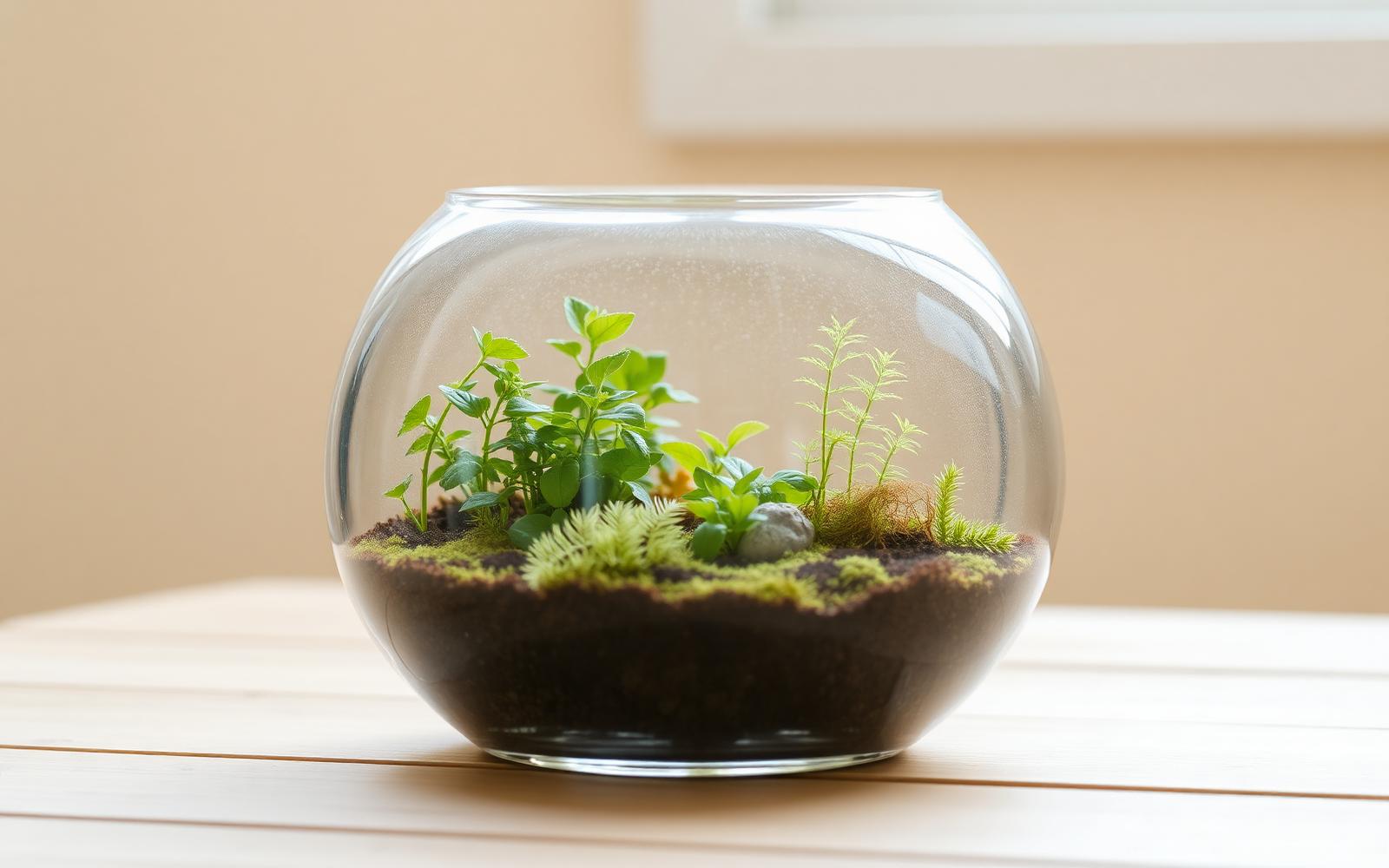
- Original guide
- Beginner friendly
- Updated 2026
- Affiliate disclosed
What makes a good terrarium plant?
A plant that looks charming in a four centimetre nursery pot will not automatically settle inside a glass jar. Terrariums are tiny, enclosed worlds with their own rules around humidity, airflow, light and root depth. The plants that last are the ones whose natural habits already match those conditions, so you spend more time enjoying the planting and less time trimming runaway growth.
When you stand in front of the houseplant shelves, the most useful question is not "is this pretty?" but "will this still be the right size in six months?" Slow growth, compact mature form, shallow roots and tolerance for either humid or dry air are the qualities that separate a long-lived terrarium from one that needs replanting by spring.
Signs a plant will work in a terrarium
- Mature size stays small, ideally under twenty centimetres tall.
- Growth is slow rather than vigorous or trailing.
- Roots are shallow and content in a few centimetres of substrate.
- Leaves tolerate either consistent humidity or consistently dry air.
- Light needs are moderate, with no demand for direct hot sun.
- Easy to prune with small scissors without damaging the plant.
- Watering rhythm matches its neighbours inside the jar.
Open vs closed terrariums
The biggest decision happens before you choose a single plant: is your container going to be sealed or open? A closed terrarium recycles its own moisture and runs warm and humid, which suits a rainforest-style planting of mosses, ferns and small tropical foliage. An open bowl breathes constantly, dries quickly and is the right home for succulents, cacti, air plants and other plants from drier habitats.
Trying to grow both types together is the most common reason a beginner terrarium fails. Pick a habitat, then stay loyal to it.
Closed terrarium vs open terrarium
| Feature | Closed terrarium | Open terrarium |
|---|---|---|
| Best for | Tropical foliage, mosses and small ferns that enjoy still, humid air. | Succulents, cacti, air plants and other plants from drier habitats. |
| Humidity | High and stable. Moisture recycles inside the jar. | Low and variable. Humidity tracks the room around the bowl. |
| Airflow | Minimal. Sealed lids hold a calm, still microclimate. | Constant. Open tops dry the substrate quickly. |
| Watering | Rare misting. A balanced jar can go weeks between waterings. | Occasional soak. Let the substrate dry out fully between drinks. |
| Best plant types | Fittonia, mosses, baby tears, button fern, peperomia, miniature ferns. | Haworthia, echeveria, sempervivum, air plants, small sedums. |
| Plants to avoid | Succulents and cacti, which rot in trapped humidity. | Mosses and tropical ferns, which crisp in open airflow. |
Best for
- Closed
- Tropical foliage, mosses and small ferns that enjoy still, humid air.
- Open
- Succulents, cacti, air plants and other plants from drier habitats.
Humidity
- Closed
- High and stable. Moisture recycles inside the jar.
- Open
- Low and variable. Humidity tracks the room around the bowl.
Airflow
- Closed
- Minimal. Sealed lids hold a calm, still microclimate.
- Open
- Constant. Open tops dry the substrate quickly.
Watering
- Closed
- Rare misting. A balanced jar can go weeks between waterings.
- Open
- Occasional soak. Let the substrate dry out fully between drinks.
Best plant types
- Closed
- Fittonia, mosses, baby tears, button fern, peperomia, miniature ferns.
- Open
- Haworthia, echeveria, sempervivum, air plants, small sedums.
Plants to avoid
- Closed
- Succulents and cacti, which rot in trapped humidity.
- Open
- Mosses and tropical ferns, which crisp in open airflow.
Quick check before you buy plants
Best terrarium plants at a glance
Use the table below to match plants to the kind of glass garden you have in front of you. Habitat is the most important column: get that right and the rest is mostly observation.
Best terrarium plants at a glance
| Plant | Best for | Light | Why it works | Difficulty |
|---|---|---|---|---|
| Fittonia (nerve plant) | Closed | Bright indirect | Loves humidity, stays compact, vivid veined leaves. | Easy |
| Baby tears | Closed | Bright indirect | Soft trailing carpet that fills gaps. Easy to trim. | Easy |
| Button fern | Closed | Medium indirect | Slow grower with tidy round leaflets. | Easy |
| Pilea glauca | Closed | Bright indirect | Tiny silver-blue leaves on threadlike stems. | Easy |
| Peperomia | Closed | Bright indirect | Compact habit with varied leaf colour. | Easy |
| Creeping fig | Closed | Bright indirect | Climbs the walls of the jar in scale. Needs occasional trimming. | Moderate |
| Selaginella | Closed | Low to medium | Feathery spike-moss texture for damp shade. | Moderate |
| Mosses | Closed | Low to medium | Living ground cover that softens edges and holds moisture. | Easy |
| Miniature ferns | Closed | Medium indirect | Adds height and texture. Choose dwarf varieties only. | Moderate |
| Haworthia | Open | Bright, some direct | Slow rosette that tolerates lower light than most succulents. | Easy |
| Echeveria | Open | Bright, several hours of sun | Classic succulent rosette form. Needs your brightest spot. | Easy |
| Sempervivum | Open | Bright, some direct | Tough houseleek rosettes that handle dry, gritty substrate. | Easy |
| Air plants | Open | Bright indirect | No substrate at all. Weekly mist or soak. | Easy |
| Small sedums | Open | Bright, some direct | Low spreading succulents that suit shallow dishes. | Easy |
Fittonia (nerve plant)
Closed- Light
- Bright indirect
- Why
- Loves humidity, stays compact, vivid veined leaves.
- Level
- Easy
Baby tears
Closed- Light
- Bright indirect
- Why
- Soft trailing carpet that fills gaps. Easy to trim.
- Level
- Easy
Button fern
Closed- Light
- Medium indirect
- Why
- Slow grower with tidy round leaflets.
- Level
- Easy
Pilea glauca
Closed- Light
- Bright indirect
- Why
- Tiny silver-blue leaves on threadlike stems.
- Level
- Easy
Peperomia
Closed- Light
- Bright indirect
- Why
- Compact habit with varied leaf colour.
- Level
- Easy
Creeping fig
Closed- Light
- Bright indirect
- Why
- Climbs the walls of the jar in scale. Needs occasional trimming.
- Level
- Moderate
Selaginella
Closed- Light
- Low to medium
- Why
- Feathery spike-moss texture for damp shade.
- Level
- Moderate
Mosses
Closed- Light
- Low to medium
- Why
- Living ground cover that softens edges and holds moisture.
- Level
- Easy
Miniature ferns
Closed- Light
- Medium indirect
- Why
- Adds height and texture. Choose dwarf varieties only.
- Level
- Moderate
Haworthia
Open- Light
- Bright, some direct
- Why
- Slow rosette that tolerates lower light than most succulents.
- Level
- Easy
Echeveria
Open- Light
- Bright, several hours of sun
- Why
- Classic succulent rosette form. Needs your brightest spot.
- Level
- Easy
Sempervivum
Open- Light
- Bright, some direct
- Why
- Tough houseleek rosettes that handle dry, gritty substrate.
- Level
- Easy
Air plants
Open- Light
- Bright indirect
- Why
- No substrate at all. Weekly mist or soak.
- Level
- Easy
Small sedums
Open- Light
- Bright, some direct
- Why
- Low spreading succulents that suit shallow dishes.
- Level
- Easy
Best closed terrarium plants
Closed terrariums reward foliage that enjoys still, humid air and is content with diffused light. The plants below cover most beginner builds and stay in scale for a year or more, provided you trim the faster growers when they start to crowd the glass.
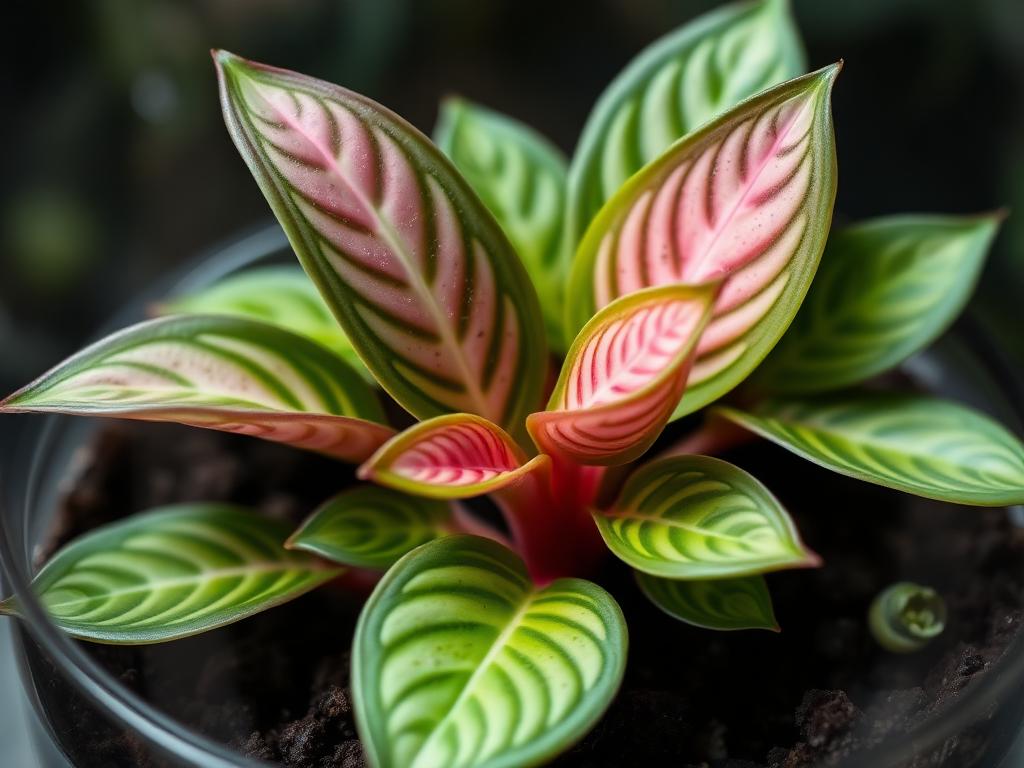
Fittonia
Fittonia albivenis
ClosedEasy- Light
- Bright indirect
- Moisture
- Consistently moist air
Why it works. Pink, red or white veining lights up dim corners and the plant stays naturally compact under glass.
Beginner note. Pinch out any small flowers as soon as they appear so growth stays tight and leafy.
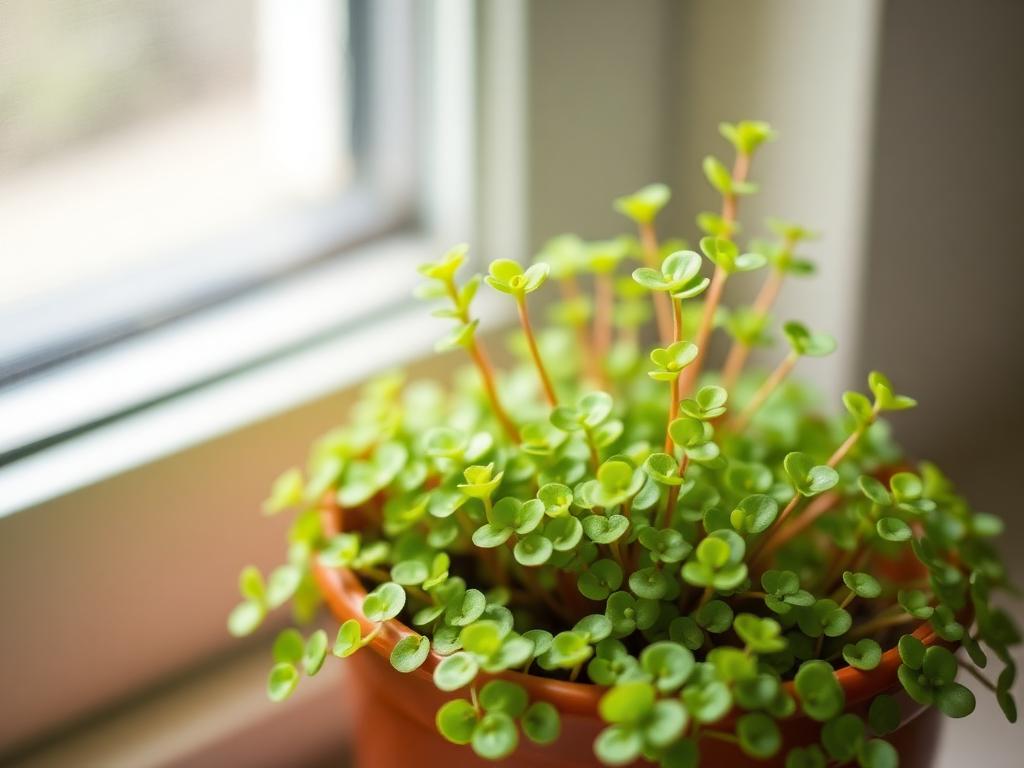
Baby tears
Soleirolia soleirolii
ClosedEasy- Light
- Bright indirect
- Moisture
- High humidity, evenly damp
Why it works. Fine trailing greenery softens stones and wood without taking over a small jar quickly.
Beginner note. Trim back gently with small scissors whenever it starts to climb the inside of the glass.
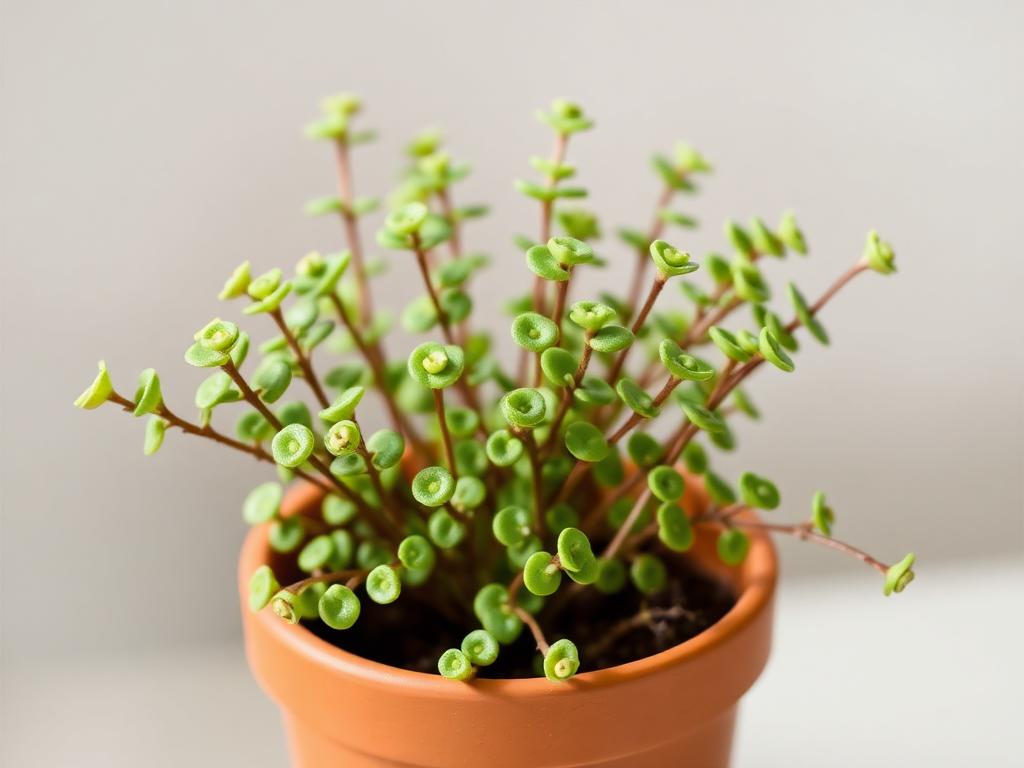
Button fern
Pellaea rotundifolia
ClosedEasy- Light
- Medium indirect
- Moisture
- Evenly moist, not soggy
Why it works. Tidy round leaflets on wiry stems, slower than most ferns and ideal for sealed containers.
Beginner note. Plant at the back of the build for height. Remove any browning fronds at the base.
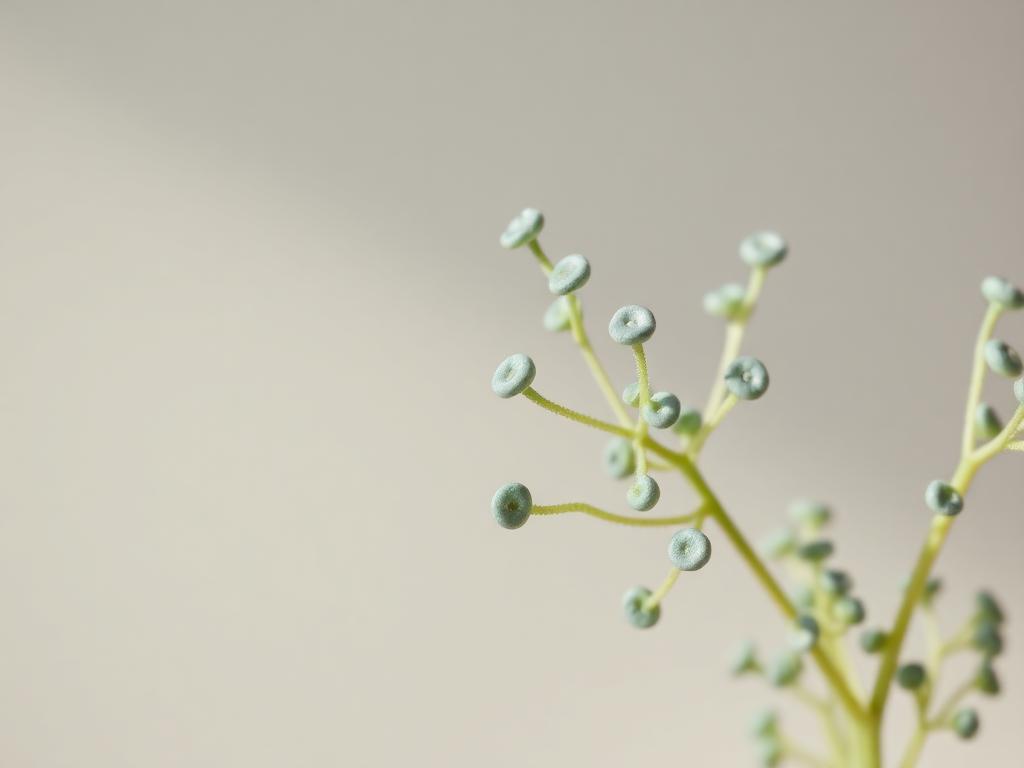
Pilea glauca
Pilea glauca
ClosedEasy- Light
- Bright indirect
- Moisture
- High humidity
Why it works. Tiny silver-blue leaves on threadlike stems add a different scale next to mossy plantings.
Beginner note. Use as a soft filler around larger plants rather than as the focal point.
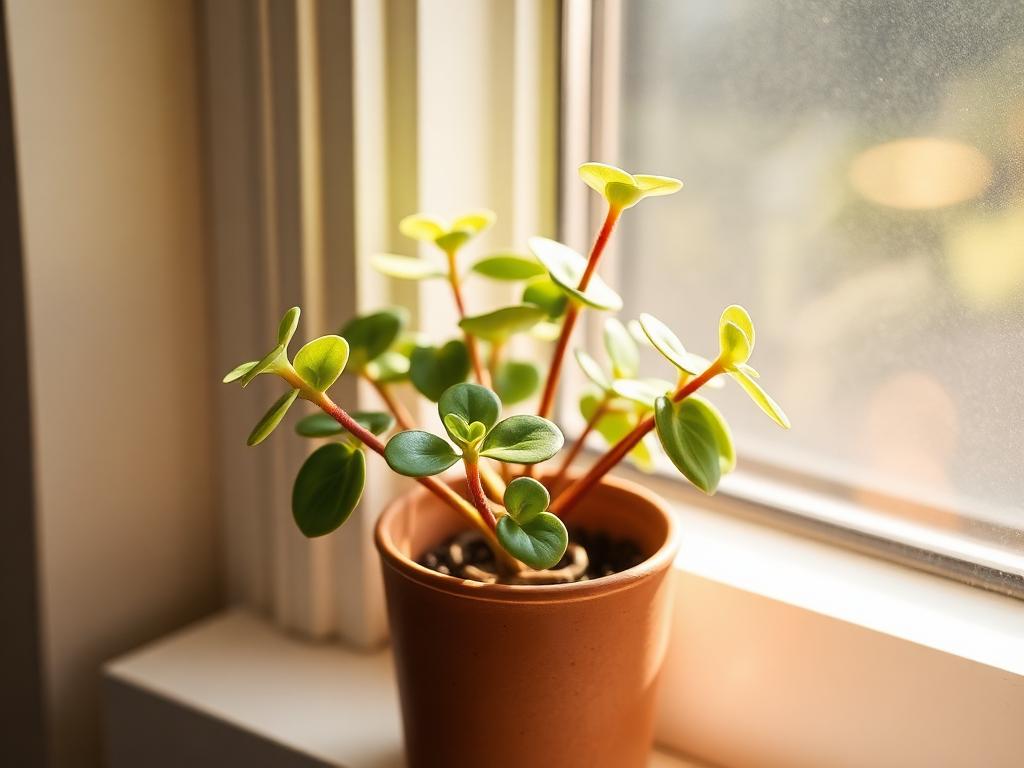
Peperomia
Peperomia prostrata and similar
ClosedEasy- Light
- Bright indirect
- Moisture
- Moderate humidity
Why it works. Compact rosettes or turtle-shell trailing leaves come in many colours and forgive small watering lapses.
Beginner note. Choose miniature varieties rather than full-size peperomias which can outgrow a jar.
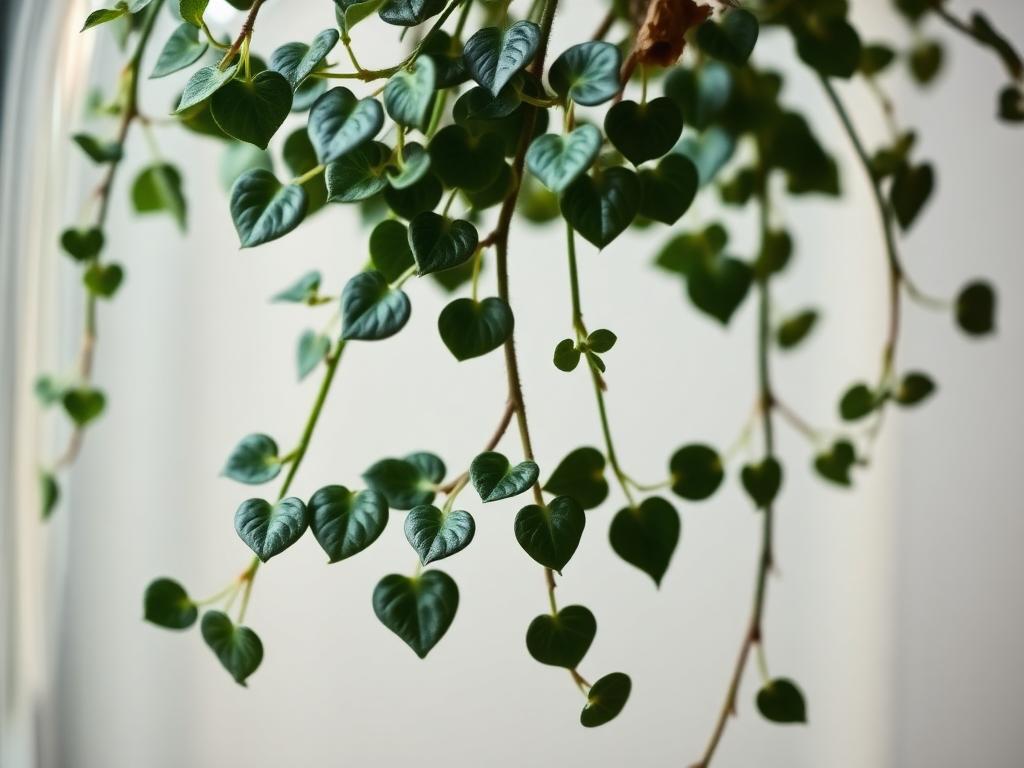
Creeping fig
Ficus pumila
ClosedModerate- Light
- Bright indirect
- Moisture
- High humidity
Why it works. Climbs the walls of the jar in proportion and quickly suggests a small leafy room.
Beginner note. Trim regularly. Left alone it will take over a small build within a few months.
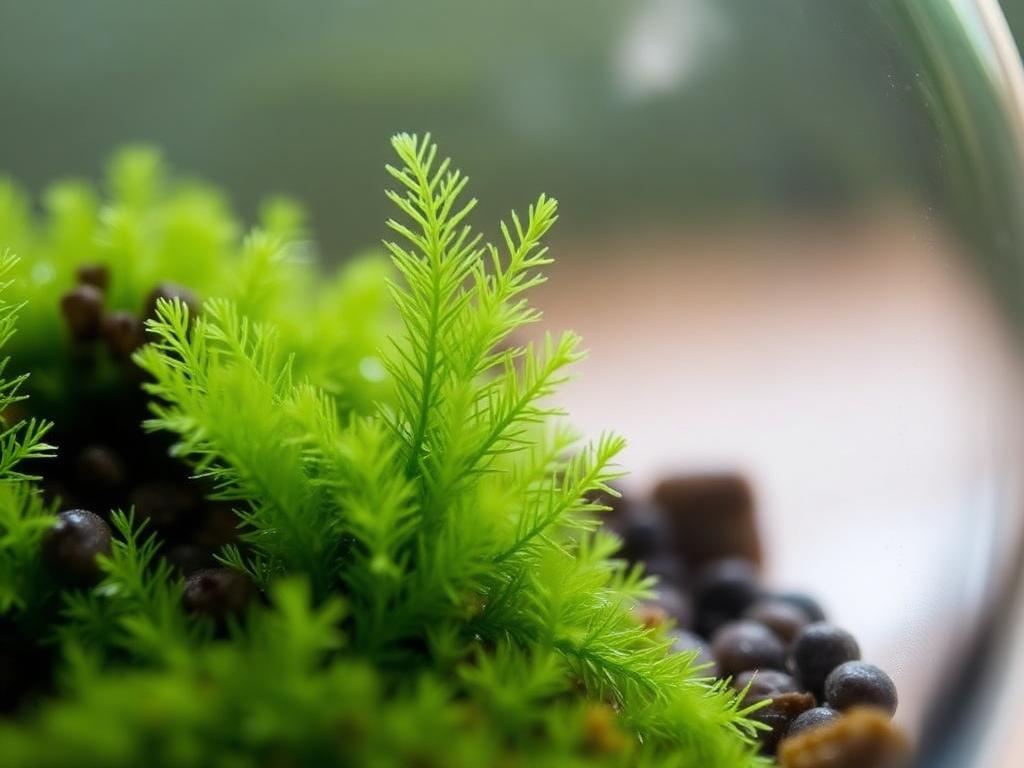
Selaginella
Selaginella kraussiana
ClosedModerate- Light
- Low to medium
- Moisture
- Consistently humid air
Why it works. Feathery spike-moss texture for damp shade gives a softly woodland feel.
Beginner note. Only happy in sealed jars. Crisps within days in open or low-humidity setups.
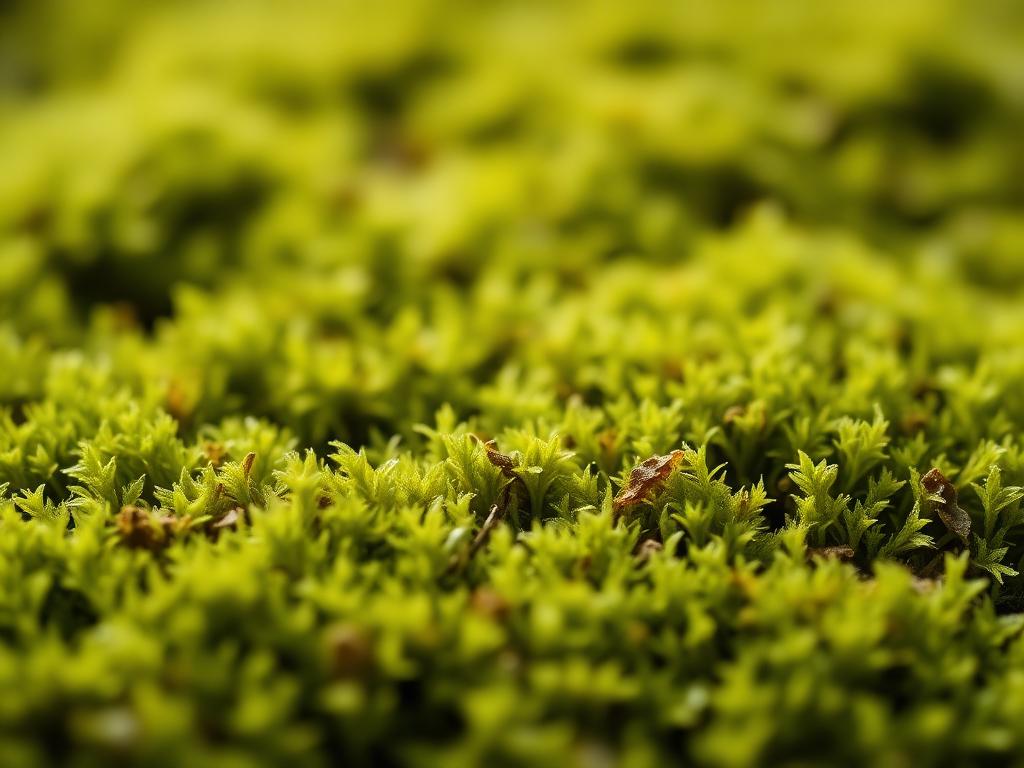
Sheet moss
Hypnum cupressiforme
ClosedEasy- Light
- Low to medium
- Moisture
- High humidity
Why it works. Living carpet for the terrarium floor that holds moisture and finishes a build instantly.
Beginner note. Press firmly onto the substrate so it makes good contact and stays green.
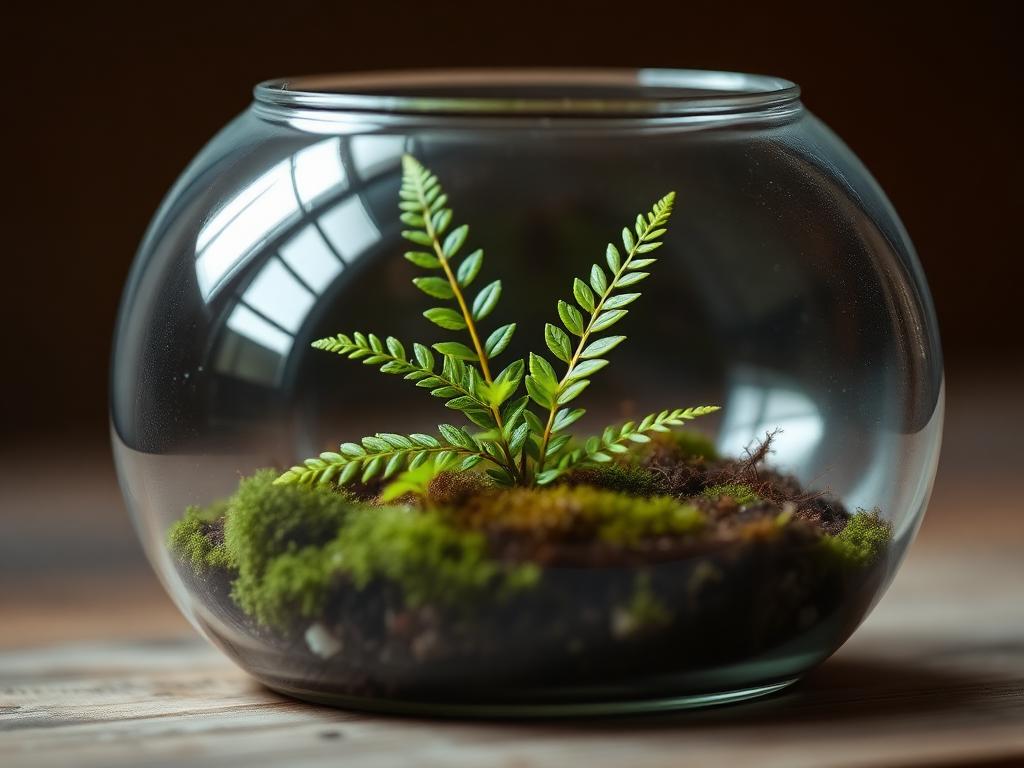
Miniature ferns
Various dwarf species
ClosedModerate- Light
- Medium indirect
- Moisture
- Evenly moist air
Why it works. Adds height and texture in a way no other terrarium plant quite matches.
Beginner note. Insist on dwarf or miniature labels. Standard nursery ferns outgrow a jar within weeks.
Best open terrarium plants
Open bowls behave like miniature deserts. Choose plants that store moisture in their leaves and prefer the substrate to dry out fully between drinks. Succulents and cacti should not usually go in closed terrariums because trapped humidity can cause soft, rotting leaves within weeks.
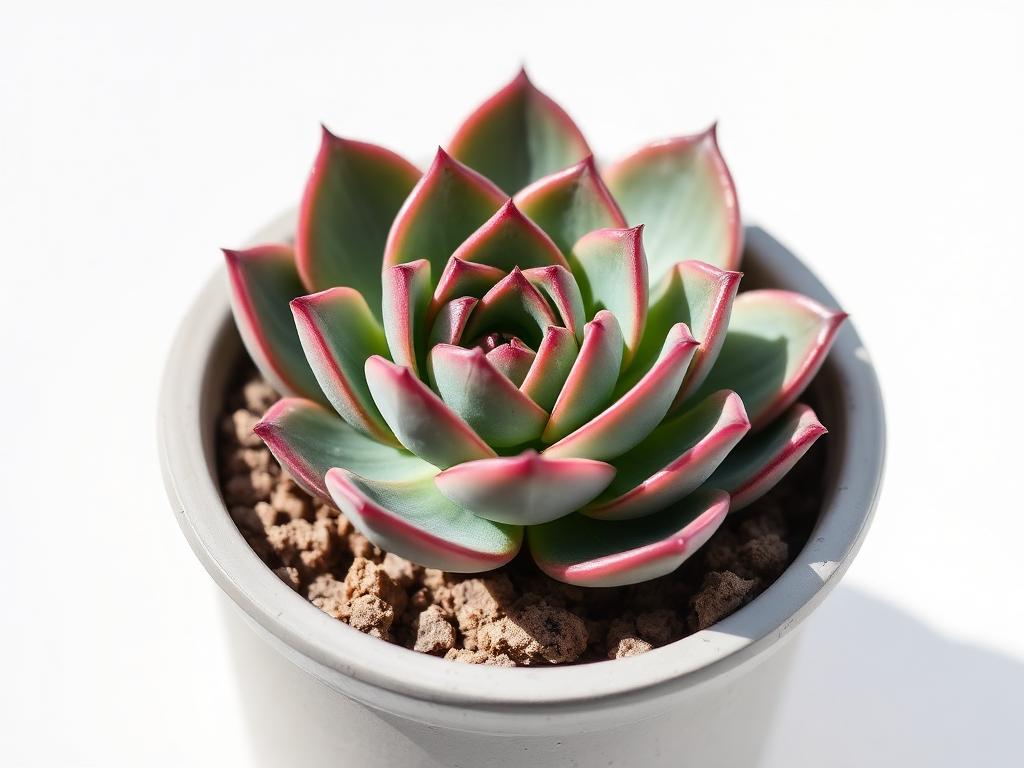
Haworthia
Haworthiopsis spp.
OpenEasy- Light
- Bright, some direct
- Moisture
- Very low humidity
Why it works. Architectural rosettes with banded or windowed leaves that hold their shape for months.
Beginner note. Tolerates lower light better than most succulents, so a forgiving first choice.
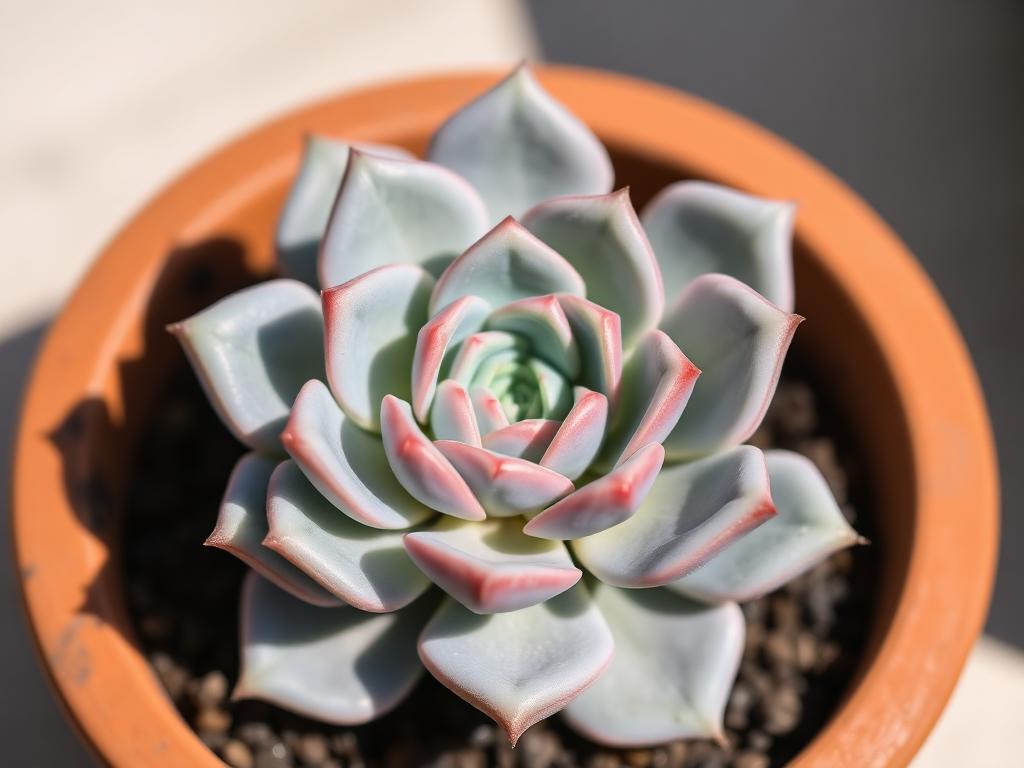
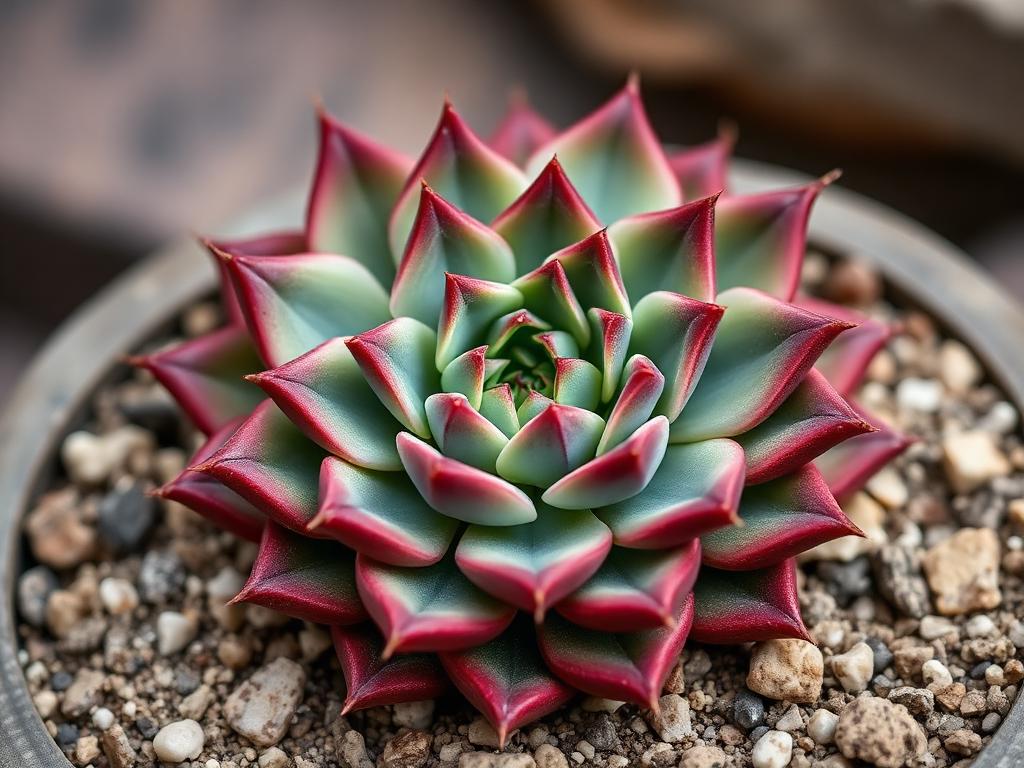
Echeveria
Echeveria spp.
OpenEasy- Light
- Bright, several hours of sun
- Moisture
- Very low humidity
Why it works. Classic rosette form in pale green, blue or rose that anchors any open dish.
Beginner note. Stretches and pales in dim rooms. Give it the brightest spot you have.
Sempervivum
Sempervivum spp.
OpenEasy- Light
- Bright, some direct
- Moisture
- Very low humidity
Why it works. Tough houseleek rosettes that handle dry, gritty substrate without complaint.
Beginner note. Adds an outdoor, alpine feeling to an indoor bowl arrangement.
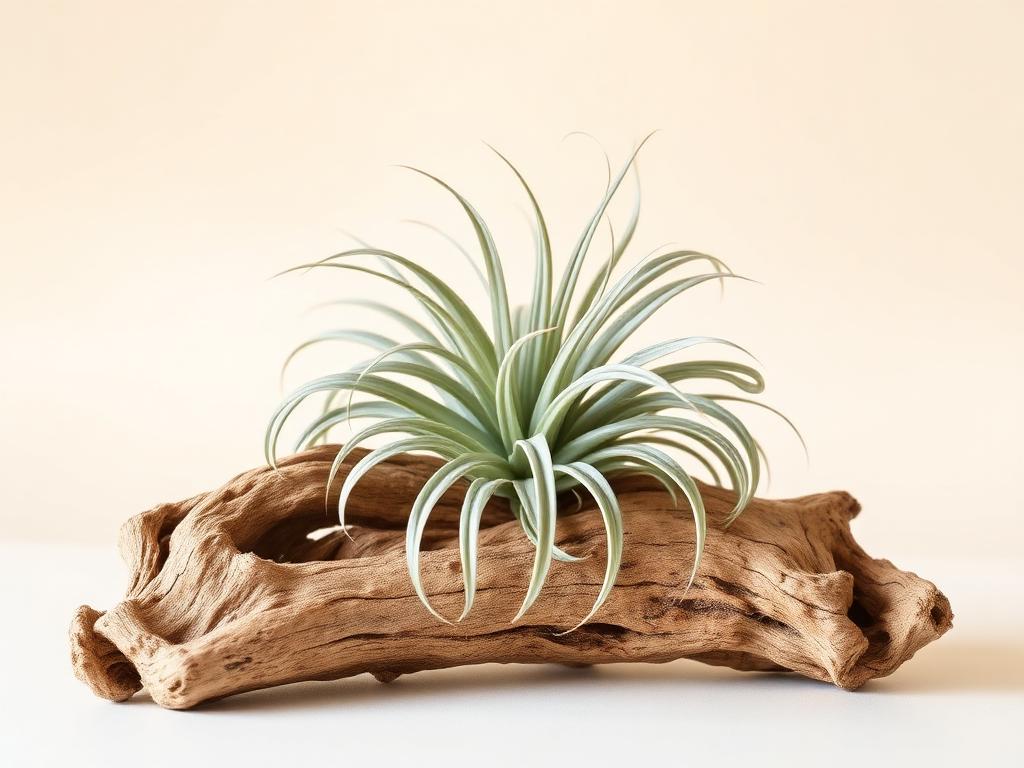
Air plants
Tillandsia spp.
OpenEasy- Light
- Bright indirect
- Moisture
- Low humidity with airflow
Why it works. No soil required and they take up almost no space, so they layer easily on stones or wood.
Beginner note. Soak in tepid water once a week, shake out, return to a bright airy spot.
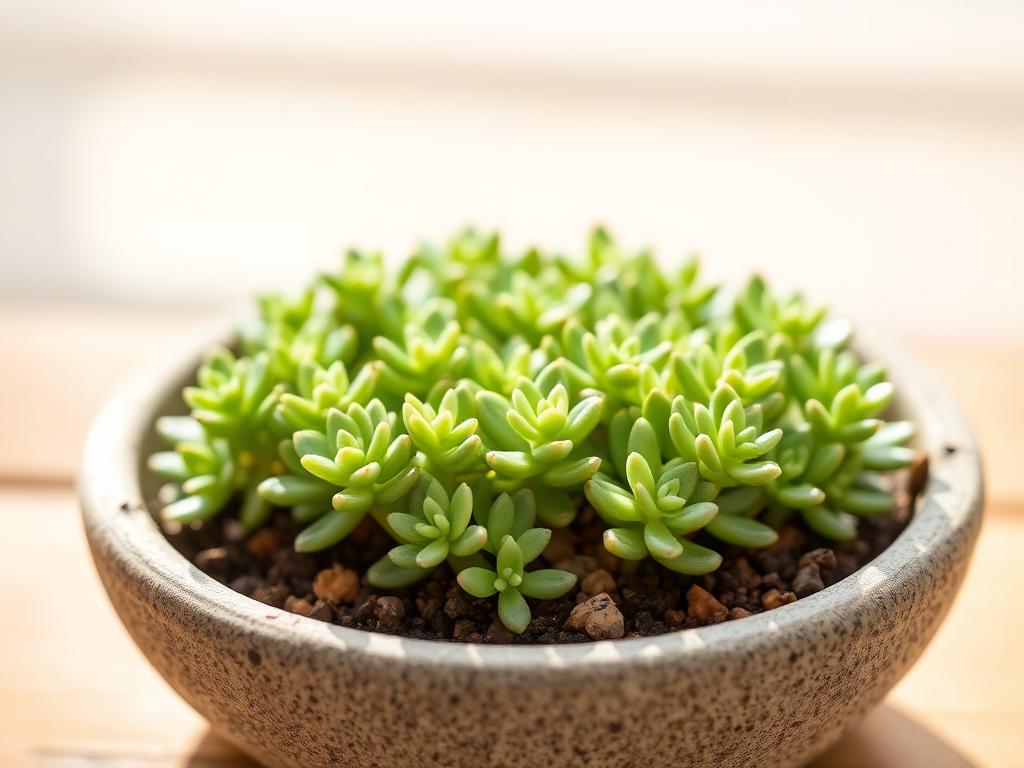
Small sedums
Sedum spp.
OpenEasy- Light
- Bright, some direct
- Moisture
- Very low humidity
Why it works. Low spreading succulents in many leaf shapes that suit shallow open dishes.
Beginner note. Pair with haworthia for texture contrast rather than mixing several sedums.
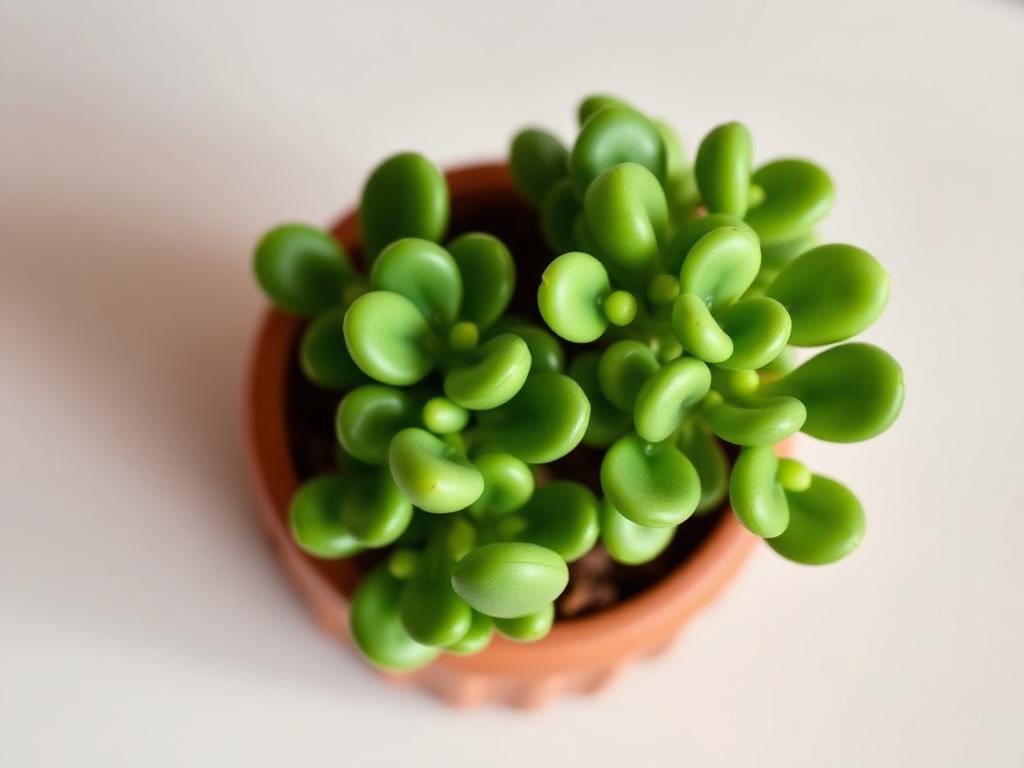
Jade plant
Crassula ovata
OpenModerate- Light
- Bright direct
- Moisture
- Very low humidity
Why it works. Sculptural mini tree that adds height while still small.
Beginner note. Only suitable while young and slow. Plan to move it on once it bulks up.
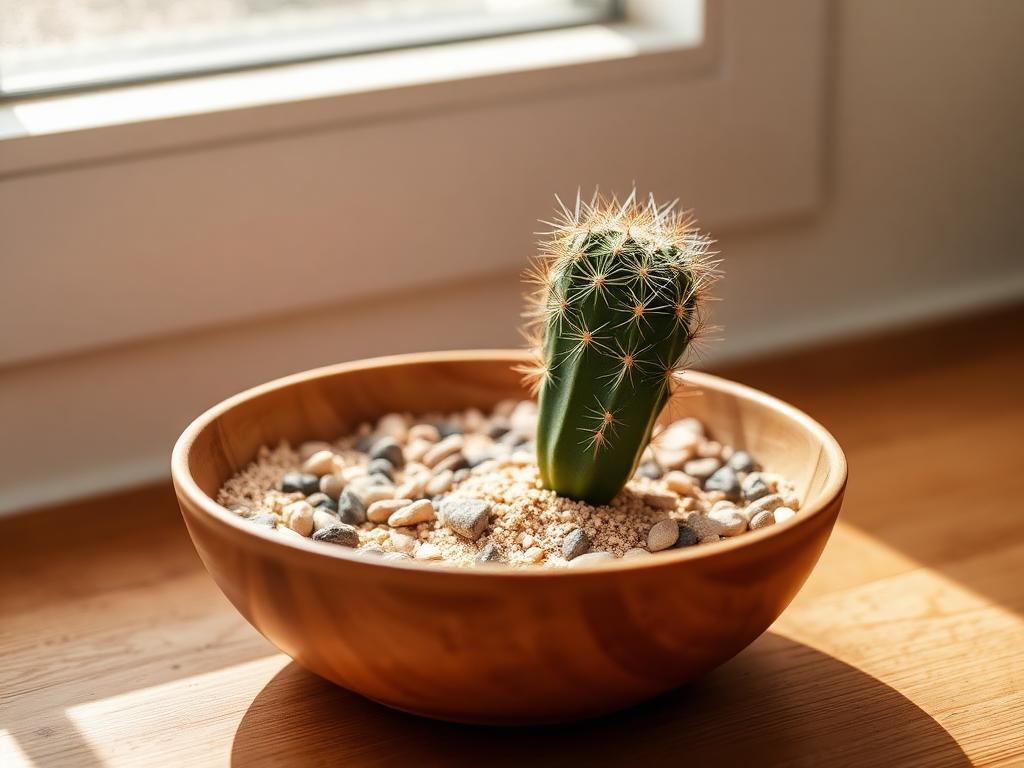
Small cacti
Various
OpenAdvanced- Light
- Bright direct
- Moisture
- Very low humidity, gritty mix
Why it works. Adds shape and stillness when conditions are exactly right.
Beginner note. Only in wide open bowls with strong airflow. Skip if your room runs humid.
Small and tiny terrarium plants for beginners
Small plants are easier to arrange in a glass garden, but they still grow. The trick is to look for slow-growing miniature varieties rather than ordinary plants in tiny pots that will quickly catch up to their full size. Avoid anything that climbs aggressively, trails fast or visibly outgrows the pot you just bought it in.
- Mini fittonia in four centimetre pots stays neat for months.
- Small peperomia varieties like Peperomia prostrata add tidy texture.
- Mini ferns labelled dwarf or miniature, not standard nursery ferns.
- Mosses are the easiest small plant of all and give instant scale.
- Pilea glauca provides delicate threadlike growth without taking over.
- Haworthia pups are the open-bowl equivalent of a miniature plant.
- Small air plants work in either habitat and need no substrate.
Plants to avoid in terrariums
Not every cute-looking houseplant belongs under glass. The plants below either grow too fast, want conditions your container cannot offer, or sulk visibly once enclosed.
Pothos and fast trailers
Lovely houseplants on a shelf, but they double in length quickly and outgrow even large jars.
Large philodendrons
Leaf size is wrong for terrarium scale and they need room to vine freely.
Monsteras
Mature leaves are bigger than most terrariums on their own.
Large peace lilies
Flop and rot once humidity gets trapped around the crown.
Most herbs
Basil, mint and parsley want airflow, full sun and regular harvesting.
Outdoor annuals
Short-lived bedding plants do not enjoy a stable indoor microclimate.
Succulents in closed jars
Trapped humidity softens and rots them within weeks.
Cacti in closed humid terrariums
Same problem as succulents, just slower and sadder.
Mixed watering needs
A tropical fern and an echeveria cannot both be happy in the same container.
The single biggest mistake
How to layer a terrarium
A closed terrarium relies on layers to manage moisture. Build from the base upwards in this order. Open succulent bowls only need a free-draining gritty mix on top of a thin drainage layer; skip the charcoal and the moss layer in that case.
Closed terrarium build order
- Clean the glass container inside and out with warm water and a soft cloth.
- Add a drainage layer of small gravel or LECA, about two centimetres deep.
- Add a thin optional layer of activated charcoal to keep the trapped water sweet.
- Add a growing layer of peat-free terrarium soil mix, three to five centimetres deep, over a sphagnum moss barrier.
- Arrange the plants on top of the closed lid before planting so you can adjust the layout.
- Plant from largest to smallest, firming the substrate gently around each root ball.
- Add moss, fine bark or small decorative gravel as a top dressing around the plants.
- Water lightly with a spray mister rather than pouring water from a jug.
- Wipe any soil or smears from the inside of the glass with a soft cloth.
- Place in bright indirect light, away from windowsills that catch direct sun.
If your container has no drainage hole
Light, watering, pruning and care
Light
Bright indirect light is the safe default for both kinds of terrarium. Direct sun through glass acts like a magnifying lens and will scorch foliage in an afternoon. East-facing windowsills are usually ideal. If your room is dim, a small LED grow light on a timer makes a real difference, especially through winter.
Watering
Closed terrariums need very little water once balanced. Once planted and lightly misted, seal the lid and watch the glass. Fine condensation in the morning that clears by midday is the sign of a healthy balance. If condensation never clears, vent the lid for a few hours. If you see none for several days, mist with a few pumps.
Open terrariums dry far faster. Treat them like cacti and succulents anywhere else: water thoroughly, then let the substrate dry out completely before watering again. Condensation is a signal to read, not a reason to keep watering every day.
Pruning
Trim plants before they crowd the glass. Compact, layered planting reads as designed; tangled growth reads as neglected. A small pair of straight scissors works for almost everything. Remove dead leaves quickly so they do not fall onto the substrate and rot. Keep a little air space around each plant.
Cleaning and airflow
Wipe the inside of the glass when condensation leaves marks or when soil splashes during watering. Open a closed terrarium briefly if condensation is excessive, particularly after a warm sunny day. Letting fresh air in for half a day is often enough to rebalance the microclimate without losing humidity entirely.
If condensation fogs the entire jar
Useful supplies for a first terrarium
Common beginner mistakes
Choosing plants only by appearance
Why it causes problems. A pretty leaf in the shop tells you nothing about how a plant will behave inside an enclosed glass container.
Better approach. Read the label for mature size and growth speed before anything else. Habitat trumps looks every time.
Mixing open and closed terrarium plants
Why it causes problems. Succulents rot in humid jars and ferns crisp in open bowls. One habitat cannot satisfy both.
Better approach. Decide closed or open before you buy plants. Build for that single habitat only.
Overwatering
Why it causes problems. Closed terrariums recycle their own moisture. Adding water on a schedule drowns roots and grows mould.
Better approach. Read the glass. Light condensation in the morning that clears by midday is the only signal you need.
Putting the terrarium in direct sun
Why it causes problems. Glass focuses heat and can scorch foliage in a single afternoon.
Better approach. Bright indirect light away from a windowsill, or a small LED grow light if your room is dim.
Using plants that grow too quickly
Why it causes problems. Anything fast becomes a constant pruning chore by month two and quickly hides the design.
Better approach. Stick to plants labelled slow, dwarf or miniature, even when faster options look tempting.
Crowding too many plants into one container
Why it causes problems. Air, light and roots all need space. A packed jar invites rot and shaded weak growth.
Better approach. Three or four plants in a two litre jar is plenty. Add more only after the planting has settled.
Forgetting to remove dead leaves
Why it causes problems. Decaying foliage sitting on damp substrate is where mould begins.
Better approach. Lift any yellow or brown leaves out with long tweezers as soon as you notice them.
Using garden soil
Why it causes problems. Garden soil compacts inside a jar, holds water badly and often brings in pests.
Better approach. Use a clean peat-free houseplant or terrarium soil mix designed for indoor growing.
Buying plants that are already too large
Why it causes problems. A plant that barely fits on planting day will not fit at all in three months.
Better approach. Choose four centimetre nursery pots, or take small divisions from larger plants.
Best beginner setup
If this is your first terrarium, start with one habitat rather than mixing styles. The two simple builds below cover the most common starting points.
Simple closed terrarium
Plants to use
- Fittonia
- Moss
- Small fern
- Peperomia
- Container
- Two to four litre sealed glass jar with a lid
- Light
- Bright indirect, off any direct windowsill
- Watering
- Very light initial misting, then watch the glass
Why it works for beginners. One humidity style, one quiet watering rhythm, and three or four plants that all want the same conditions.
Simple open terrarium
Plants to use
- Haworthia
- Small sedum
- Air plant
- Container
- Shallow open glass dish or bowl with no lid
- Light
- Bright indirect, with a little gentle morning sun
- Watering
- Careful watering only when leaves feel slightly soft
Why it works for beginners. All three plants enjoy gritty mix, dry air and bright light, so they thrive on the same schedule.
Add more plants once you trust your routine. A simple terrarium with compatible plants will outlast a crowded one every time.
Frequently asked questions
What plants are small enough for a closed terrarium?
How often should you water a closed terrarium?
Do terrarium plants need fertiliser?
Can succulents go in a closed terrarium?
Why are my terrarium plants going leggy?
How big should a first terrarium be?
Can I use outdoor plants in a terrarium?
What are the easiest terrarium plants for beginners?
Do terrarium plants need direct sunlight?
Where can I buy terrarium plants?
Final advice
A terrarium that lasts is the result of a few small decisions made in the right order. Choose the container first, decide open or closed before you buy a single plant, then group plants by humidity, airflow, light and watering needs. Start with three or four small, slow-growing plants from one habitat and leave the rest of the shelf for another build.
The most common cause of disappointment is mixing tropical, humidity-loving plants with desert plants in the same sealed container. They cannot both be happy. A simple, compatible terrarium with a little breathing space between plants will always outlast a crowded jar full of contrast, and it is far easier to keep looking deliberate over time.
- Choose the container first, then choose plants to match.
- Decide open or closed before you buy a single plant.
- Match plants by humidity, airflow, light and watering needs.
- Start with small, slow-growing plants you can already identify.
- Avoid mixing tropical and desert plants in the same jar.
- A simple compatible planting is better than a crowded one.
Related reads
Keep reading
- HubAll terrarium guidesClosed jars, open bowls and how to keep them looking deliberate.Read guide
- HubAll plant guidesIndoor and outdoor planting ideas grouped by topic and situation.Read guide
- PlantsLarge-Leaved Plants: 8 Beauties to TryArchitectural foliage for indoor rooms and shaded outdoor corners.Read guide
- Garden DesignLime Coloured Plants: My FavouritesChartreuse shrubs and perennials that brighten green borders.Read guide
- Garden DesignBest Plants for TopiaryReliable shrubs that take to clipping well, beyond box.Read guide
- Garden DesignTopiary Shapes Worth TryingBalls, cones, cloud-pruning and the right shape for your garden.Read guide
This guide was written and reviewed for Blooming Lucky's refreshed gardening archive. We use original writing, practical gardening research and clear plant-care guidance. We do not copy old archived articles or claim personal testing unless stated.