- Original guide
- Beginner friendly
- Updated 2026
- Affiliate disclosed
What counts as a topiary shape?
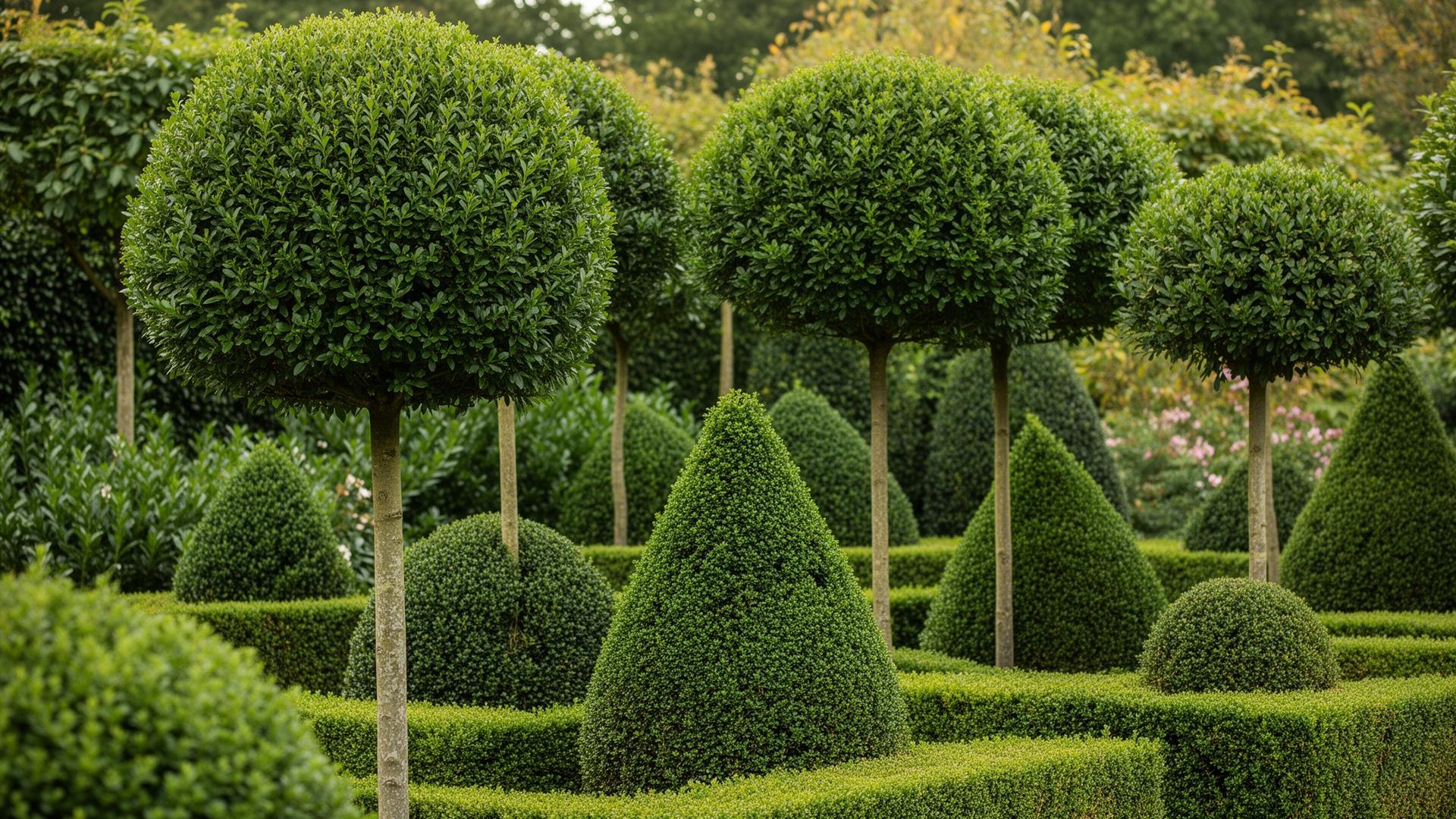
A topiary shape is a plant clipped or trained into a clear, deliberate form. It can be tightly geometric, softly architectural, playful or naturalistic. The most familiar shapes are balls, cones, pyramids, domes, cubes, spirals and standards, but topiary also covers cloud pruning, heart-shaped trees, frame-trained animals and the low clipped blocks that edge formal beds.
Some shapes are clipped freehand by eye, with nothing but shears and a step back to check symmetry. Others are trained over a wire frame so the gardener fills in the form gradually as the plant grows. Cloud pruning and niwaki-style shaping sit slightly apart from classic topiary, since they accept the plant's natural branch structure and clip it into rounded pads rather than smooth surfaces. Each style asks for a different temperament from the plant, and a different commitment from the gardener.
A good topiary shape should match
- Plant growth habit and natural outline
- Leaf size, so cut edges read cleanly
- Garden style, from formal to relaxed
- Available space, both width and height
- Skill level and confidence with shears
- Clipping frequency you can realistically commit to
- Pot or ground planting, since the two behave differently
- Desired formality of the finished effect
- Long-term maintenance over years, not just the first season
Best topiary shapes at a glance
This table is a quick scan of the shapes most worth trying in real gardens, from the easiest to the most advanced. Use it to compare difficulty, maintenance and which plants suit each form, then go to the deeper sections below for the shapes you are seriously considering. On mobile each row becomes a stacked card so nothing scrolls sideways.
| Shape | Best for | Difficulty | Best plants | Care | Beginner | Why it works |
|---|---|---|---|---|---|---|
| Ball | Doorways, pots, repeated border accents | Easy | Boxwood, Japanese holly, yew, privet | Low | Yes | Forgiving outline that hides small uneven spots. |
| Dome | Soft formal mounds in borders and pots | Easy | Boxwood, Japanese holly, dwarf conifers | Low | Yes | Reads as designed without trying too hard. |
| Cone | Height in narrow spots, paired entrances | Easy | Yew, privet, dwarf conifers, lemon cypress | Low | Yes | One clear tapering line that is easy to correct. |
| Pyramid | Sharper formal accents and parterres | Moderate | Yew, holly, Portuguese laurel | Moderate | Maybe | Four flat faces give a strong architectural feel. |
| Spiral | Dramatic single specimens and entrance pairs | Advanced | Juniper, boxwood, yew, cypress | High | No | Curving line shows skill, but only on a dense upright plant. |
| Standard | Pots by doors, patios and steps | Moderate | Bay, rosemary, myrtle, eugenia, olive, lavender | Moderate | Maybe | A clear stem lifts a clipped head to eye level. |
| Tiered balls | Formal entrances and tall accent pots | Advanced | Boxwood, Japanese holly, bay | High | No | Two or three balls on one stem signal real craft. |
| Cube | Modernist gardens and crisp parterres | Moderate | Yew, boxwood, hornbeam | Moderate | Maybe | Flat faces and clean edges reinforce architecture. |
| Low mound | Naturalistic borders and meadow edges | Easy | Boxwood, Japanese holly, hebe | Low | Yes | Sits comfortably with looser planting around it. |
| Cloud pruning | Relaxed, Japanese or architectural gardens | Advanced | Pine, Lonicera nitida, Phillyrea, yew | High | No | Soft rounded pads on bare stems look unforced when right. |
| Heart shape | Single feature in a small garden or pot | Advanced | Boxwood, ivy on a frame | High | No | A novelty shape that needs a wire frame and patience. |
| Animal shape | Statement gardens with regular care | Advanced | Yew, boxwood, ivy on a frame | High | No | Frame-trained shapes can be charming, but they take years. |
| Frame-trained topiary | Indoor and small garden novelty shapes | Advanced | Ivy, small-leaved climbers, myrtle | High | No | The frame gives the form so the gardener can fill it in slowly. |
| Clipped hedge form | Border edges, low walls, structural blocks | Easy | Hornbeam, beech, yew, boxwood, privet | Moderate | Yes | Straight lines make the surrounding planting look intentional. |
Ball
Easy- Best for
- Doorways, pots, repeated border accents
- Plants
- Boxwood, Japanese holly, yew, privet
- Care
- Low
- Beginner
- Yes
- Why
- Forgiving outline that hides small uneven spots.
Dome
Easy- Best for
- Soft formal mounds in borders and pots
- Plants
- Boxwood, Japanese holly, dwarf conifers
- Care
- Low
- Beginner
- Yes
- Why
- Reads as designed without trying too hard.
Cone
Easy- Best for
- Height in narrow spots, paired entrances
- Plants
- Yew, privet, dwarf conifers, lemon cypress
- Care
- Low
- Beginner
- Yes
- Why
- One clear tapering line that is easy to correct.
Pyramid
Moderate- Best for
- Sharper formal accents and parterres
- Plants
- Yew, holly, Portuguese laurel
- Care
- Moderate
- Beginner
- Maybe
- Why
- Four flat faces give a strong architectural feel.
Spiral
Advanced- Best for
- Dramatic single specimens and entrance pairs
- Plants
- Juniper, boxwood, yew, cypress
- Care
- High
- Beginner
- No
- Why
- Curving line shows skill, but only on a dense upright plant.
Standard
Moderate- Best for
- Pots by doors, patios and steps
- Plants
- Bay, rosemary, myrtle, eugenia, olive, lavender
- Care
- Moderate
- Beginner
- Maybe
- Why
- A clear stem lifts a clipped head to eye level.
Tiered balls
Advanced- Best for
- Formal entrances and tall accent pots
- Plants
- Boxwood, Japanese holly, bay
- Care
- High
- Beginner
- No
- Why
- Two or three balls on one stem signal real craft.
Cube
Moderate- Best for
- Modernist gardens and crisp parterres
- Plants
- Yew, boxwood, hornbeam
- Care
- Moderate
- Beginner
- Maybe
- Why
- Flat faces and clean edges reinforce architecture.
Low mound
Easy- Best for
- Naturalistic borders and meadow edges
- Plants
- Boxwood, Japanese holly, hebe
- Care
- Low
- Beginner
- Yes
- Why
- Sits comfortably with looser planting around it.
Cloud pruning
Advanced- Best for
- Relaxed, Japanese or architectural gardens
- Plants
- Pine, Lonicera nitida, Phillyrea, yew
- Care
- High
- Beginner
- No
- Why
- Soft rounded pads on bare stems look unforced when right.
Heart shape
Advanced- Best for
- Single feature in a small garden or pot
- Plants
- Boxwood, ivy on a frame
- Care
- High
- Beginner
- No
- Why
- A novelty shape that needs a wire frame and patience.
Animal shape
Advanced- Best for
- Statement gardens with regular care
- Plants
- Yew, boxwood, ivy on a frame
- Care
- High
- Beginner
- No
- Why
- Frame-trained shapes can be charming, but they take years.
Frame-trained topiary
Advanced- Best for
- Indoor and small garden novelty shapes
- Plants
- Ivy, small-leaved climbers, myrtle
- Care
- High
- Beginner
- No
- Why
- The frame gives the form so the gardener can fill it in slowly.
Clipped hedge form
Easy- Best for
- Border edges, low walls, structural blocks
- Plants
- Hornbeam, beech, yew, boxwood, privet
- Care
- Moderate
- Beginner
- Yes
- Why
- Straight lines make the surrounding planting look intentional.
Plant suitability is covered in much more depth in our companion guide on the best plants for topiary, which compares evergreen shrubs, indoor and outdoor options and boxwood alternatives side by side.
Easy topiary shapes for beginners
Beginners should start with shapes that follow the plant's natural outline. A ball clipped on a rounded shrub, a cone clipped on an upright shrub, a low mound on a spreading shrub: in each case, the form does most of the design work and the clipping is a tidy rather than a transformation. These shapes are also forgiving, since small uneven spots can be corrected gradually instead of redone from scratch.
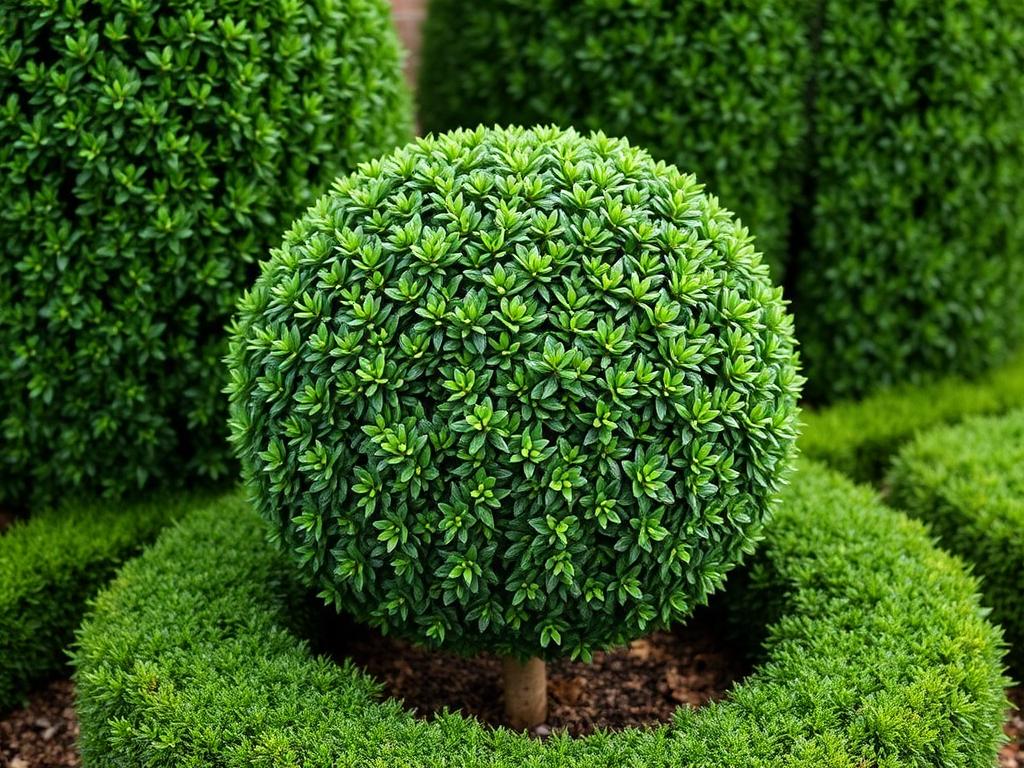
Ball
- Difficulty
- Easy
- Best for
- Doorways, pots, low border accents
- Good plants
- Boxwood, Japanese holly, yew, privet
- Trim
- Once or twice a year
Why it works. Round outlines are forgiving, and the eye sees the whole shape rather than individual cuts.
Common mistake. Cutting too deep on one side. Light passes that follow the curve almost always look better.
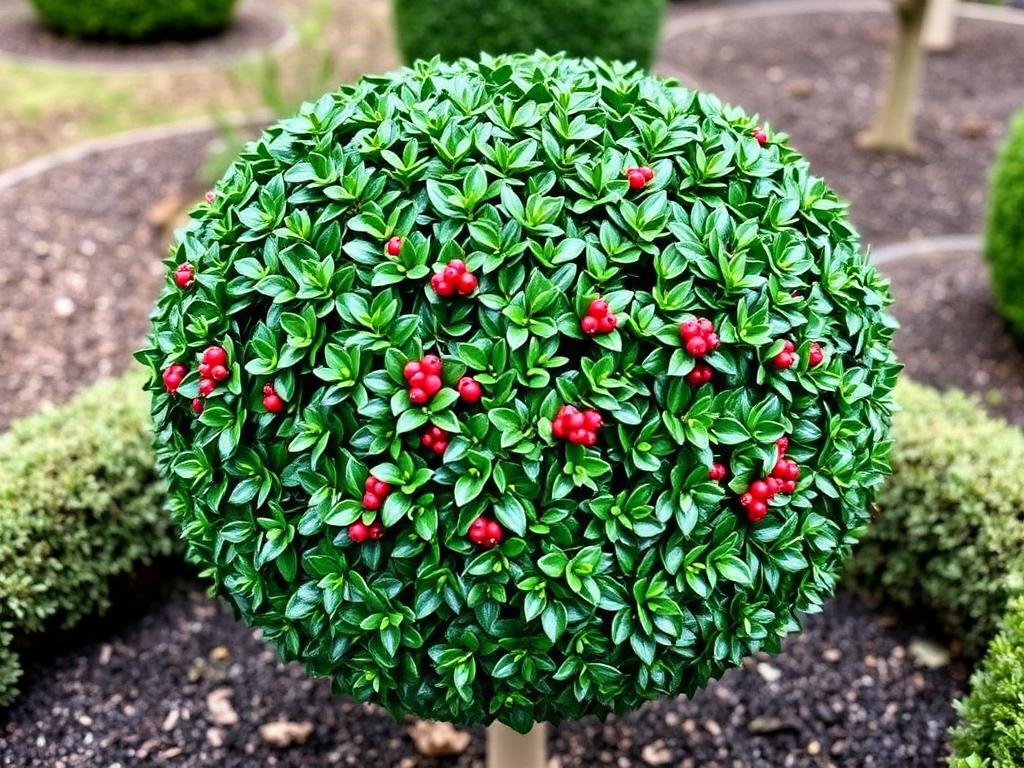
Dome
- Difficulty
- Easy
- Best for
- Soft mounds in borders and large pots
- Good plants
- Boxwood, Japanese holly, hebe
- Trim
- Once or twice a year
Why it works. Sits between formal and relaxed and looks comfortable in almost any planting style.
Common mistake. Making the top too flat. A gentle curve always reads better than a half cylinder.
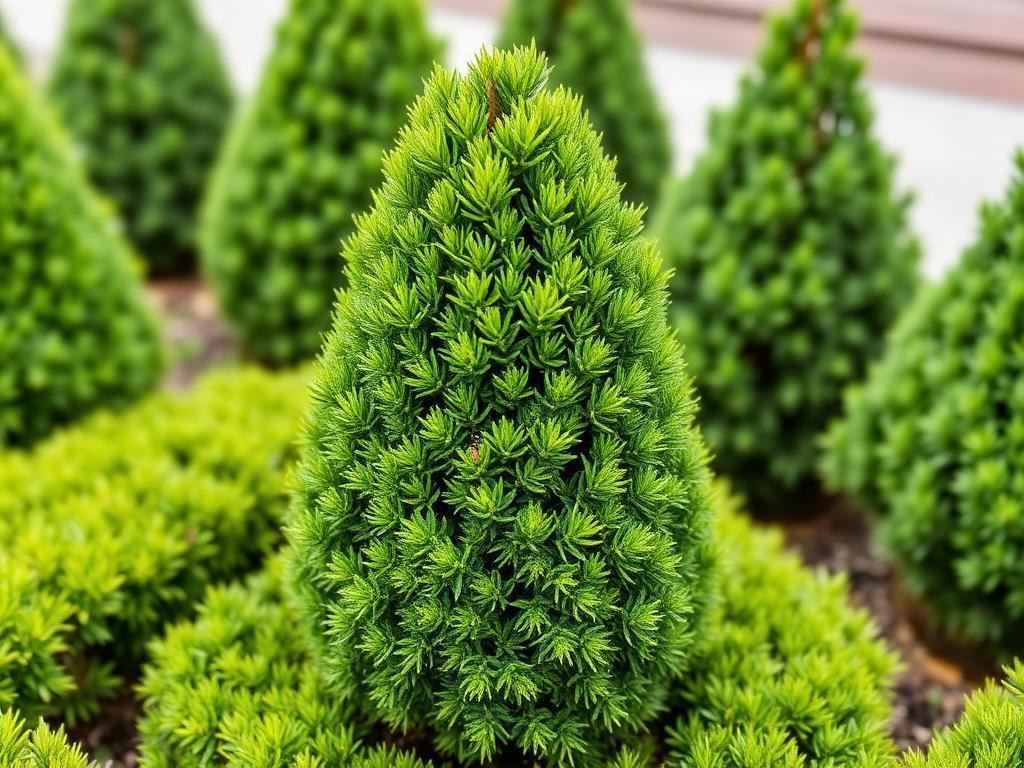
Low mound
- Difficulty
- Easy
- Best for
- Naturalistic borders and edges
- Good plants
- Boxwood, Japanese holly, dwarf conifers
- Trim
- Once a year, very lightly
Why it works. Lets the shrub keep its native character while still reading as designed.
Common mistake. Trying to turn a loose mound into a tight ball in one season. Build the shape over years.
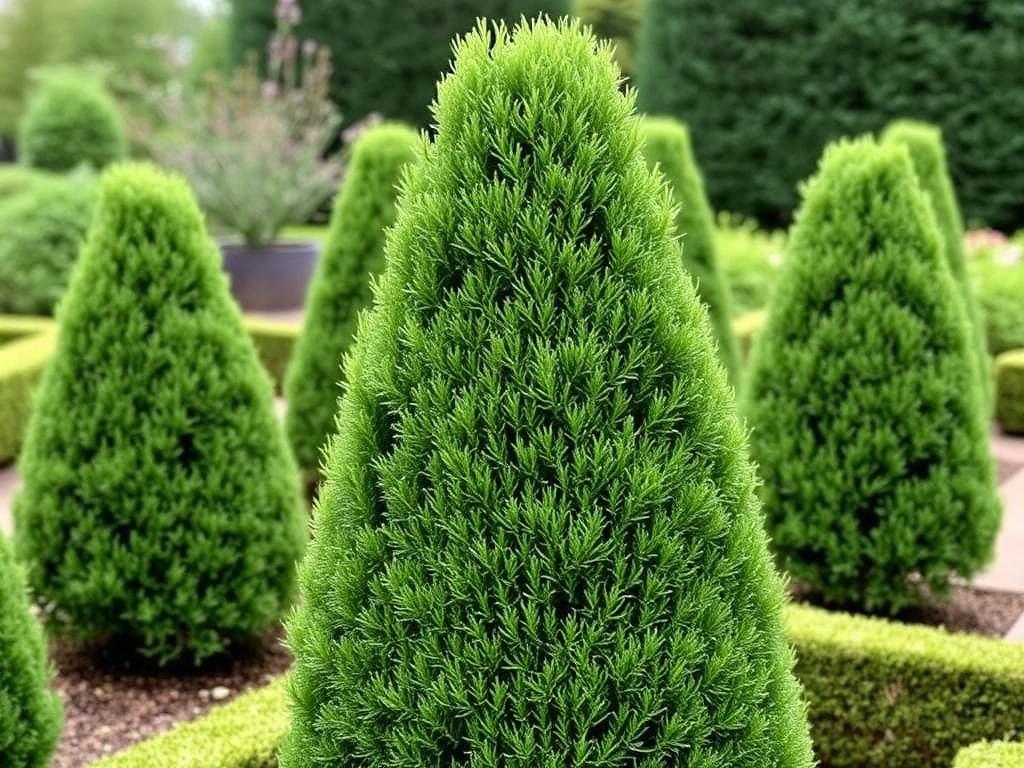
Cone
- Difficulty
- Easy
- Best for
- Height in narrow spots and paired entrances
- Good plants
- Yew, dwarf conifers, lemon cypress, privet
- Trim
- Once or twice a year
Why it works. A single tapering line is easy to see, easy to check and easy to correct.
Common mistake. Making the top wider than the base. Always taper inward as you go up.
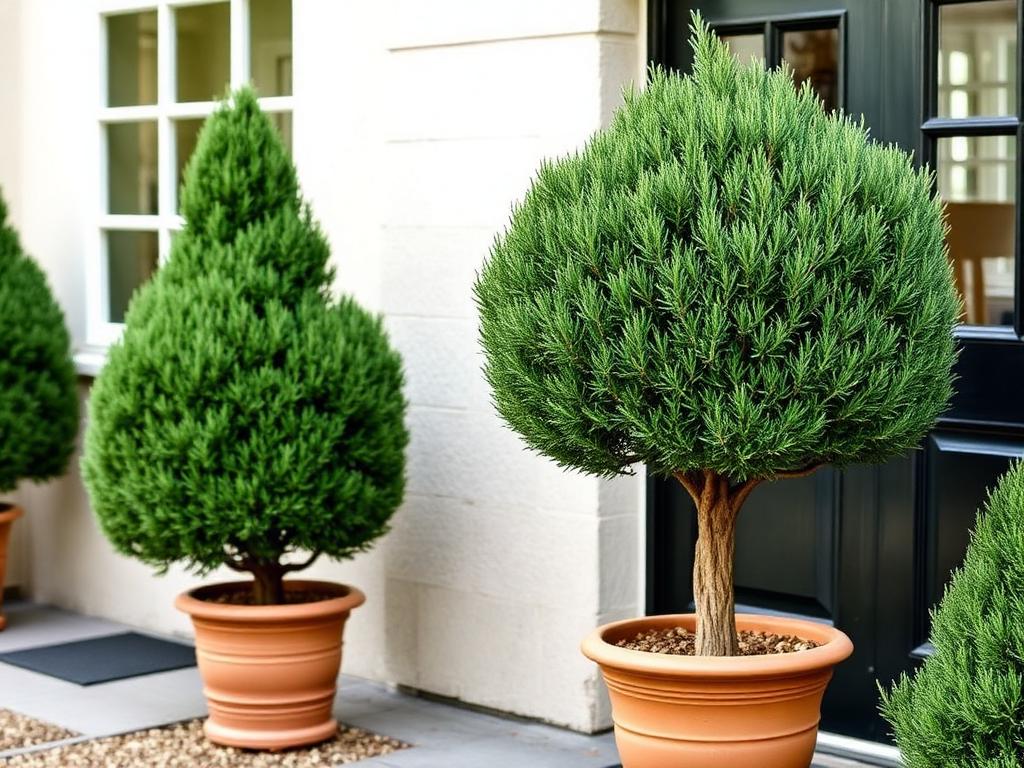
Small standard
- Difficulty
- Moderate
- Best for
- Pots by a door, patio or step
- Good plants
- Bay, rosemary, myrtle, eugenia
- Trim
- Two or three light trims through the season
Why it works. Lifts a clipped head to eye level and gives instant formality.
Common mistake. Letting the head get top heavy. Trim a little off the underside as well as the sides.
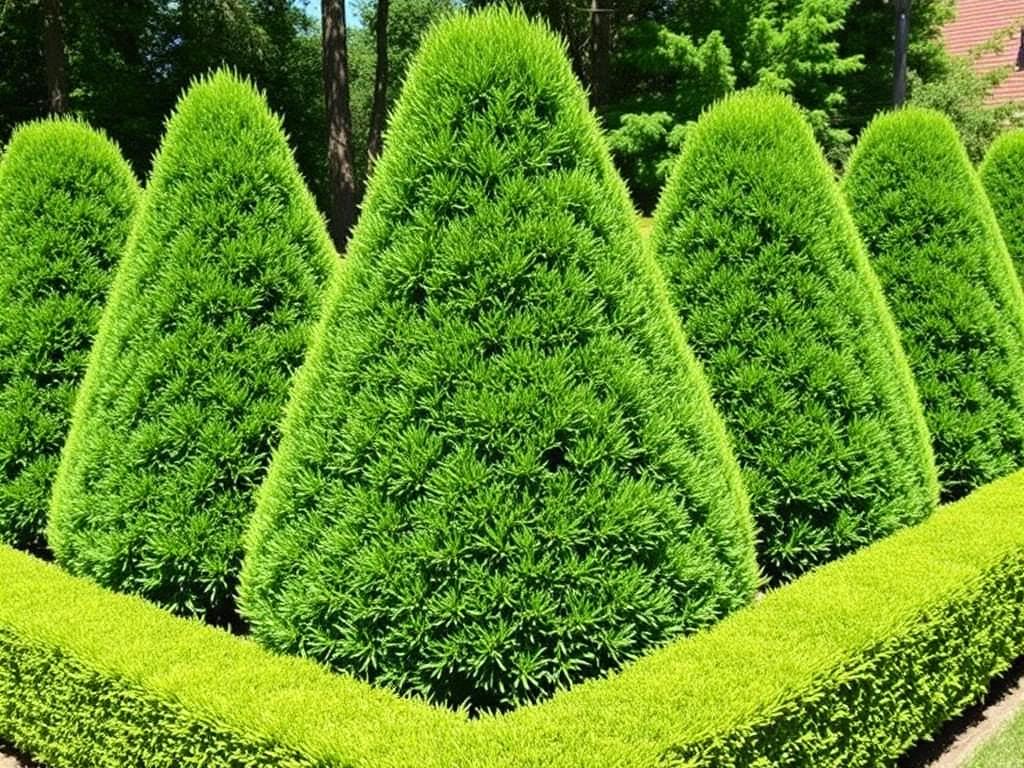
Simple clipped hedge block
- Difficulty
- Easy
- Best for
- Edges of borders, low walls, formal blocks
- Good plants
- Hornbeam, beech, yew, boxwood, privet
- Trim
- Once or twice a year
Why it works. Straight lines anchor a border and make looser perennials look intentional.
Common mistake. Letting the top get wider than the base. The lower foliage will thin in the shade.
Light passes beat heroic cuts
Topiary balls and round shapes
Topiary balls are one of the most useful shapes because they work almost anywhere. A single ball softens a corner. A pair of matching balls frames a doorway. Repeated balls along a path or border edge create rhythm without crowding. Low clipped balls can read as a soft hedge, and tiered ball forms add height without taking much width on the ground.
For potted balls, boxwood, Japanese holly and yew give the cleanest finish. Boxwood topiary balls remain the classic for formal settings, but Japanese holly is the easiest substitute where box blight is a worry. Small dwarf conifers can take the same treatment in colder gardens, and bay or myrtle can be clipped into ball-headed standards for patios in milder climates. Three-ball or tiered ball forms on a clear stem make a strong formal accent, especially in pairs.
Round shapes are easier to keep neat than they look. Turn the pot or walk around the plant as you clip, use a simple bamboo cane swept around the form as a guide, and trim lightly rather than cutting deep holes into the plant. A boxwood or Japanese holly ball that is trimmed once or twice a year will hold its shape for many seasons without much fuss.
Cone, pyramid and upright topiary shapes
Cones and pyramids give height without taking as much width as a wide spreading shrub. A pair of matching cones flanking a gate, a single cone at the end of a sightline or a row of low cones along a path will all read as deliberate without feeling overdesigned. Yew, privet and dwarf conifers all clip well into cones. Lemon cypress is naturally conical and only needs a light shaping each year, which makes it a good entry point for upright topiary.
Pyramids are similar to cones in spirit, but they have four distinct faces and sharper edges. They suit more formal gardens and respond best to plants that hold dense foliage right to the base, such as yew, holly and Portuguese laurel. Whichever upright shape you choose, keep the base wider than the top so the lower foliage still gets enough light. A top heavy cone always looks slightly wrong, even if the eye cannot quite say why.
Avoid the lollipop top
Spiral topiary shapes
Spiral topiary is dramatic, but it is less beginner friendly than a ball or cone. A spiral has a single continuous curving line that runs from the base to the top, and any inconsistency in that line is immediately visible. Juniper is the classic spiral plant because of its naturally upright habit and dense needled foliage. Boxwood spirals are widely sold and look beautiful, but they need the same disease awareness as any other boxwood topiary. Cypress and lemon cypress can also be trained into spirals, although the soft foliage needs careful handling.
A spiral works best on a plant that already has the right starting shape. A dense, conical specimen is much easier to train into a clean spiral than a loose, open one. Start by marking the spiral with a soft ribbon wound around the plant, then trim back the foliage between the bands. Keep the cuts shallow on the first pass and build the depth of the spiral gradually over two or three years.
Spirals reward patience
Standards and tiered topiary
Standards are plants trained with a clear stem and a shaped head. Tiered ball topiary uses two or three clipped balls on a stem or central trunk. Both shapes lift the foliage to eye level, which makes them ideal as pot specimens beside a door, on a patio or at the top of a flight of steps. Bay, holly and Portuguese laurel all train into classic mophead standards. Rosemary, lavender and olive give a more relaxed Mediterranean version on a slightly smaller scale.
Double and triple ball topiary, sometimes sold as a three ball topiary tree, is a more demanding shape because each ball needs to be balanced against the others. The lower ball should be slightly larger than the middle one, and the middle ball should be slightly larger than the top. If they are all the same size, the shape can look heavy at the top. Bay, eugenia and Japanese holly all suit this treatment in a generous pot.
Standards in pots need a stable base, balanced trimming and regular turning so the head does not lean toward the light. A heavy frost-proof planter is much better than a tall narrow pot for tall topiary, since a top heavy plant in a light pot will catch the wind sooner or later.
Cloud pruning and softer shaped shrubs
Cloud pruning is softer and more sculptural than strict geometric topiary. Instead of carving a single smooth surface, the gardener clips a shrub or small tree into distinct rounded pads of foliage on bare stems. The effect is calm, architectural and slightly Japanese in feel, which suits relaxed or modern gardens better than rigid formal designs. Pine, Lonicera nitida, Phillyrea and yew are all common subjects, and an old, slightly leggy shrub can sometimes be transformed into a cloud pruned specimen rather than removed.
Cloud pruning is usually not the easiest first project. It needs an eye for which branches to keep and which to remove, and it takes years to mature into something that looks unforced. Start with gentle shaping rather than removing too much growth in one season. A cloud pruned shrub that has been over thinned can take a long time to recover, and some plants will never quite fill back in.
Heart, animal and novelty topiary shapes
Heart-shaped topiary, bunny-shaped topiary, peacocks, chickens and other animal shapes can be charming features in a garden, but they are usually advanced. Most are grown over a wire frame so the gardener fills the form with foliage gradually, rather than carving it freehand. Yew and boxwood are the classic outdoor subjects. Ivy on a small wire frame is the easiest indoor or pot version, since it grows quickly enough to cover a frame in a season.
Novelty shapes need regular trimming to stay readable. A peacock with a fluffy tail or a heart with bulging edges loses its meaning the moment the silhouette is lost. Decide before you start how often you can realistically clip, and choose a shape that will still look good if it goes a few weeks without attention. Keep these shapes to one or two pieces in a garden, so they feel like a deliberate accent rather than a collection.
Animal topiary is a style idea, not a location
Advanced shape cards at a glance
The five shapes below cover the most common advanced topiary forms. Read each card before committing, since these shapes all need the right plant, regular clipping and several seasons to settle in.
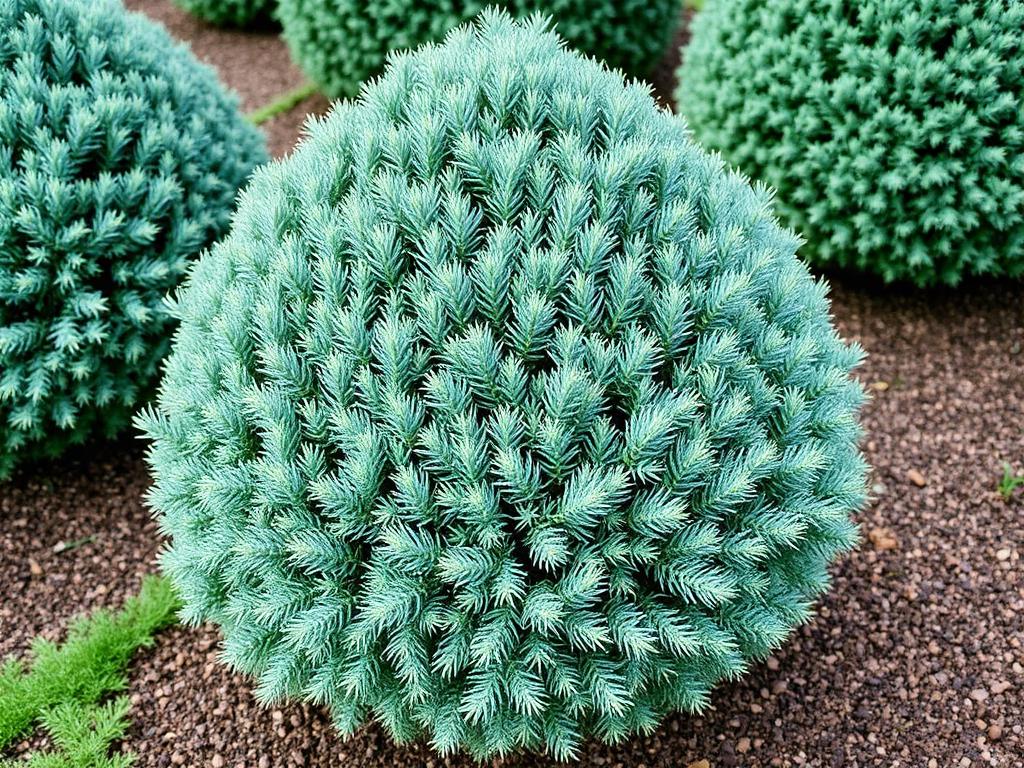
Spiral
- Difficulty
- Advanced
- Best for
- Single specimens and matched entrance pairs
- Good plants
- Juniper, boxwood, yew, cypress
- Trim
- Two or three light trims a year
Why it works. A continuous curving line draws the eye and gives strong vertical movement.
Common mistake. Cutting too deep on the first pass. Mark the spiral, take shallow cuts, then deepen the line over two or three seasons.
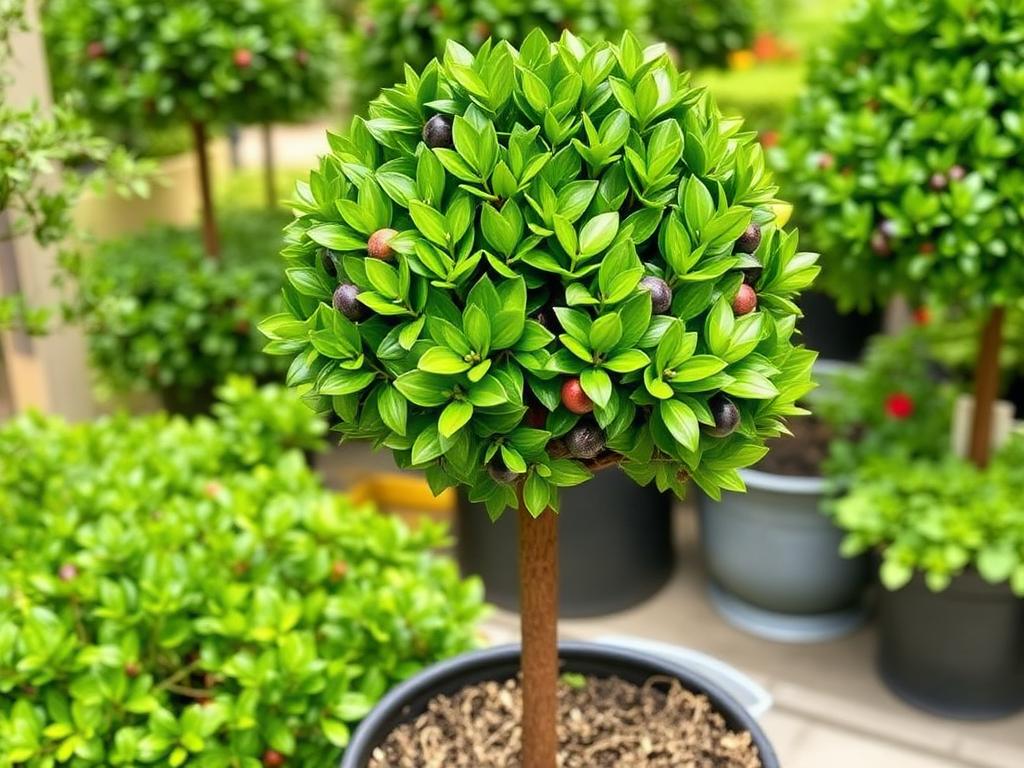
Tiered balls
- Difficulty
- Advanced
- Best for
- Formal entrances and tall pots
- Good plants
- Boxwood, Japanese holly, bay, eugenia
- Trim
- Two trims a year, each ball checked separately
Why it works. Two or three clipped balls on one stem signal craft and lift height without taking floor space.
Common mistake. Making the balls the same size. The lower ball should be the largest, the top one the smallest.
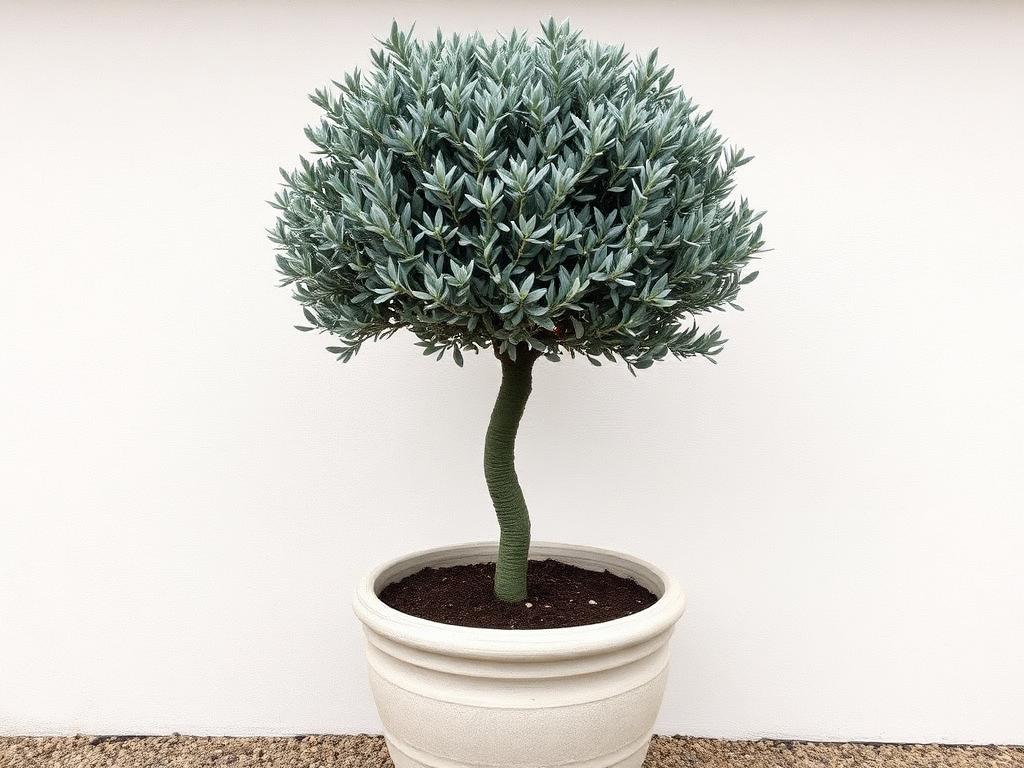
Cloud pruning
- Difficulty
- Advanced
- Best for
- Relaxed, Japanese or architectural gardens
- Good plants
- Pine, Lonicera nitida, Phillyrea, yew, olive
- Trim
- Light shaping once or twice a year as pads develop
Why it works. Soft rounded pads on bare stems read as unforced and pair well with looser planting.
Common mistake. Over-thinning in the first season. Build the open structure slowly so the plant has time to fill back in.
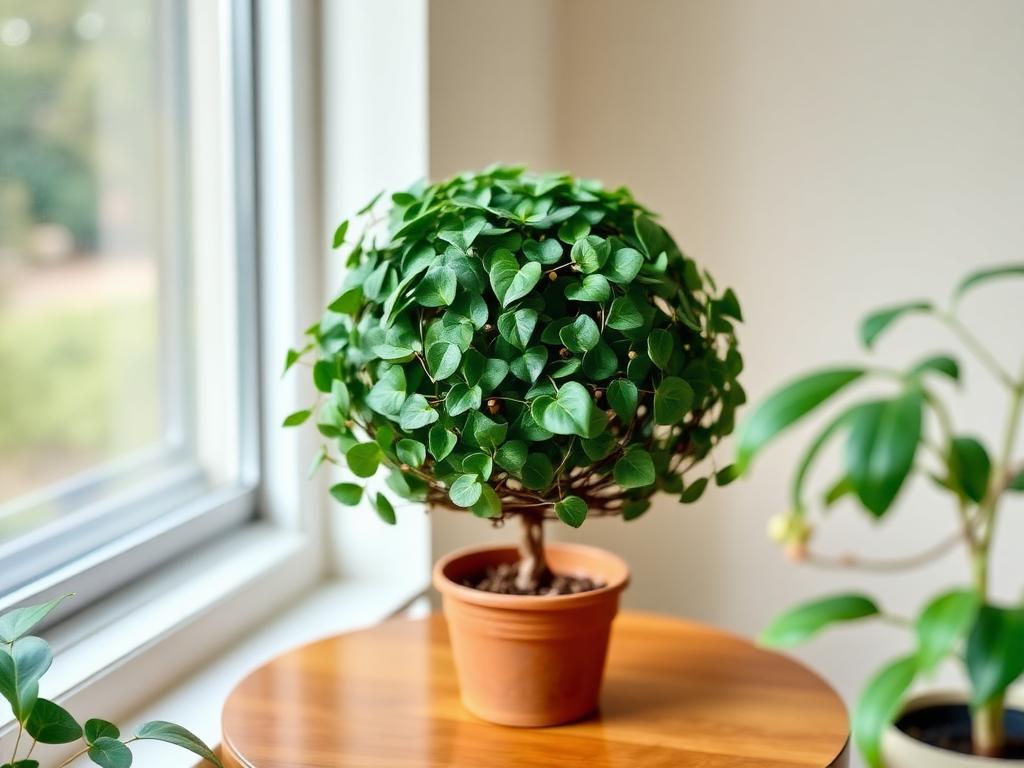
Heart shape
- Difficulty
- Advanced
- Best for
- Single feature in a small garden or pot
- Good plants
- Boxwood, ivy on a wire frame
- Trim
- Light clipping every few weeks in growth
Why it works. A clear silhouette makes the heart instantly readable when the form is held tight.
Common mistake. Going freehand. A heart almost always needs a wire frame to keep both curves even.
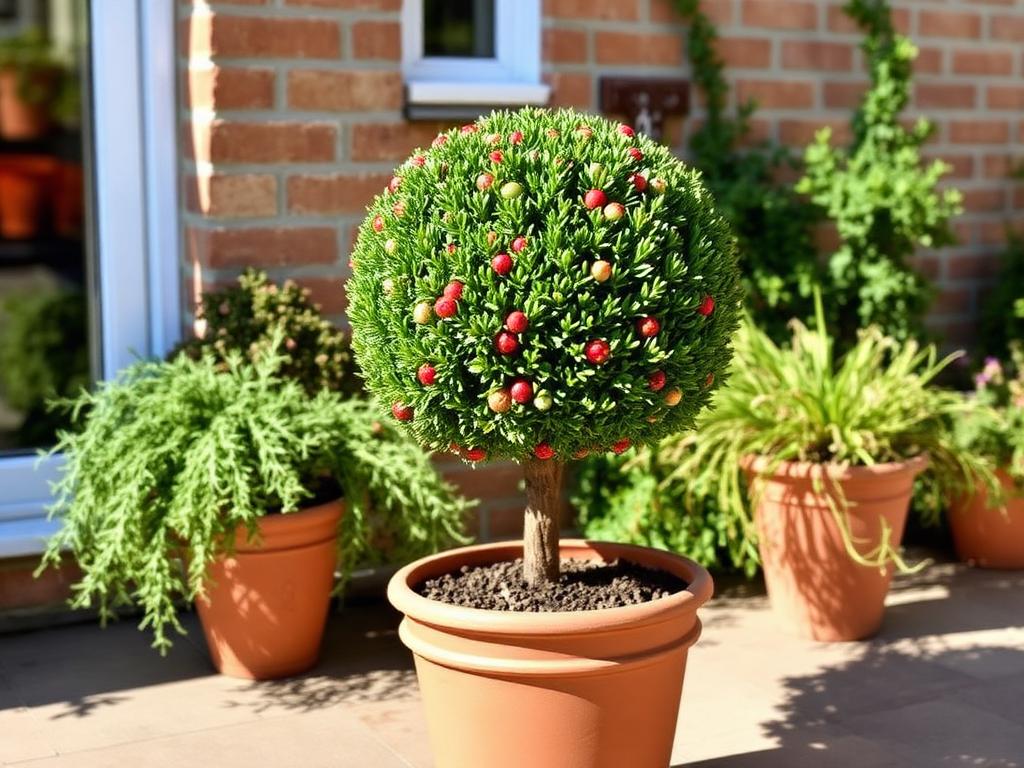
Animal or frame-trained
- Difficulty
- Advanced
- Best for
- Statement gardens with steady year-round care
- Good plants
- Yew, boxwood, ivy on a frame
- Trim
- Frequent light trims to keep the silhouette readable
Why it works. A wire frame gives the shape so the plant only has to fill it in over time.
Common mistake. Starting without a frame or a plan. Freehand animals almost always end up as vague lumpy mounds.
Topiary shapes for pots and front entrances
Potted topiary gives instant structure at doors, patios, steps and balconies. The same shapes that work in the ground work in pots, with a few extra considerations. Pots dry out faster than open ground, they heat up and cool down faster, and they can tip over in wind. The shape and the plant both have to suit the pot, not just the spot.
For a pair of front door balls, choose boxwood, Japanese holly or yew in matching frost proof planters and stand them on the same level. For taller height, a pair of cones or standards reads as a more formal welcome. Bay standards by a kitchen door, rosemary standards near the back step or olive standards on a sunny patio all bring a sense of place to a doorway. Tiered ball topiary works as a single formal accent at the end of a sightline or in the centre of a small courtyard.
Use heavy, stable pots for tall topiary
How to choose the right topiary shape
Choosing the right shape is a practical question, not an aesthetic one. The right shape depends on space, plant, skill level, garden style and how often you are willing to clip. Use these rough rules as a starting point and adapt them to your conditions.
For small gardens
Use balls, cones, small standards and clipped mounds. Single specimens are usually better than rows, since each shape needs space around it to be read clearly.
For formal gardens
Use repeated balls, cones, pyramids, standards and clipped hedges. Repetition is the effect you want, so resist the urge to alternate different shapes along the same path.
For relaxed gardens
Use softer domes, low mounds, cloud pruning and natural rounded shrubs. The clipped shapes should look like an answer to the looser planting, not a fight with it.
For pots
Use balls, cones, standards and small spirals in heavy planters. Match pots in pairs for entrances. Single tiered topiary makes a strong focal point in a courtyard.
For beginners
Choose a ball, dome, low mound or cone first. A neat boxwood or Japanese holly ball in a single good pot will teach almost everything the next shape needs.
For advanced gardeners
Try spirals, tiered balls, hearts, frame-trained shapes, animals and cloud pruning. Accept that each of these needs the right plant, the right setting and many seasons to mature.
How to shape bushes and shrubs
The mechanics of shaping a bush are simple. The patience is the hard part. Use sharp shears, take small cuts, step back often and accept that the shape will improve over years rather than weekends. The steps below work for almost any beginner-friendly shape, from a ball to a low hedge block.
A simple shaping sequence
- Choose the shape before you make a single cut.
- Start with a healthy, dense plant that is well established.
- Remove dead, damaged or crossing growth first.
- Clip lightly around the outline rather than carving deep into the plant.
- Step back often to check symmetry from at least two angles.
- Turn potted plants as you work so every side gets the same attention.
- Avoid cutting too deeply into bare wood, since many shrubs will not regrow from it.
- Trim little and often through the growing season rather than making one severe cut.
- Brush or shake clippings out of the plant so they do not sit on the foliage.
- Repeat as new growth appears, building the shape gradually over seasons.
For major pruning, large mature shrubs, ladder work or valuable specimens, consider asking a qualified gardener or arborist for help. A topiary that has been allowed to grow out of shape over many years rarely benefits from one heroic cut, and some shrubs cannot recover from being cut hard into old wood at all.
Topiary shape mistakes to avoid
Choosing a spiral as a first project
Why it causes problems. Spirals show every uneven cut and need dense, upright growth from day one. Most beginner attempts end up looking like a worn rope.
Better approach. Start with a ball, dome or cone for a year. Move to a small standard next. Try a spiral only once your eye is used to checking continuous curves.
Cutting too much at once
Why it causes problems. Hard cuts shock the plant, expose bare patches and often cut into old wood that will not regrow. The shape can take seasons to recover.
Better approach. Take small light passes around the outline. Stop short of perfect on the first pass and tidy again as new growth firms up.
Choosing a sparse plant
Why it causes problems. A topiary shape needs a solid surface to read cleanly. A thin, open plant always looks see through, no matter how well it is clipped.
Better approach. Buy the densest plant you can find, or grow a young one on for a season before you start shaping it.
Ignoring the plant's natural shape
Why it causes problems. Forcing a wide spreading shrub into an upright cone, or an upright conifer into a flat ball, means constant fighting and a tired plant.
Better approach. Match the shape to the habit. Round plants make balls. Upright plants make cones, columns and spirals.
Making the top wider than the base
Why it causes problems. Light reaches the top first, so untrimmed plants naturally bulge outward at the top. The lower foliage then thins in the shade.
Better approach. Trim a little more off the upper third on each pass, so the silhouette always tapers gently inward.
Using a pot that is too light
Why it causes problems. Tall topiary in a lightweight pot will tip over in wind, especially when the compost is dry. A fallen standard can lose its head completely.
Better approach. Use a heavy frost proof planter with good drainage, sized to give the roots room to grow for a few years.
Letting the shape get too large before trimming
Why it causes problems. Big jumps between shape and reality mean cutting back into hard wood, which most evergreens dislike.
Better approach. Trim a little every season, even when the shape looks fine. Maintenance cuts are kinder than rescue cuts.
Cutting into old bare wood
Why it causes problems. Many evergreens, especially conifers, will not regrow from brown bare wood. A bald patch can stay bald for years.
Better approach. Stay within green foliage. If a plant has been allowed to grow out of shape, reshape gradually over several seasons.
Trying animal topiary without a frame or plan
Why it causes problems. Freehand animal shapes almost always end up as vaguely lumpy mounds. The eye expects ears, a tail and a clear silhouette.
Better approach. Use a wire frame, train the plant into it slowly and accept that the finished animal is a project of several years.
Copying a shape that does not suit the garden
Why it causes problems. A formal tiered standard in a wild meadow border, or a cloud pruned pine in a strictly geometric parterre, will read as out of place.
Better approach. Choose shapes that echo the rest of the garden. Formal beds want geometric topiary. Relaxed beds want softer mounds and clouds.
Work with the plant, not against it
Useful supplies for shaping topiary
You can shape simple topiary with very little kit, but a few good tools make the work much more enjoyable and the finish much cleaner. The list below is grouped by category, with placeholder links only.
Best beginner topiary shapes
A short, honest list of the shapes most worth trying first, and the shapes most worth saving for later.
Best first shapes
- Ball
- Dome
- Low mound
- Cone
- Small standard
Best shapes to wait on
- Spiral
- Tiered balls
- Heart shape
- Animal shape
- Cloud pruning
- Frame-trained topiary
A neat ball or cone almost always looks better than an ambitious spiral that is hard to maintain. Build confidence with simple shapes first, then move to standards and tiered forms as your eye and your hand settle into the work.
Frequently asked questions
What are the easiest topiary shapes?
What are the most popular topiary shapes?
What shape should I cut a bush into?
Are topiary balls easy to maintain?
Are topiary cones easier than spirals?
How do you shape a bush into a ball?
How do you shape shrubs into cones?
Are spiral topiary trees hard to maintain?
What plants are best for topiary shapes?
Can topiary shapes grow in pots?
What is cloud pruning?
Can beginners make animal topiary?
How often should topiary be trimmed?
What tools do you need for topiary shaping?
Final advice
Topiary is one of the few garden features that gets better with time and very little money. Start with simple shapes. Choose the plant before the shape. Balls, domes, cones and standards are the easiest forms to learn on, while spirals, hearts, animals and cloud pruning are best saved for later. Potted topiary needs a stable pot, consistent watering and balanced trimming. Shape lightly and often instead of cutting hard once a year. The best topiary shape is, in the end, the one you can keep neat over time.
Related reads
Keep reading
- Plant guideBest plants for topiary, including shrubs and small treesA side by side comparison of boxwood, yew, Japanese holly, privet, bay, eugenia, juniper, olive and other reliable topiary plants.Read guide
- HubGarden design guides and ideasLong form articles on structure, planting style, evergreens, borders and small space planning.Read guide
- HubPlants for every garden and situationBrowse our plant guides by leaf, colour, light, climate and intended use.Read guide
- HubTools and products for everyday gardeningEditor categories for pruners, shears, planters, watering kit and seasonal supplies.Read guide
- Plant guideLime green plants for shaded borders and bright accentsChartreuse foliage and flowers to lift dark corners and pair with formal evergreens.Read guide
- Plant guideLarge leaved plants for indoors and shady bordersBold foliage plants that pair well with clipped evergreens for contrast and scale.Read guide