- Original Blooming Lucky guide
- Practical, beginner friendly
- Pruning-group based care
What clematis needs to grow well
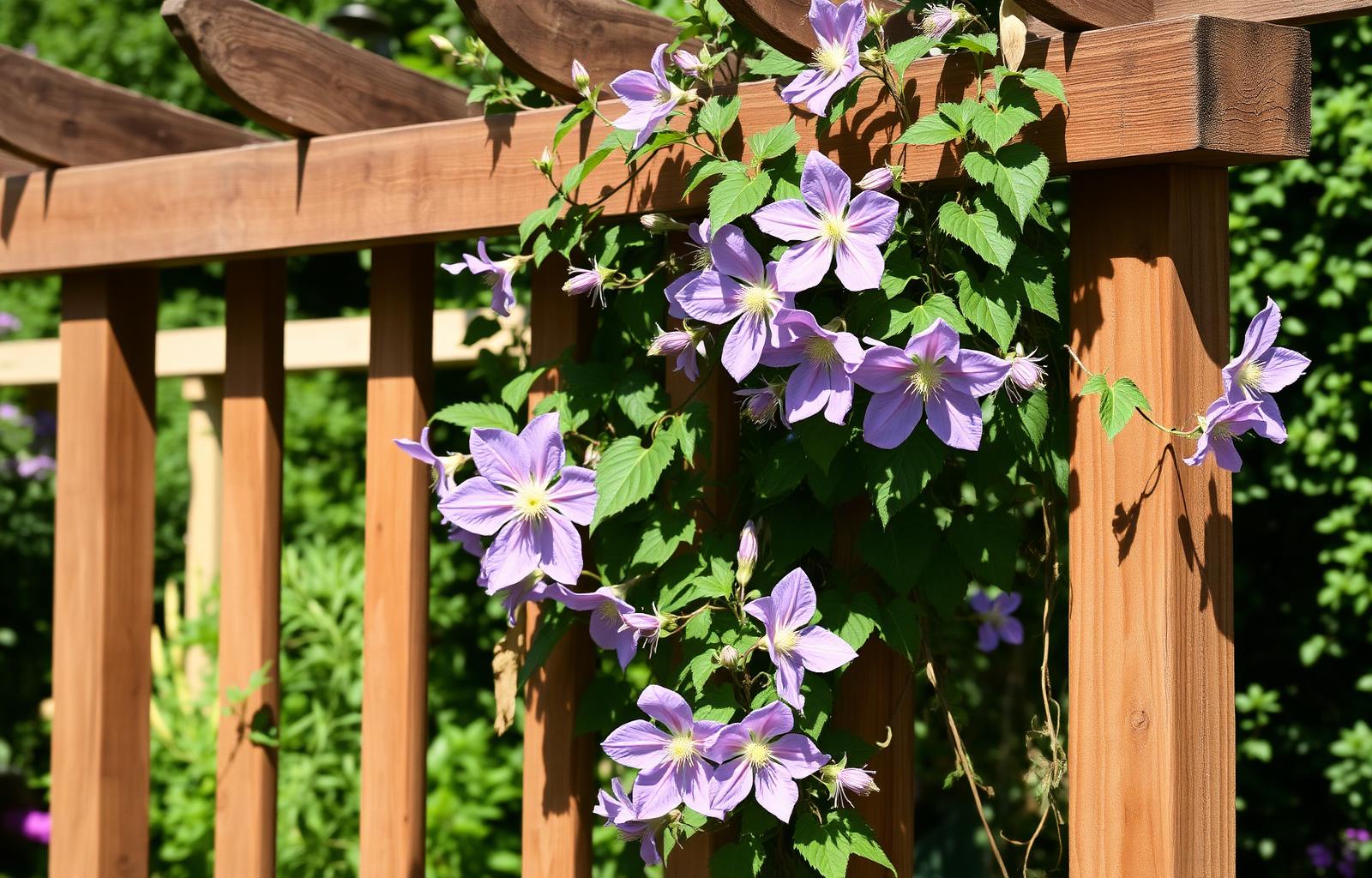
Clematis is not a difficult plant when the basics are in place. It needs enough light for the variety, soil that holds moisture without becoming waterlogged, somewhere strong to climb, and pruning that matches its flowering pattern. Most clematis problems come back to one of these basics being wrong rather than the plant being fussy.
A young clematis often takes a season or two to settle. The first year usually has modest growth as the plant invests in its roots. Patience here is part of growing clematis well; a calm year one is often followed by a much stronger year two.
A good clematis spot should have
- Sun or bright partial shade depending on the variety
- Soil that drains well rather than staying wet for days
- Soil that does not dry out completely between waterings
- Space for the roots to grow without competing too hard
- A trellis, wires, obelisk, arch, pergola, fence, or shrub support
- Easy access so you can prune and tie in stems
- Some shelter from harsh drying wind where possible
Best clematis growing conditions
Most clematis flower best with good light on the top growth, though many tolerate partial shade. Deep shade usually reduces flowering, and very hot, dry positions can stress the roots. A common rule of thumb is to give clematis a bright head and cool feet: light above, with the root zone shaded by low planting, a stone, or mulch.
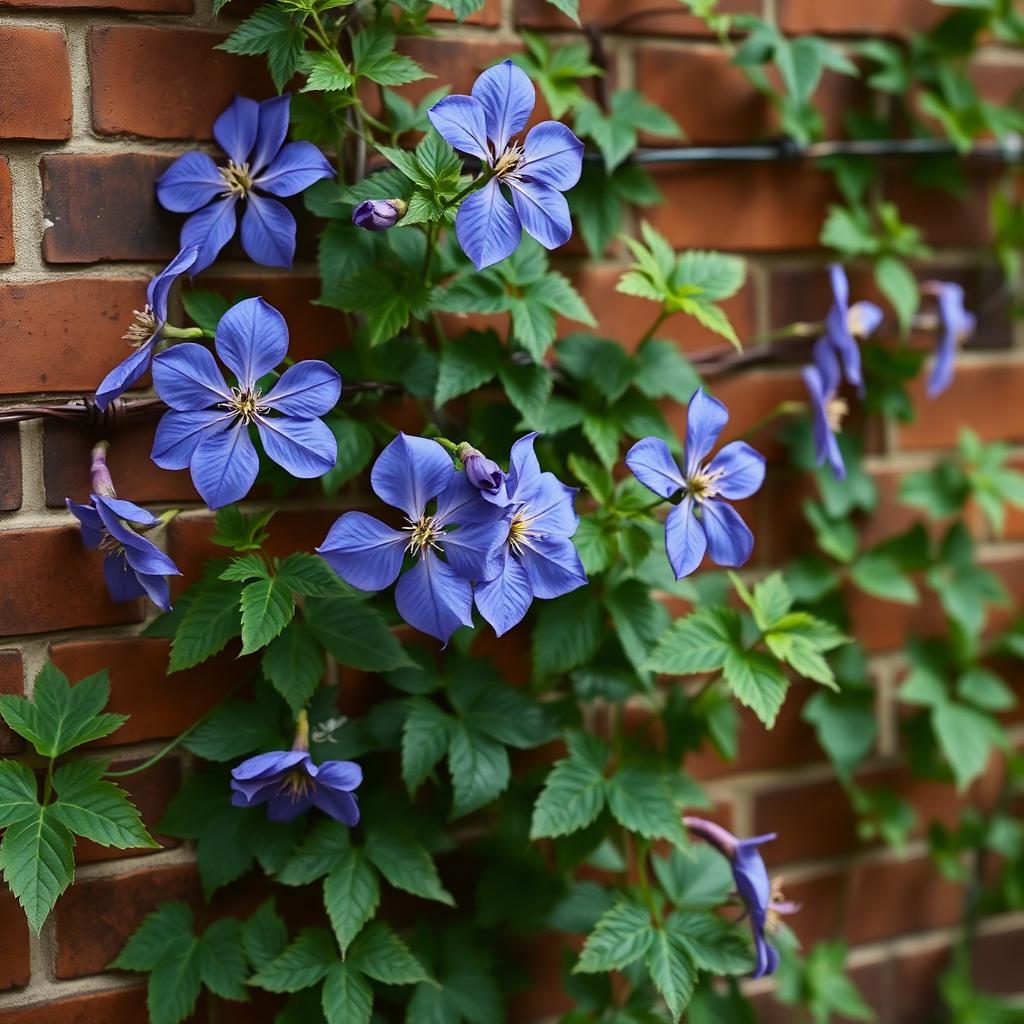
Soil moisture matters as much as light. Clematis is a thirsty plant, especially while establishing. A free-draining but moisture-retentive soil is ideal. Add compost to lighter soils and improve drainage in heavier ones rather than dropping a young clematis straight into difficult ground.
Watch out for dry walls and fences
How to plant clematis
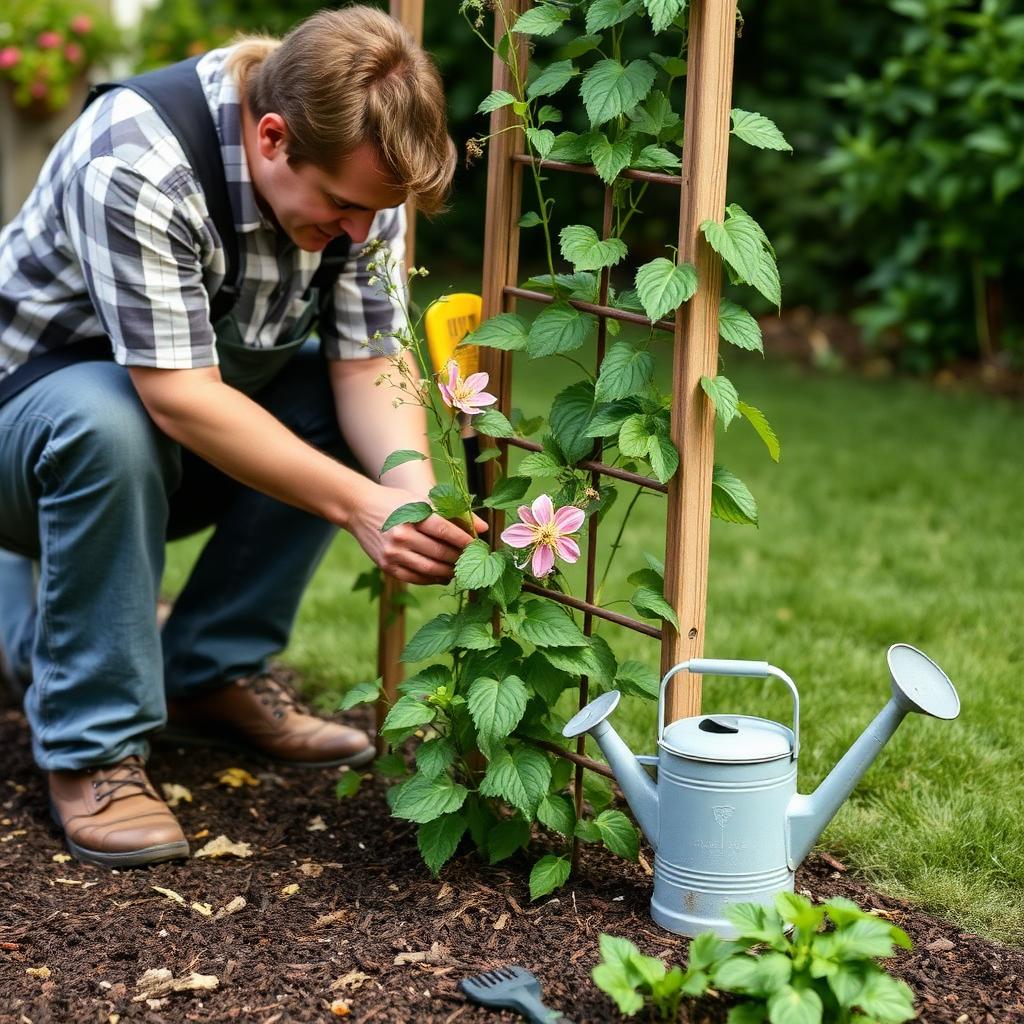
The same simple steps work for most clematis, in the border or in a large pot. The key is to set the plant up well at the start so it does not need rescuing later.
- Choose a variety that suits the position, support, and your climate
- Prepare a planting spot with good soil and drainage
- Soak the plant in its pot before planting so the root ball is fully wet
- Set up the support before or during planting so you do not disturb roots later
- Plant at a depth suited to the type and supplier guidance
- Backfill gently, firming the soil without compacting it heavily
- Water deeply once planted
- Add a light mulch layer, kept away from the stems
- Tie stems loosely to the support to start them climbing
- Water regularly through the first growing season
A note on planting depth
Clematis pruning groups explained
Clematis pruning depends on when the plant flowers and whether it blooms on old wood, new wood, or both. The three common pruning groups make it easier to avoid cutting off the buds you are waiting for. Once you know your plant's group, the rest of the routine becomes much simpler.
| Group | Flowers on | Flowering time | When to prune | How hard | Difficulty | Common mistake |
|---|---|---|---|---|---|---|
| Group 1 | Old wood from last year | Late winter to late spring | Lightly, just after flowering | Tidy, remove dead and tangled growth, light shape only | Easy | Cutting hard in late winter and losing the flowers. |
| Group 2 | Old and new wood | Late spring to early summer, often again later | Light prune in late winter or early spring | Remove dead and weak stems, cut to strong buds | Moderate | Cutting too hard and removing the early flush. |
| Group 3 | New growth only | Summer to early autumn | Hard prune in late winter or early spring | Cut all stems to a low pair of strong buds | Easy | Leaving it unpruned and ending up with bare tangled stems flowering only high up. |
Group 1
Easy- Flowers on
- Old wood from last year
- Flowering
- Late winter to late spring
- When prune
- Lightly, just after flowering
- How hard
- Tidy, remove dead and tangled growth, light shape only
- Mistake
- Cutting hard in late winter and losing the flowers.
Group 2
Moderate- Flowers on
- Old and new wood
- Flowering
- Late spring to early summer, often again later
- When prune
- Light prune in late winter or early spring
- How hard
- Remove dead and weak stems, cut to strong buds
- Mistake
- Cutting too hard and removing the early flush.
Group 3
Easy- Flowers on
- New growth only
- Flowering
- Summer to early autumn
- When prune
- Hard prune in late winter or early spring
- How hard
- Cut all stems to a low pair of strong buds
- Mistake
- Leaving it unpruned and ending up with bare tangled stems flowering only high up.
Group 1 clematis pruning
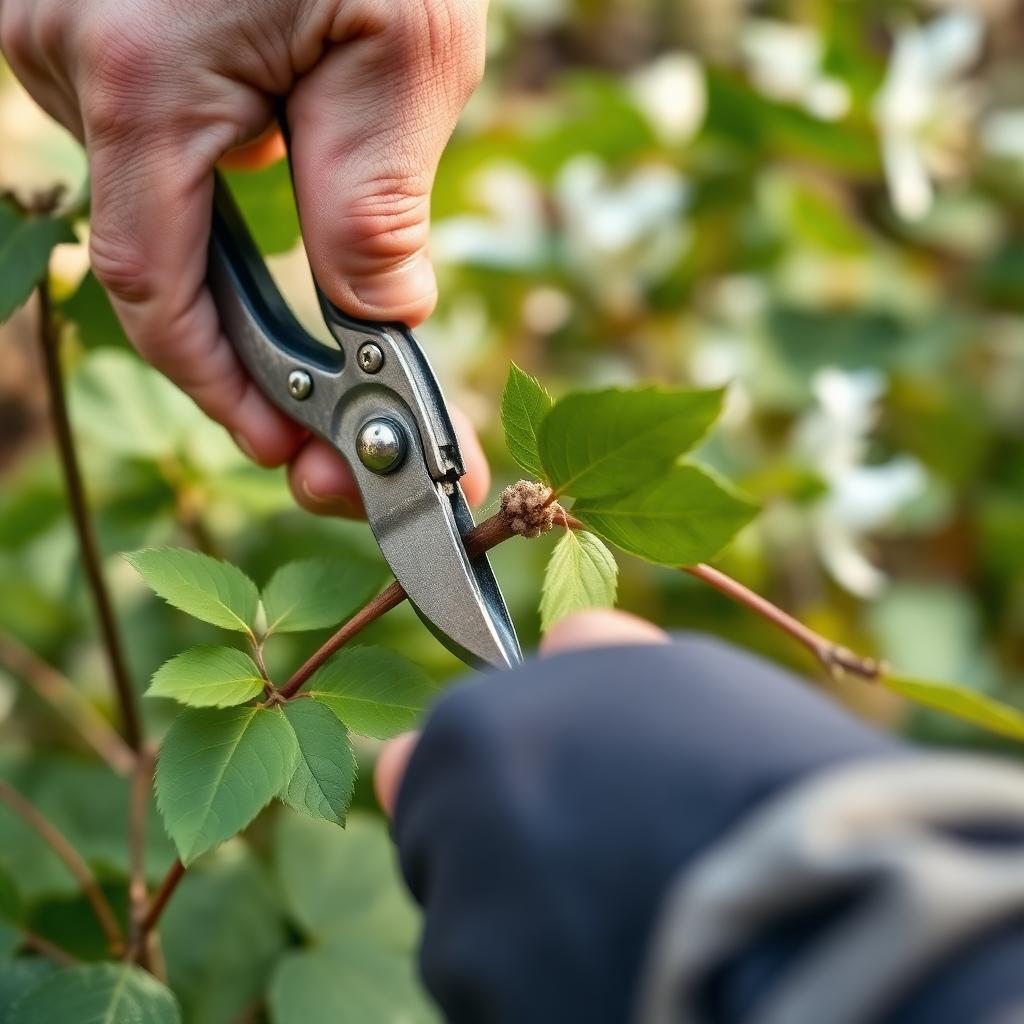
Group 1 clematis usually flower early on old wood from the previous year. They normally need little pruning beyond removing dead or tangled growth and light shaping after flowering. Examples often include Clematis montana, Clematis armandii, and alpine types in many climates, though always check your specific variety.
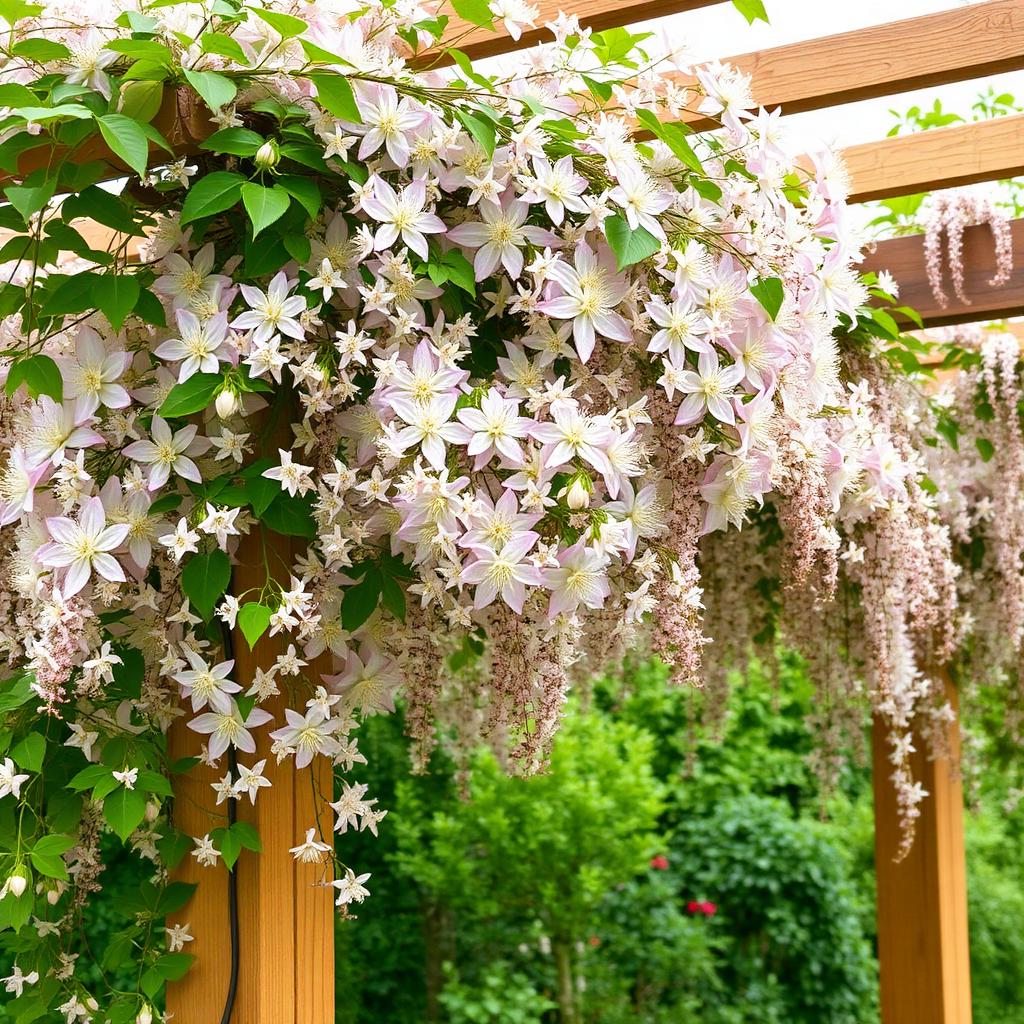
When pruning Group 1
- Prune just after the main flowering finishes
- Remove dead, damaged, or weak stems back to healthy wood
- Untangle and shape lightly to keep growth manageable
- Avoid hard cutting in late winter unless renovating
- If a mature plant has become bare at the base, plan a careful renovation prune in stages
Do not hard prune Group 1 in late winter
Group 2 clematis pruning
Group 2 clematis often include large-flowered hybrids that bloom in late spring or early summer and may flower again later. They are usually pruned lightly in late winter or early spring. Many popular named varieties such as Nelly Moser and The President fit this group in many climates, though always confirm the variety.
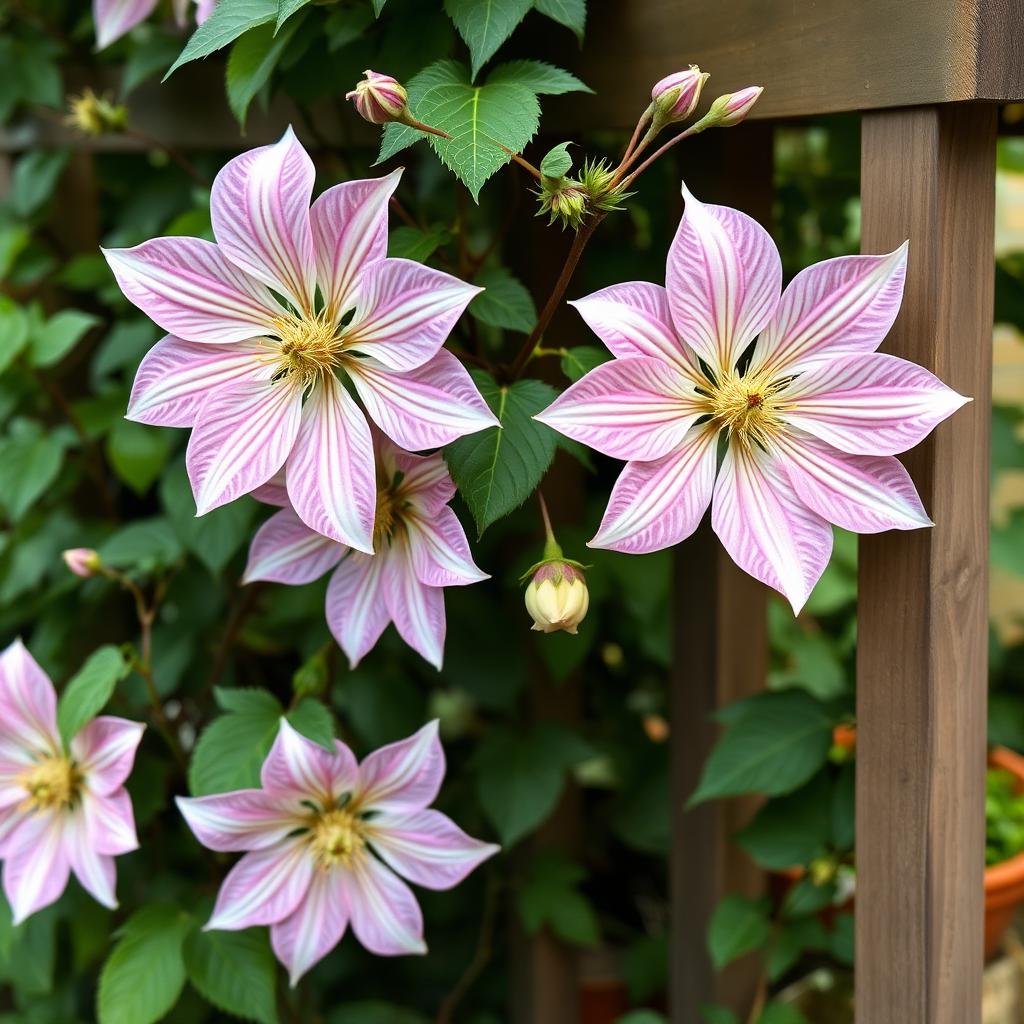
When pruning Group 2
- Remove dead, weak, or damaged stems back to healthy wood
- Cut healthy stems back to a strong pair of buds where you want growth to resume
- Avoid cutting all stems hard at once if you want the early flush
- Tidy lightly again after the first main flowering if it helps the second flush
Group 3 clematis pruning
Group 3 clematis flower on new growth and are usually the easiest group to prune. They are typically cut back hard in late winter or early spring, before new growth starts to take off. Examples often include Jackmanii types, viticella types, and many late-summer flowering varieties.
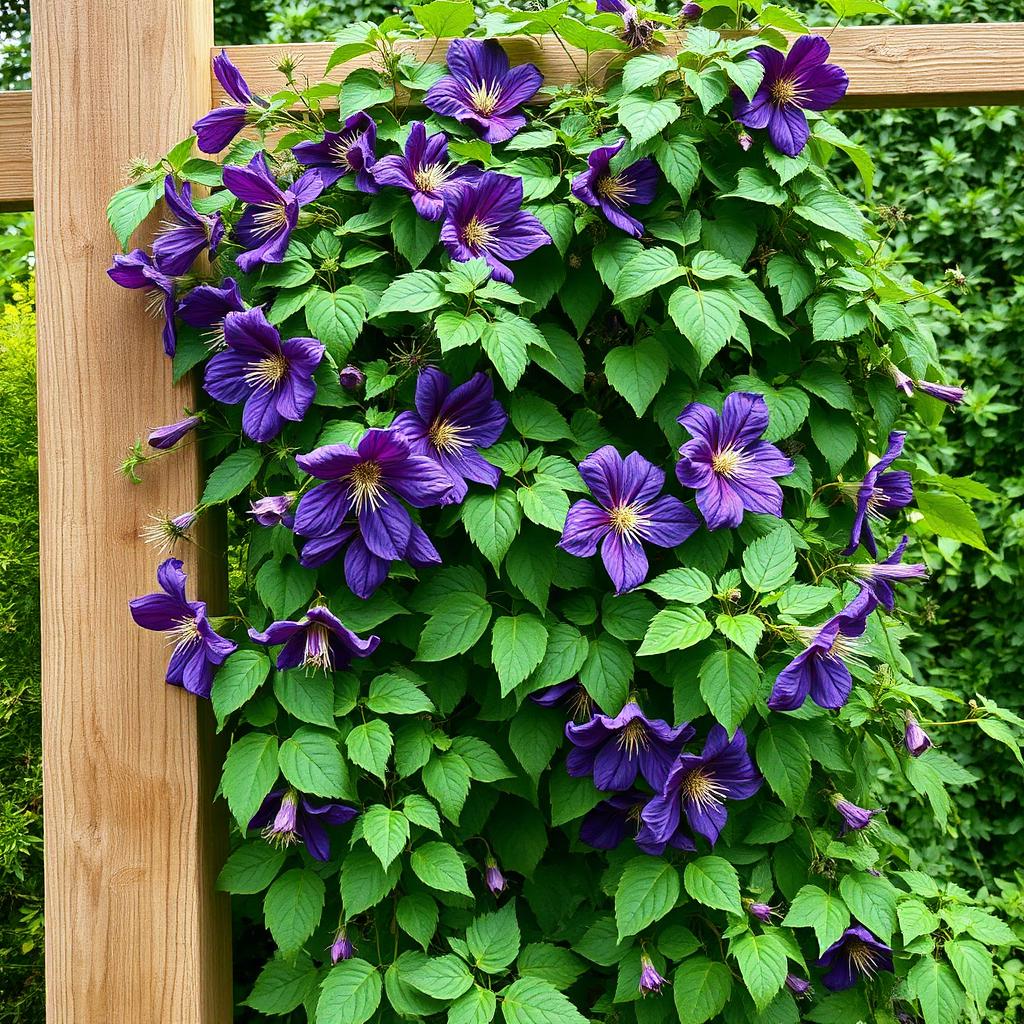
When pruning Group 3
- Prune in late winter or early spring before strong new growth begins
- Cut all stems down to a low pair of strong, plump buds
- Many gardeners cut to roughly 20 to 30 cm above the ground
- Tidy away the old top growth and check the support is still sound
- Tie in the new shoots as they grow up through spring
Group 3 is the most forgiving
What if you do not know your clematis pruning group?
If the variety name is lost, do not panic and do not start with a hard cut. Watch when the plant flowers for a season, then use that pattern to decide.
Guide to identifying the group by flowering
- Flowers early in the year before summer often suggest Group 1 or an early Group 2
- Flowers in late spring with a second flush later often suggest Group 2
- Flowers only in summer or early autumn on new growth often suggest Group 3
- During year one, prune only lightly and observe
- Remove dead or damaged stems any time it is safe and practical to do so
When in doubt, prune less
Growing clematis in pots
Clematis can grow happily in pots, but the container has to be large enough and the watering has to be consistent. The most common reasons potted clematis disappoint are pots that are too small, compost that dries out, and supports that fall over.
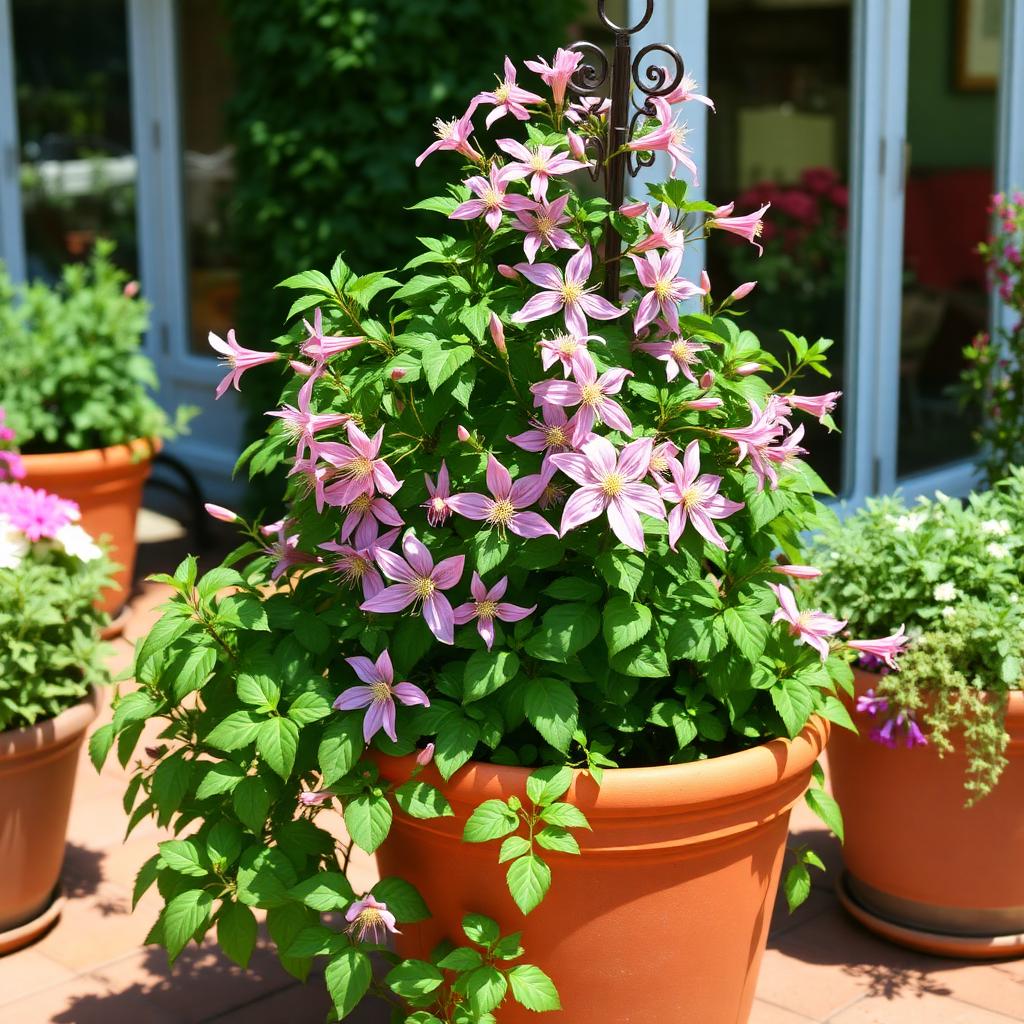
Planting clematis in pots
- Choose compact or container-suitable varieties where possible
- Use a large, deep pot with good drainage holes
- Use a quality peat-free potting mix that holds moisture but drains
- Add a trellis, obelisk, or fan support that is fixed firmly
- Water consistently; in summer this may be daily for established plants
- Feed during active growth following the product guidance
- Protect pots in very cold winters from prolonged freezing solid
- Avoid tiny decorative pots that dry out within hours
Small pots are the main reason potted clematis struggle
Clematis care through the year
Most clematis care is simple if you spread it across the seasons. None of the jobs below take long on their own, but together they keep a clematis flowering reliably.
Spring
- Check new shoots and tie them gently to the support
- Feed if the plant is hungry and not over-fed
- Prune according to the group if you have not already
- Water new plants regularly while they settle
Summer
- Water during dry spells, especially pots
- Keep tying in new growth where needed
- Deadhead spent flowers if it helps the look
- Watch for sudden wilting, dry roots, or stem damage
Autumn
- Reduce feeding as growth slows
- Clear fallen diseased leaves rather than leaving them
- Check pot drainage before wet weather sets in
- Prepare containers for cold weather
Winter
- Protect vulnerable pots from prolonged hard frost
- Avoid waterlogged compost in containers
- Check supports, ties, and any loose stems
- Plan pruning for the correct time for the group
Best clematis varieties for beginners
The varieties below are a useful starting selection. They cover different colours, sizes, and pruning groups so you can find one that matches your conditions. Always check your local climate and supplier guidance before buying, since clematis vary in how well they suit different regions.
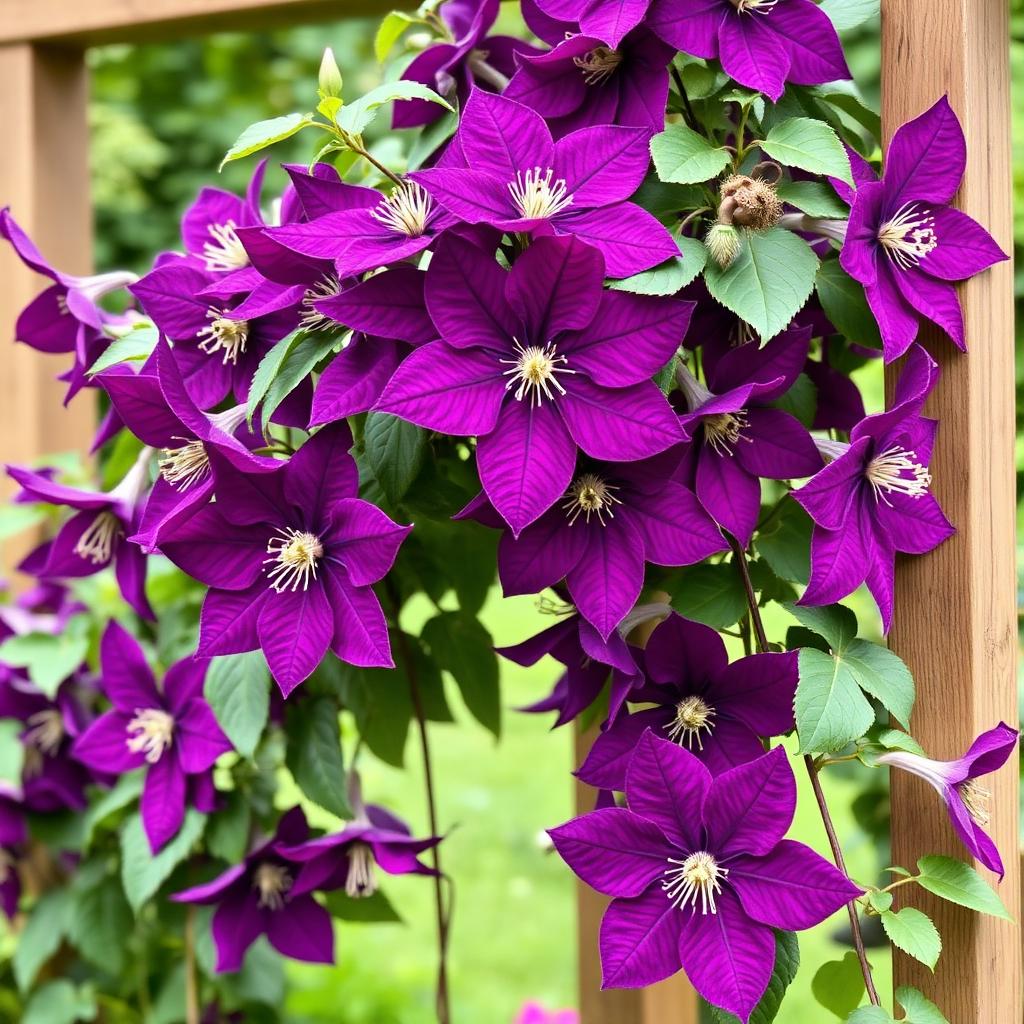
Clematis Jackmanii
Clematis 'Jackmanii'
- Colour
- Deep violet purple
- Flowering
- Summer
- Group
- Group 3
- Best for
- Trellis, fence, arch, or up through a shrub
- Difficulty
- Easy
Why it works. A long-loved, vigorous garden classic with reliable summer flowers and very simple pruning.
Beginner note. Cut back hard in late winter and the rest of the year mostly looks after itself.
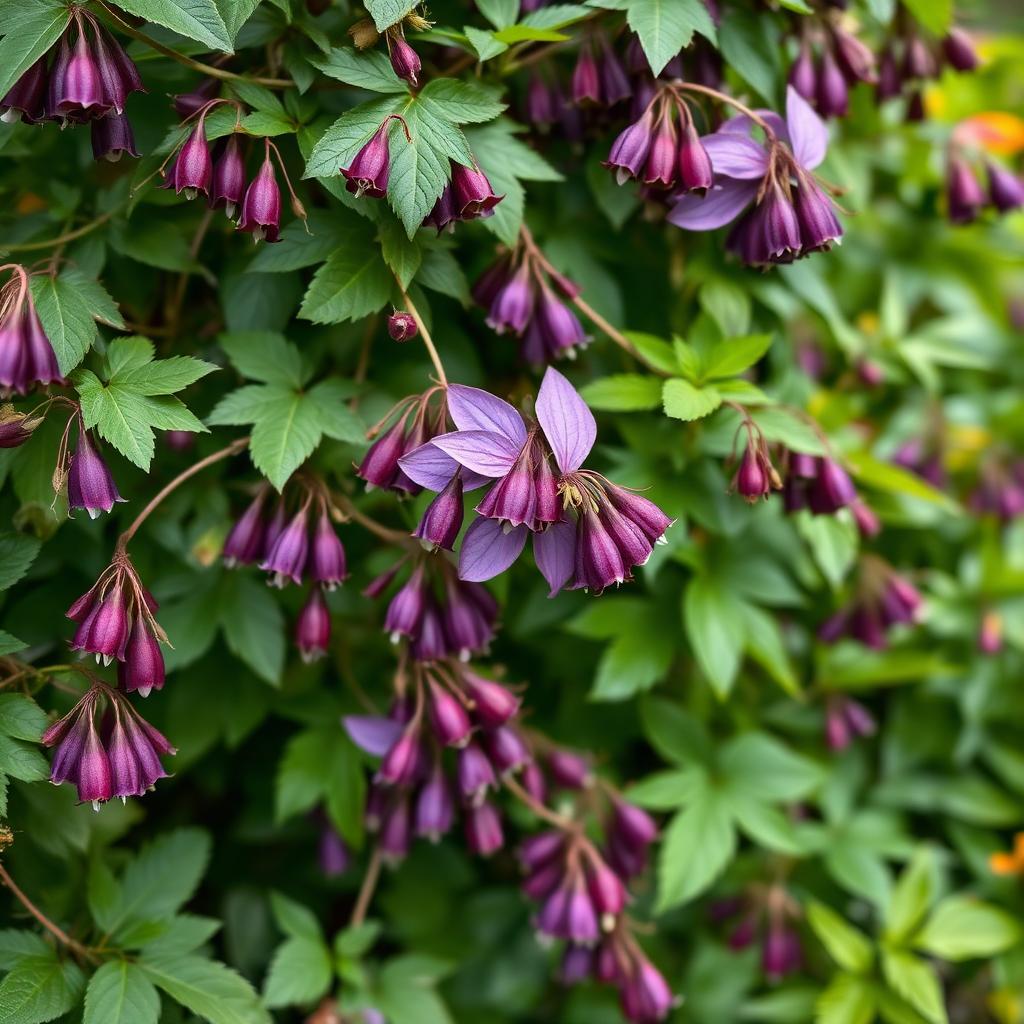
Viticella-type clematis
Clematis viticella
- Colour
- Purple, wine, pink, and white forms
- Flowering
- Mid to late summer
- Group
- Group 3
- Best for
- Trellis, fence, or scrambling through shrubs and roses
- Difficulty
- Easy
Why it works. Tough, disease-resistant Group 3 clematis that flower beautifully on new growth.
Beginner note. A safe first clematis if you are unsure about pruning and want strong flowering.
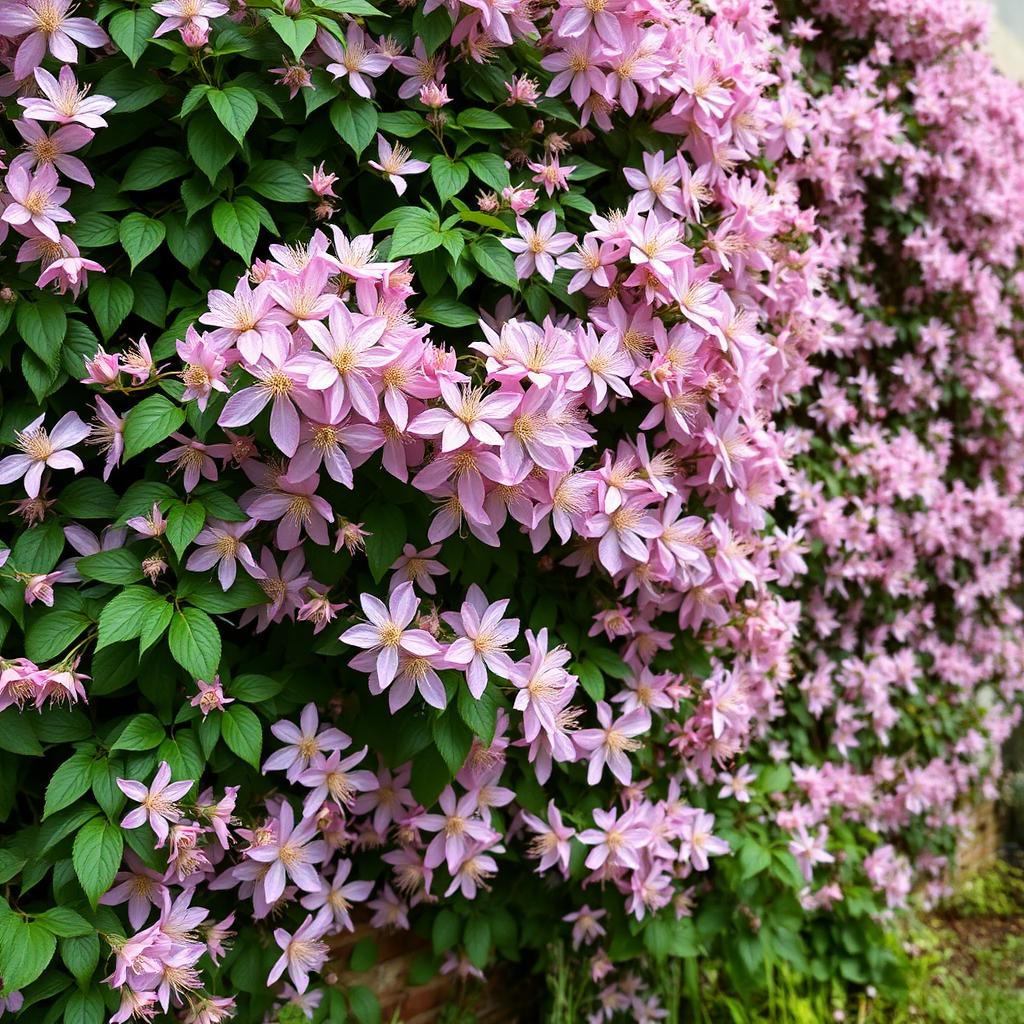
Clematis montana
Clematis montana
- Colour
- White and pink forms
- Flowering
- Late spring
- Group
- Group 1
- Best for
- Large walls, pergolas, and big garden structures
- Difficulty
- Easy
Why it works. A vigorous spring climber that smothers a large structure in flowers when happy.
Beginner note. It grows large quickly. Give it plenty of space and a sturdy support before planting.
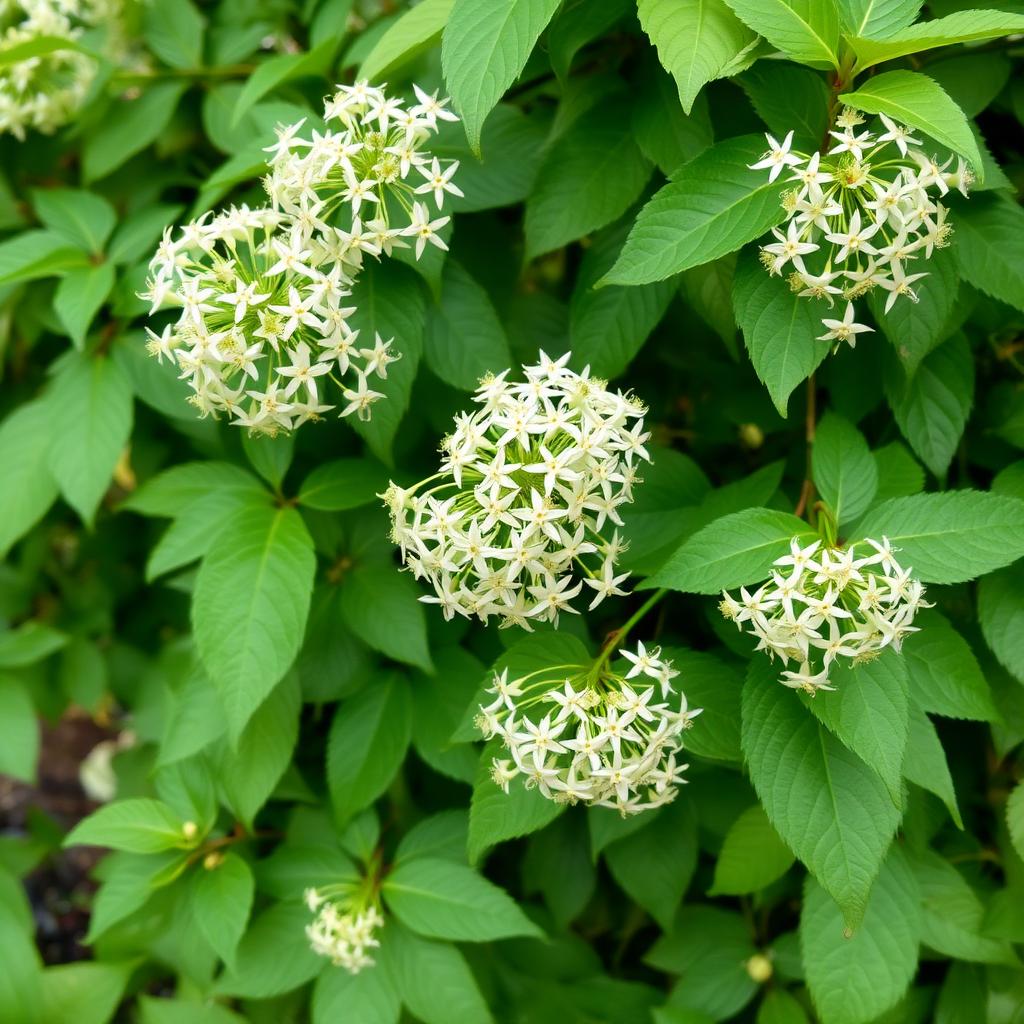
Clematis armandii
Clematis armandii
- Colour
- White star-shaped flowers
- Flowering
- Early spring
- Group
- Group 1
- Best for
- Sheltered walls or fences in milder climates
- Difficulty
- Moderate
Why it works. Evergreen leathery foliage and fragrant white flowers very early in the year.
Beginner note. Best in milder climates with shelter from cold drying winds. Check your local climate before choosing.
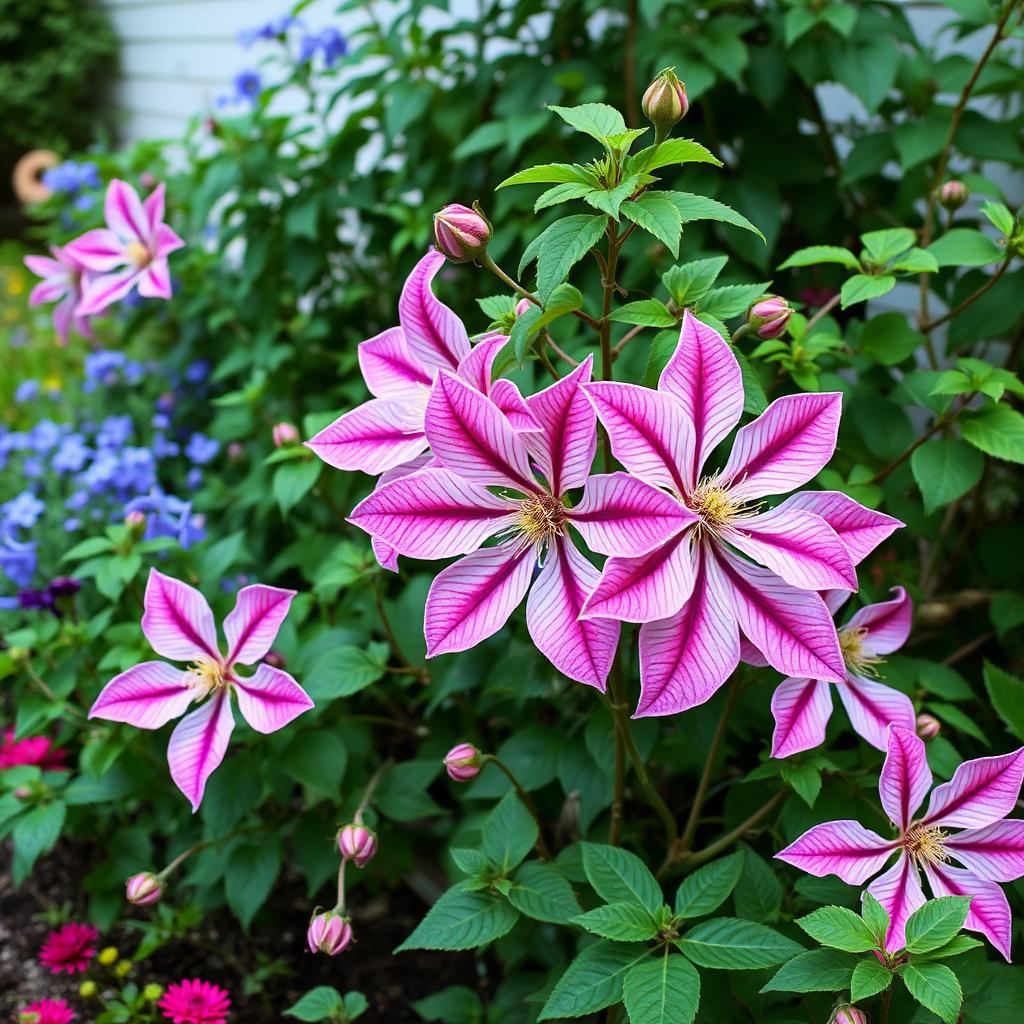
Nelly Moser
Clematis 'Nelly Moser'
- Colour
- Pale pink with deeper pink stripe
- Flowering
- Late spring to early summer, often again later
- Group
- Group 2
- Best for
- Trellis, obelisk, or partly shaded walls where stripes show well
- Difficulty
- Moderate
Why it works. Popular large-flowered hybrid with striking striped blooms that often repeat later.
Beginner note. Light prune only in late winter so you keep the early display.
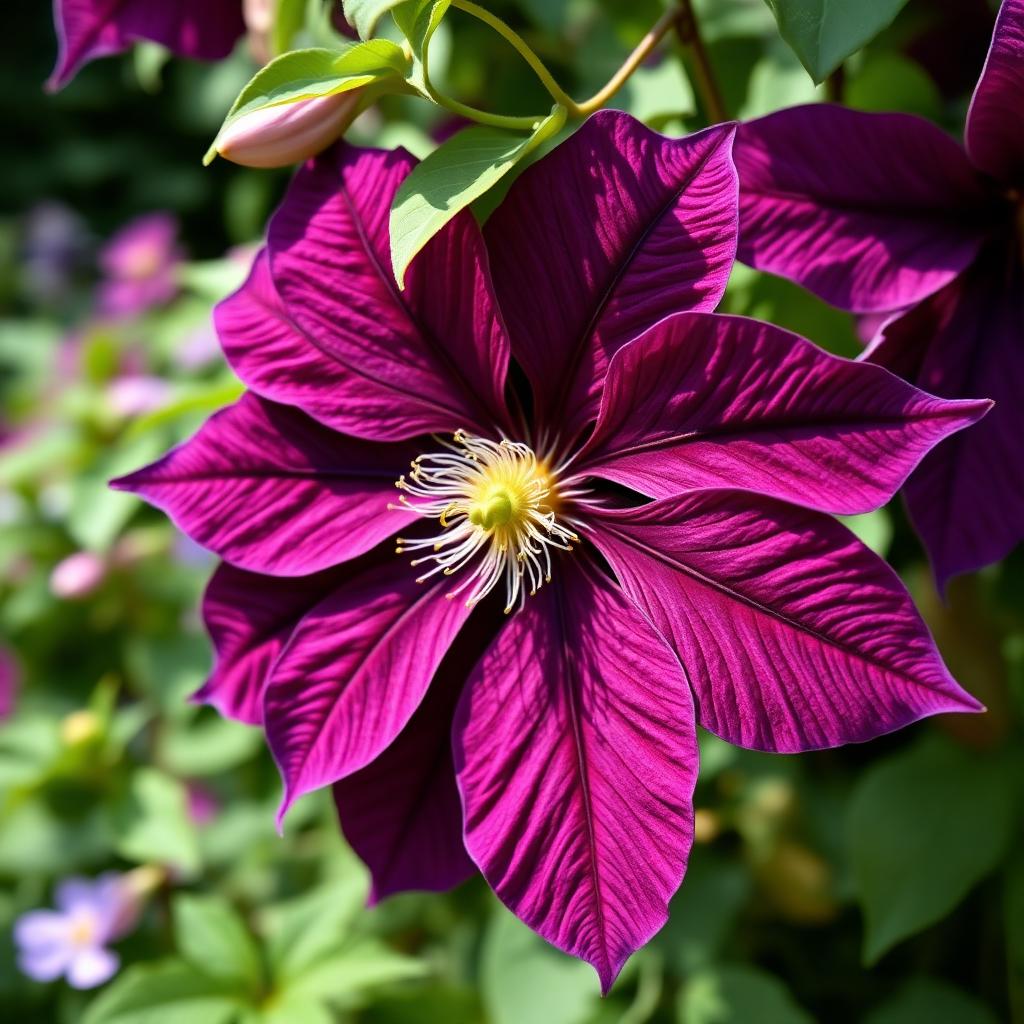
The President
Clematis 'The President'
- Colour
- Rich deep purple
- Flowering
- Early summer and often again later
- Group
- Group 2
- Best for
- Trellis, obelisk, or container with a sturdy support
- Difficulty
- Moderate
Why it works. A classic purple large-flowered clematis with two flushes when conditions suit.
Beginner note. Avoid hard pruning. Tidy out dead stems and cut back to strong buds in late winter.
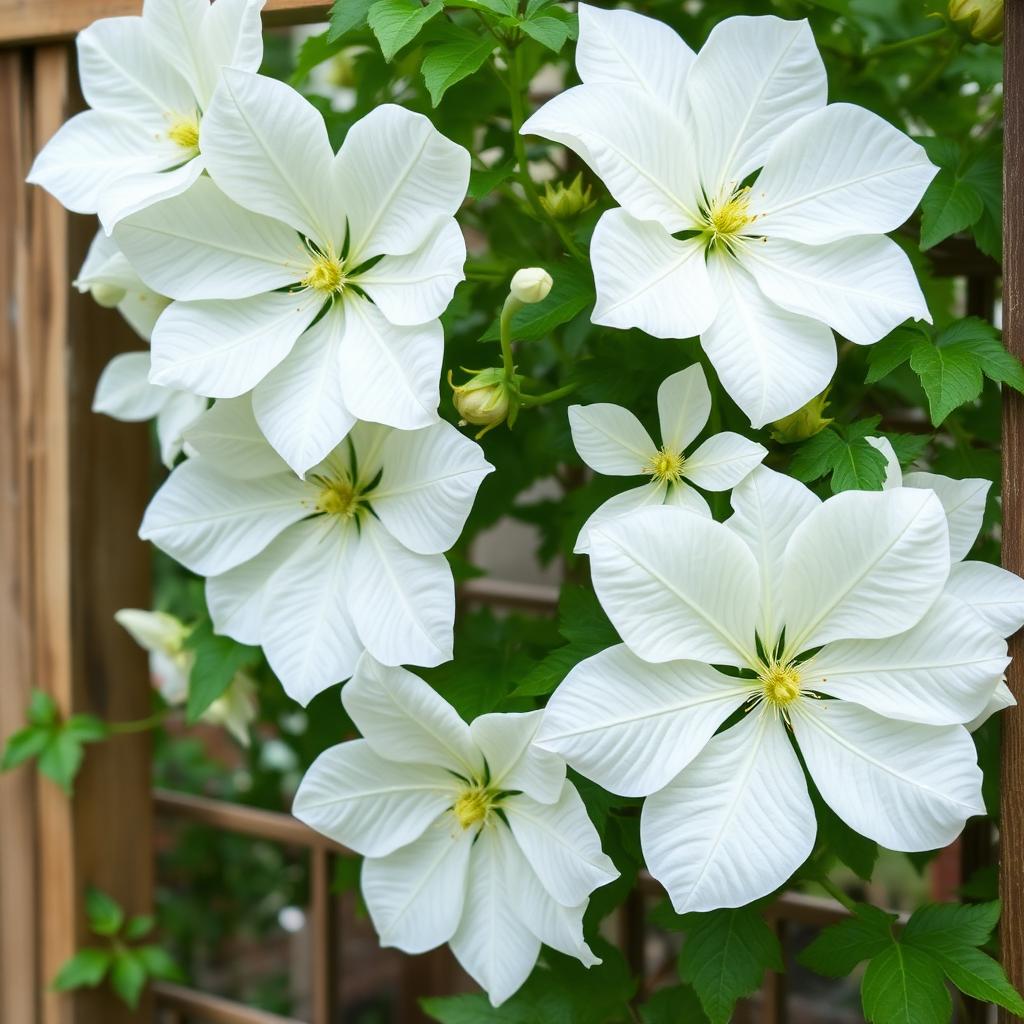
White large-flowered clematis
Clematis hybrids (e.g. 'Marie Boisselot' types)
- Colour
- Clean white
- Flowering
- Early summer, sometimes again later
- Group
- Group 2
- Best for
- Trellis, arch, or somewhere flowers show against darker foliage
- Difficulty
- Moderate
Why it works. White flowers brighten shaded corners and pair well with darker climbers.
Beginner note. Check the supplier's recommended pruning notes for the specific variety.
Arabella or integrifolia types
Clematis integrifolia and hybrids
- Colour
- Blue, violet, and pink forms
- Flowering
- Summer
- Group
- Group 3
- Best for
- Borders, low scramblers, or growing through shrubs
- Difficulty
- Easy
Why it works. Non-climbing or scrambling clematis that work well at the front of a border.
Beginner note. Cut back hard in late winter, then let them weave through nearby plants.
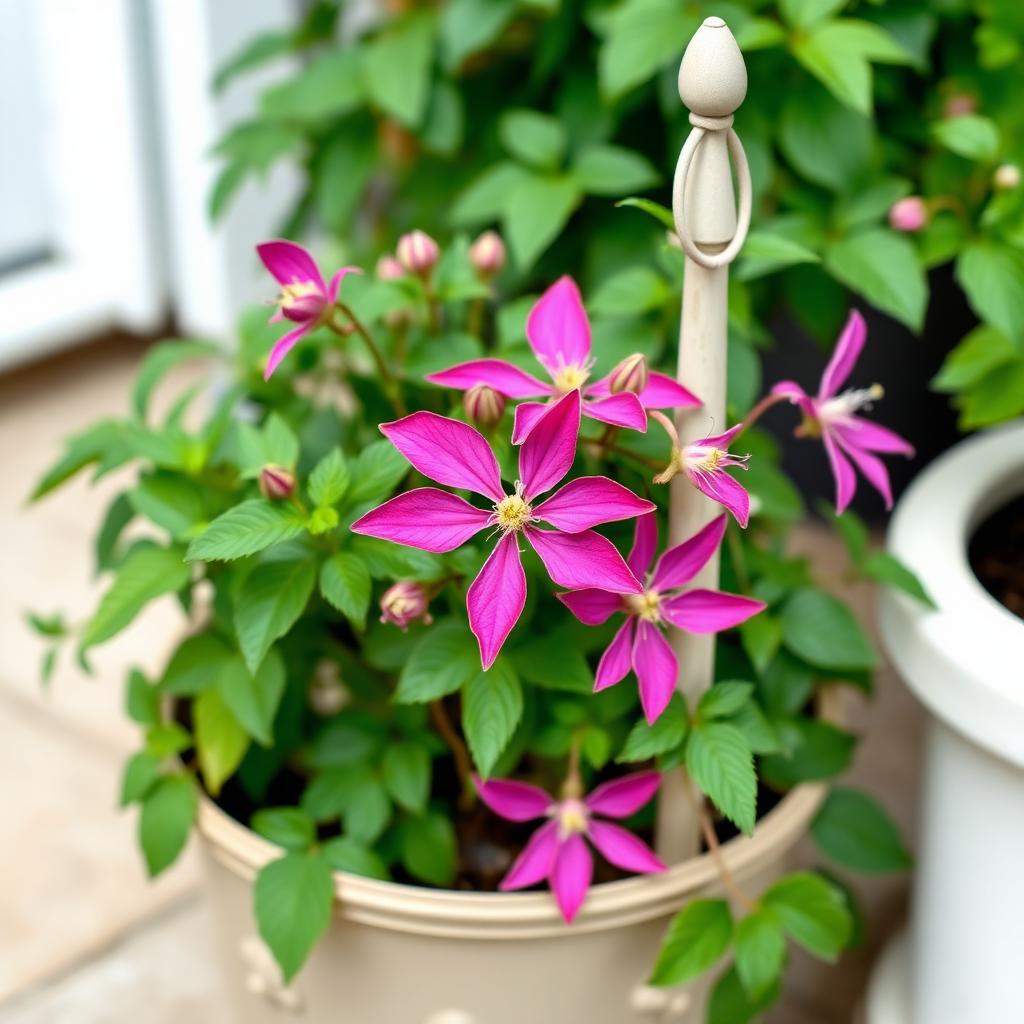
Compact patio clematis
Various dwarf hybrids
- Colour
- Pink, blue, purple, and white forms
- Flowering
- Summer
- Group
- Group 3 or 2 depending on variety
- Best for
- Large containers on patios and small gardens
- Difficulty
- Easy
Why it works. Bred to stay smaller and flower well in pots with a simple obelisk.
Beginner note. Still needs a big enough pot, steady watering, and the right pruning for that variety.
Take care with vigorous and sweet autumn clematis
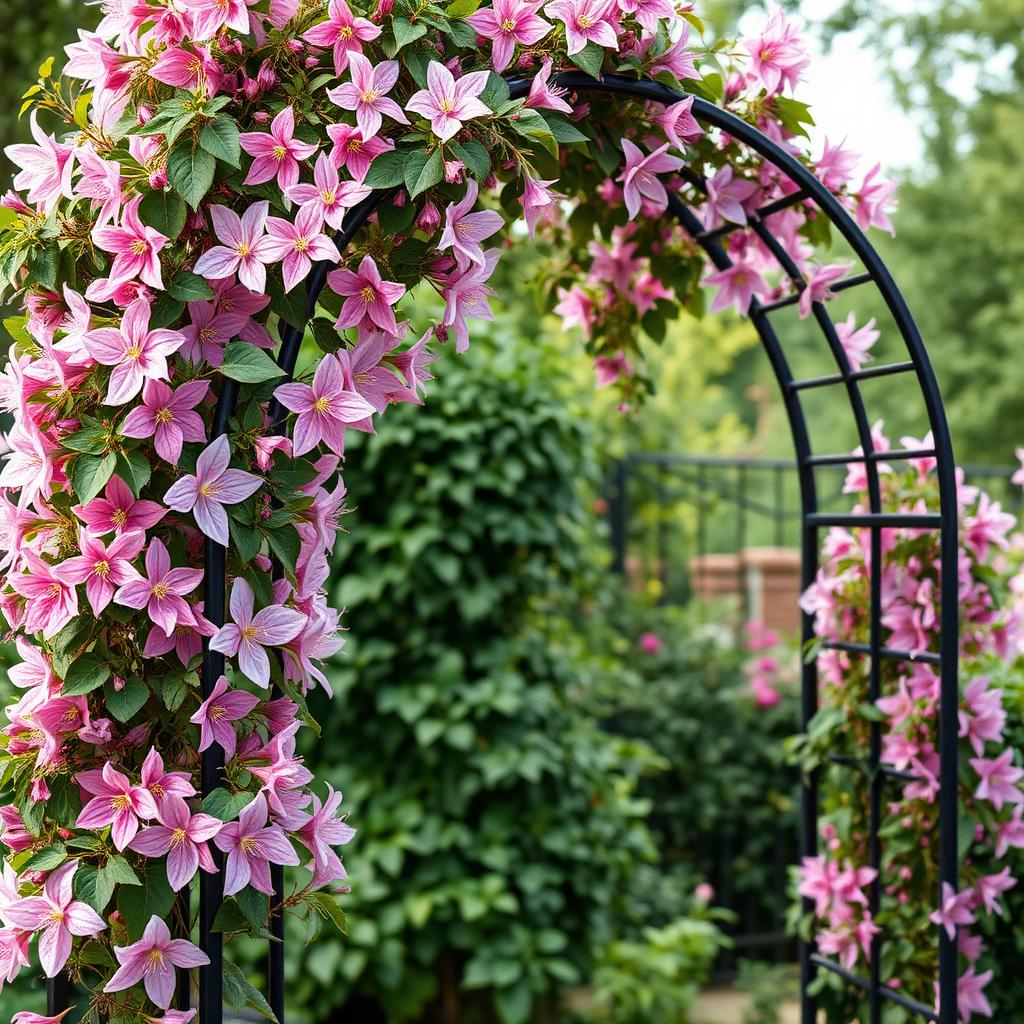
Common clematis problems
Most clematis problems come back to a small list of causes. The fix is usually a change in conditions, support, or pruning rather than replacing the plant.
Clematis not flowering
Why it causes problems. Often wrong pruning timing, shade, age, or too much nitrogen.
Better approach. Identify the group, check light, ease off high-nitrogen feeds, and give the plant time to settle.
Sudden wilting stems
Why it causes problems. Dry roots, heat stress, broken stems at soil level, or clematis wilt.
Better approach. Check soil moisture and stems, water deeply, and cut wilted stems back to healthy growth if needed.
Weak, thin growth
Why it causes problems. Low light, poor soil, or root competition from nearby plants.
Better approach. Improve the soil, give it space, and consider moving the plant in autumn or early spring if shade is too deep.
Flowers only at the top
Why it causes problems. Group 3 clematis left unpruned for years often flower only on the high tangled stems.
Better approach. Prune correctly for the group; for Group 3, a hard late-winter cut brings flowers back lower down.
Yellowing leaves
Why it causes problems. Dry soil, waterlogged roots, or nutrient stress.
Better approach. Check moisture and drainage first, then consider a balanced feed if soil and watering are fine.
Dry pot root ball
Why it causes problems. Pot too small, compost gone hydrophobic, or missed watering in heat.
Better approach. Soak the pot thoroughly, consider repotting into a larger container, and water consistently.
No support or weak tying
Why it causes problems. Clematis cannot self-support like a shrub; stems flop or break.
Better approach. Install a proper support before planting and tie new growth gently as it climbs.
Cut at the wrong time
Why it causes problems. Pruning a Group 1 hard in late winter removes the year's flower buds.
Better approach. Confirm the group before pruning, especially with unknown plants.
Too much shade
Why it causes problems. Most clematis flower poorly in deep shade.
Better approach. Move the plant or choose a more shade-tolerant variety for that spot.
Dry soil at the base of a wall
Why it causes problems. Walls cast a rain shadow that the roots cannot escape.
Better approach. Plant a little out from the wall, lean stems towards the support, and water generously in dry spells.
Slow young plant
Why it causes problems. First-year clematis often invest in roots rather than top growth.
Better approach. Be patient, water steadily, and avoid heavy feeding that pushes leaf at the cost of flowers.
Winter damage in pots
Why it causes problems. Small pots freezing solid for long periods can damage the roots.
Better approach. Move pots to shelter, wrap or group them, and avoid waterlogged compost going into winter.
Why is my clematis not flowering?
This is one of the most common clematis questions. The answer is almost always a combination of factors, not a single fault. Work through the checklist below before deciding the plant is hopeless.
Flowering checklist
- Do you know the variety or pruning group?
- When does it usually flower in your climate?
- Is it getting enough light, especially on the top growth?
- Was it cut back at the wrong time, removing the buds?
- Is it in a small or dry pot that limits root growth?
- Is it still young and settling in for the first year or two?
- Has there been frost or cold damage to early buds this season?
- Is the soil heavily fed with high-nitrogen fertiliser, pushing leaf at the cost of flowers?
Often the cure is simply waiting one more season
Useful supplies for growing clematis
Affiliate disclosure. Blooming Lucky may earn a commission if you buy through some links, at no extra cost to you.
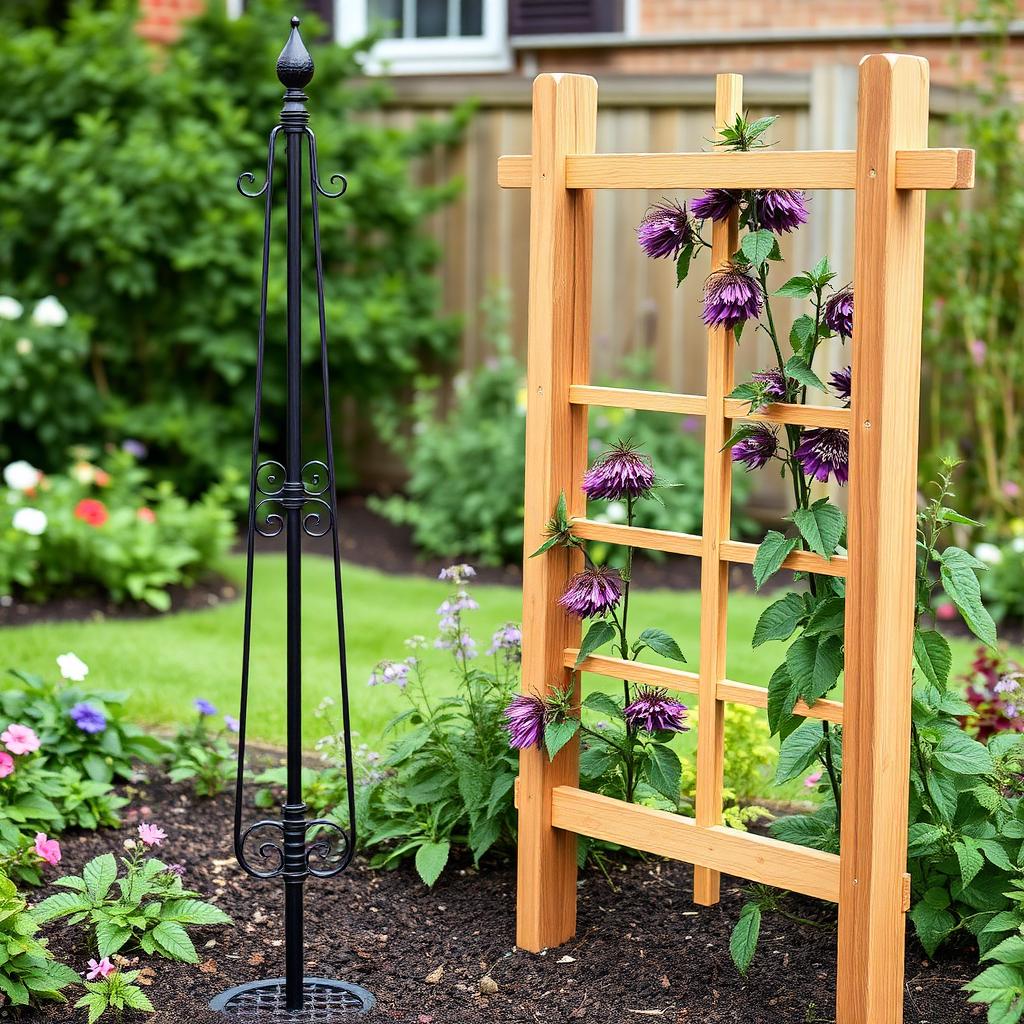
Best beginner clematis setup
Beginners do best with a clear, calm setup rather than a complicated planting plan. Choose a clematis with a known pruning group, give it a support that matches its mature size, and keep the first year simple. The combinations below cover the two most useful starting points.
For a border
- Choose a reliable variety with a known pruning group
- Plant near a trellis, fence, arch, or obelisk
- Improve the soil with compost before planting
- Water deeply while the plant is establishing
- Mulch lightly, keeping mulch off the stems
- Learn the pruning group before the first late winter
For a pot
- Choose a compact or patio clematis
- Use a large, deep container with drainage holes
- Add a stable support fixed into the pot or the soil below
- Use a quality peat-free potting mix
- Water consistently; never let the pot bake dry
- Protect the pot from very cold or very hot weather
If safe access for pruning is difficult, for example a mature clematis on a tall wall or a heavy old plant tangled into a pergola, consider asking a qualified gardener or arborist for help rather than attempting awkward ladder work.
Frequently asked questions
How do you grow clematis?
Where is the best place to plant clematis?
Does clematis need full sun?
Can clematis grow in shade?
How often should you water clematis?
When should clematis be pruned?
How do I know which clematis pruning group I have?
What is Group 1 clematis pruning?
What is Group 2 clematis pruning?
What is Group 3 clematis pruning?
Can clematis grow in pots?
How do you care for clematis in winter?
Why is my clematis not flowering?
Why is my clematis wilting?
What are easy clematis varieties for beginners?
Final advice
Most clematis problems are easier to solve once you know the variety, site conditions, and pruning group. Choose the right clematis for the space, give it support from the beginning, keep the roots evenly moist but not waterlogged, and learn the pruning group before reaching for the pruners. In pots, always go larger than feels necessary and water more consistently than you think you need to.
Do not panic if a new plant takes a season or two to settle. A calm, well-established clematis usually rewards patience with years of generous flowering on the same plant.
Related reads
Keep reading
- PlantsAll Blooming Lucky plant guidesBrowse the full library of plant guides for every part of the garden.Read guide
- Garden DesignGarden design ideasLayout, structure, and planting ideas for real gardens.Read guide
- ContainersPots and containersHow to plant and look after pots, troughs, and containers.Read guide
- PlantsPlants for under treesBest shade plants for dry, root-filled ground beneath mature trees.Read guide
- PlantsLarge-leaved plants: 8 beauties to tryBold leaf plants that bring structure to shaded and sheltered spots.Read guide
- PlantsHow to grow sunflowers: 9 varieties to tryA practical guide to growing sunflowers and choosing the right variety.Read guide
Looking for the wider plant library? Visit the Plants hub.