- Original Blooming Lucky guide
- Beginner friendly
- Ornamental garden salvias only
Can you take cuttings from salvias?
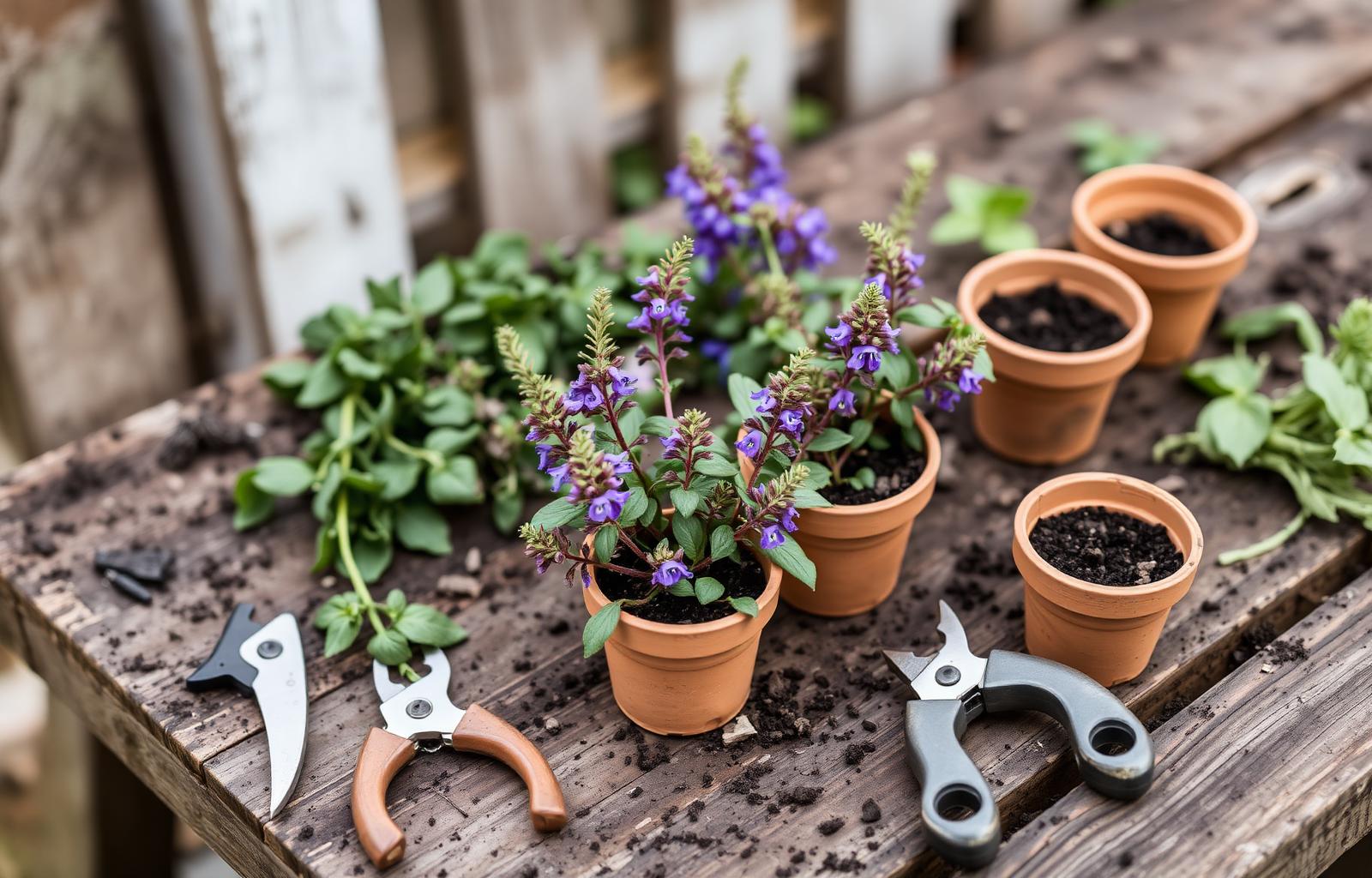
Many ornamental salvias can be propagated from stem cuttings, and the shrubby tender types are some of the most reliable plants in any propagation tray. Tender salvias such as Salvia microphylla and greggii hybrids, guaranitica types including 'Black and Blue' and 'Black and Bloom', and named hybrids like 'Hot Lips' and 'Amistad' all respond well in a typical home garden setup.
Some herbaceous perennial salvias may be easier to propagate by division or by basal cuttings in spring, rather than by classic stem cuttings later in the year. Success varies by salvia type, season, temperature, and aftercare, so always treat early attempts as learning rather than failure.
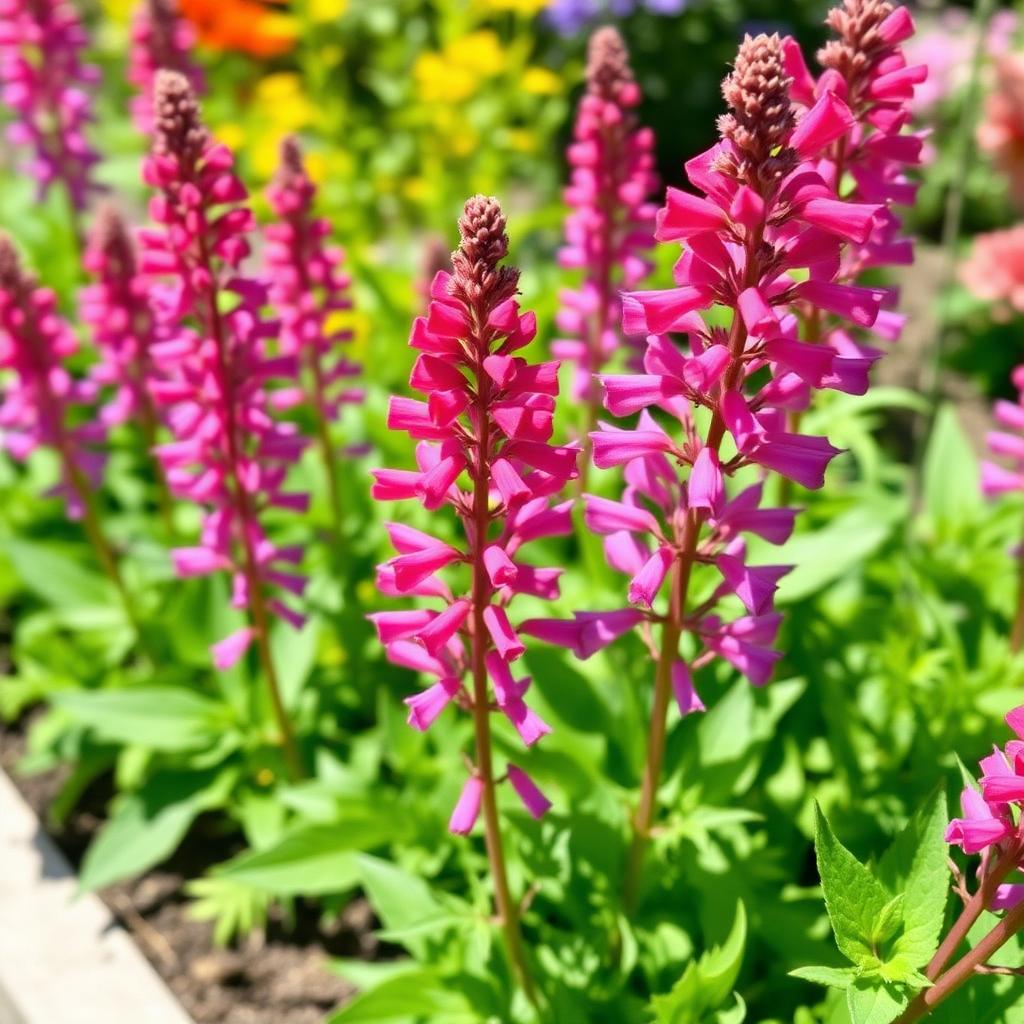
Good salvia cutting material should be
- Healthy and pest-free
- Not badly wilted before you cut it
- Not too woody and old
- Not too soft and floppy
- Ideally non-flowering or only lightly flowering
- Taken from a strong parent plant
- Prepared quickly after cutting so it does not dry out
When to take salvia cuttings
Most salvia cuttings are taken in late spring, summer, or early autumn. The exact timing depends on your climate and the type of salvia. Softwood cuttings from soft fresh growth root quickly when conditions are warm; semi-ripe cuttings from slightly firmer growth later in the season can be more forgiving and useful for tougher shrubby types.
Very hot, dry weather stresses cuttings before they have a chance to root, and cold wet conditions can cause young cuttings to rot. Morning is often a good time to take cuttings because stems are well hydrated. Avoid the middle of a hot sunny day.
A note on timing for tender salvias
What you need before taking salvia cuttings
You do not need much specialist equipment for salvia cuttings, but clean tools and the right compost make a real difference. Set everything up before you start so a cut shoot is in a pot within minutes rather than hours.
- Clean sharp bypass pruners or propagation snips
- Small pots, around 9 to 11 cm is plenty
- Free-draining seed and cutting compost
- Perlite or horticultural grit if your mix needs more drainage
- Plant labels and a pencil
- A watering can with a fine rose, or a mister
- A clear cover or simple propagator, vented if used
- A bright sheltered place out of harsh sun and strong wind
Clean tools, fresh compost
How to take salvia cuttings step by step
This is the core of the guide. Work calmly and try to keep cut material out of the sun until it is in the pot. A small batch done well is more useful than a large batch done in a rush.
- Water the parent plant the day before if it is dry
- Choose healthy non-flowering side shoots from a strong plant
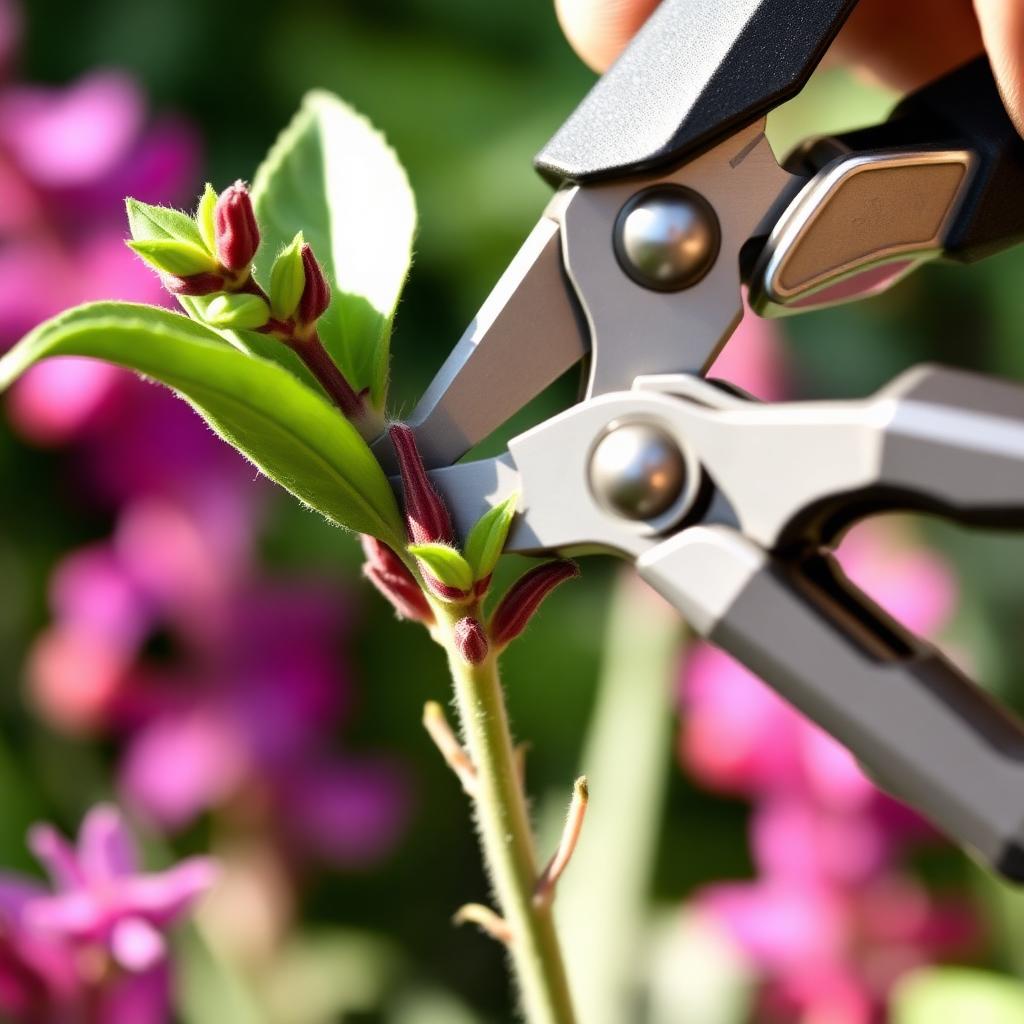
- Cut each shoot cleanly just below a leaf joint
- Trim the cutting to a short length, often around 8 to 12 cm
- Remove the lower leaves so a clean section of stem goes into compost
- Remove any flowers or flower buds at the tip
- Trim very large remaining leaves in half to reduce water loss if needed
- Insert cuttings around the edge of a small pot of free-draining compost
- Firm gently around the stems so they stand upright
- Water lightly so the compost settles, not so much that it puddles
- Place in bright indirect light, sheltered from harsh sun and strong wind
- Keep the compost lightly moist, not wet, and pot on once well rooted
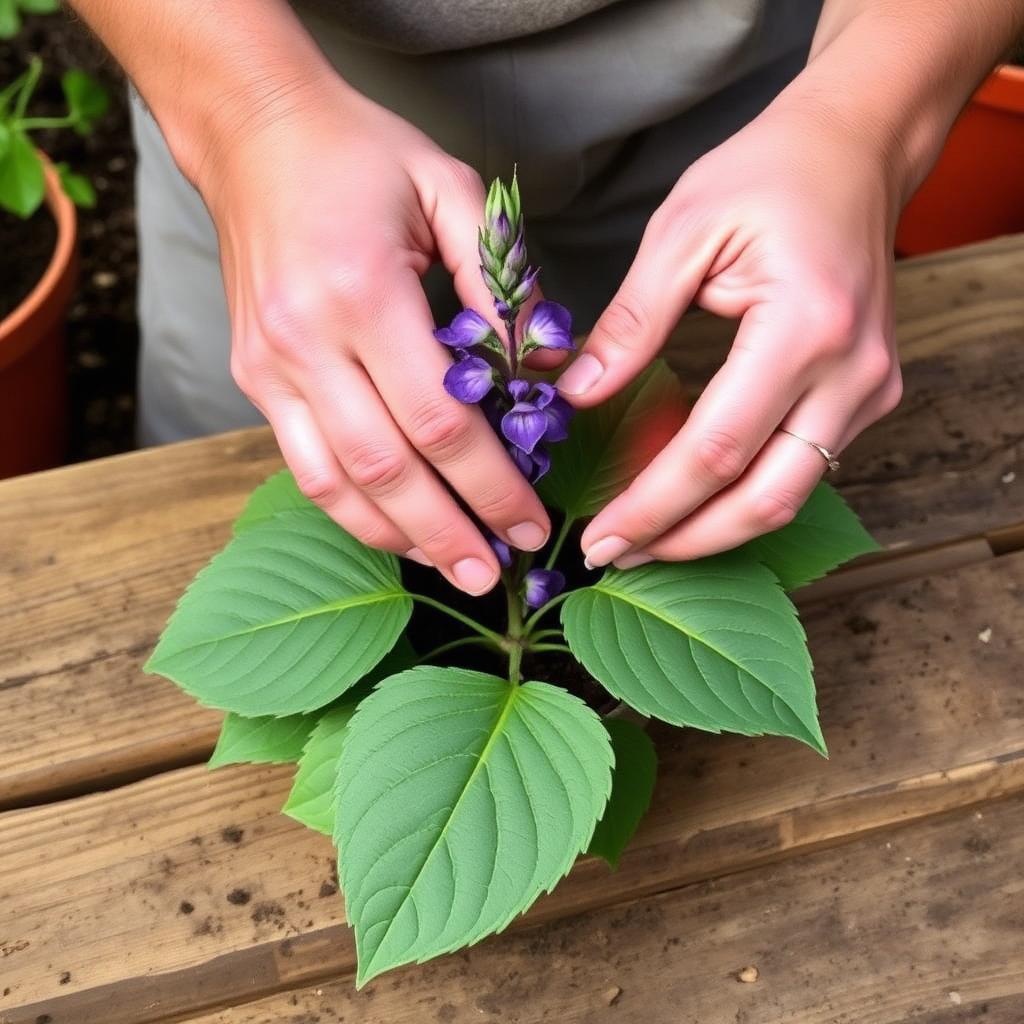
Take a few extras
Salvia cuttings in compost
Compost is usually the safest method for most ornamental salvia cuttings because roots form directly in the medium the young plant will grow in. There is no shock from moving roots out of water into soil, and the structure of a good cutting mix supports both moisture and airflow at the same time.
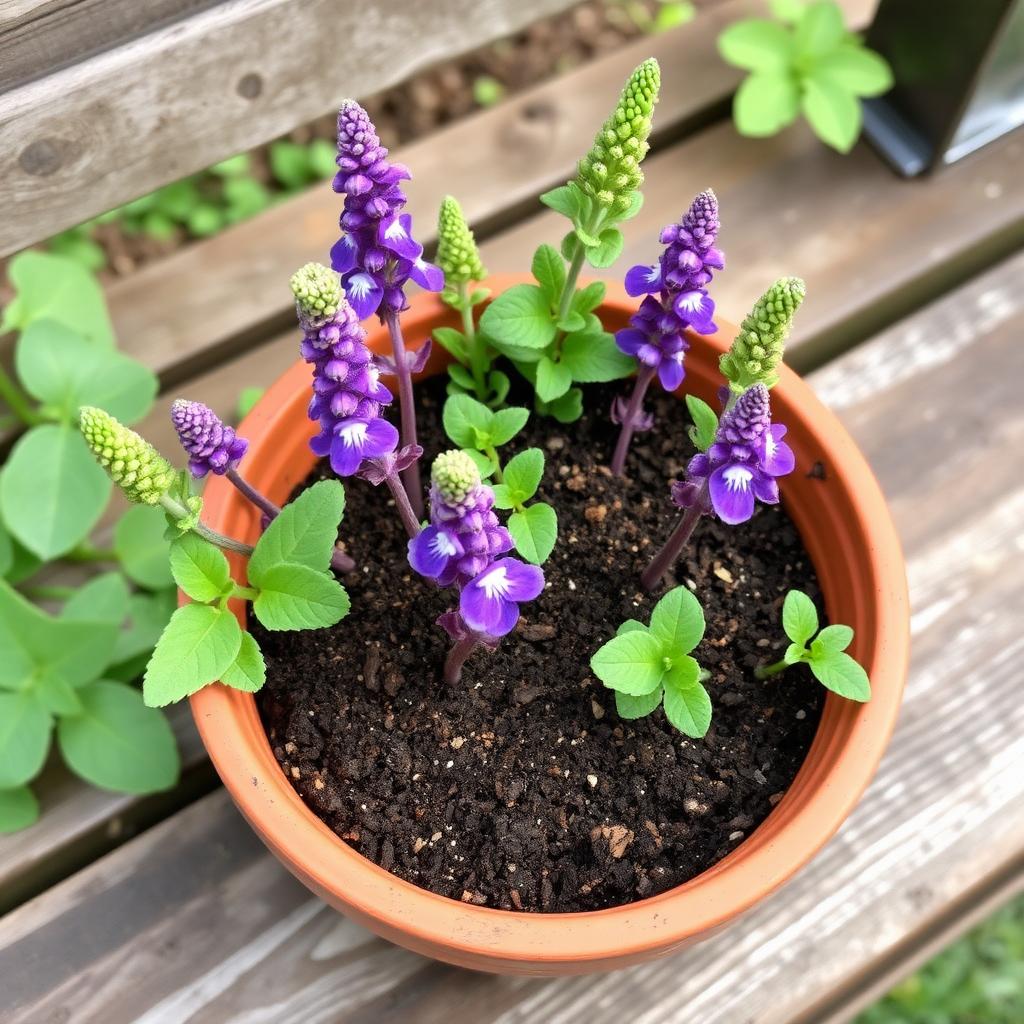
- Use small pots rather than huge ones; a 9 to 11 cm pot is fine for several cuttings
- Use a free-draining seed and cutting compost, with added perlite or grit if needed
- Put cuttings around the edge of the pot where drainage is best
- Avoid soggy compost that stays wet for days
- Keep pots in bright indirect light, not full midday sun
- Vent any cover so condensation does not become trapped wetness
- Check gently for rooting after a couple of weeks, then leave alone between checks
Damp, not wet
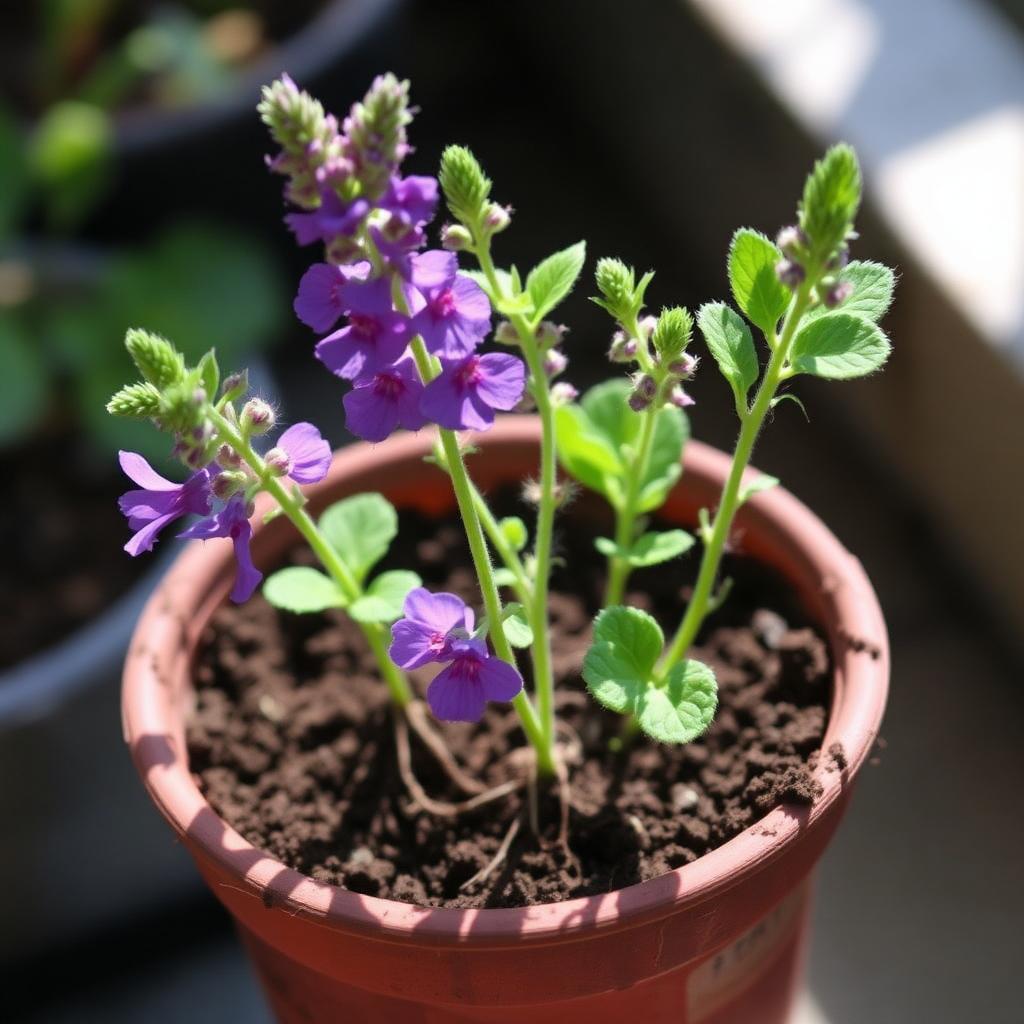
Can salvia cuttings root in water?
Some salvias will produce roots in clean water on a bright windowsill, but water roots are different from soil roots. They are often more delicate, and the move from water to compost can stress the cutting if the roots are already long.
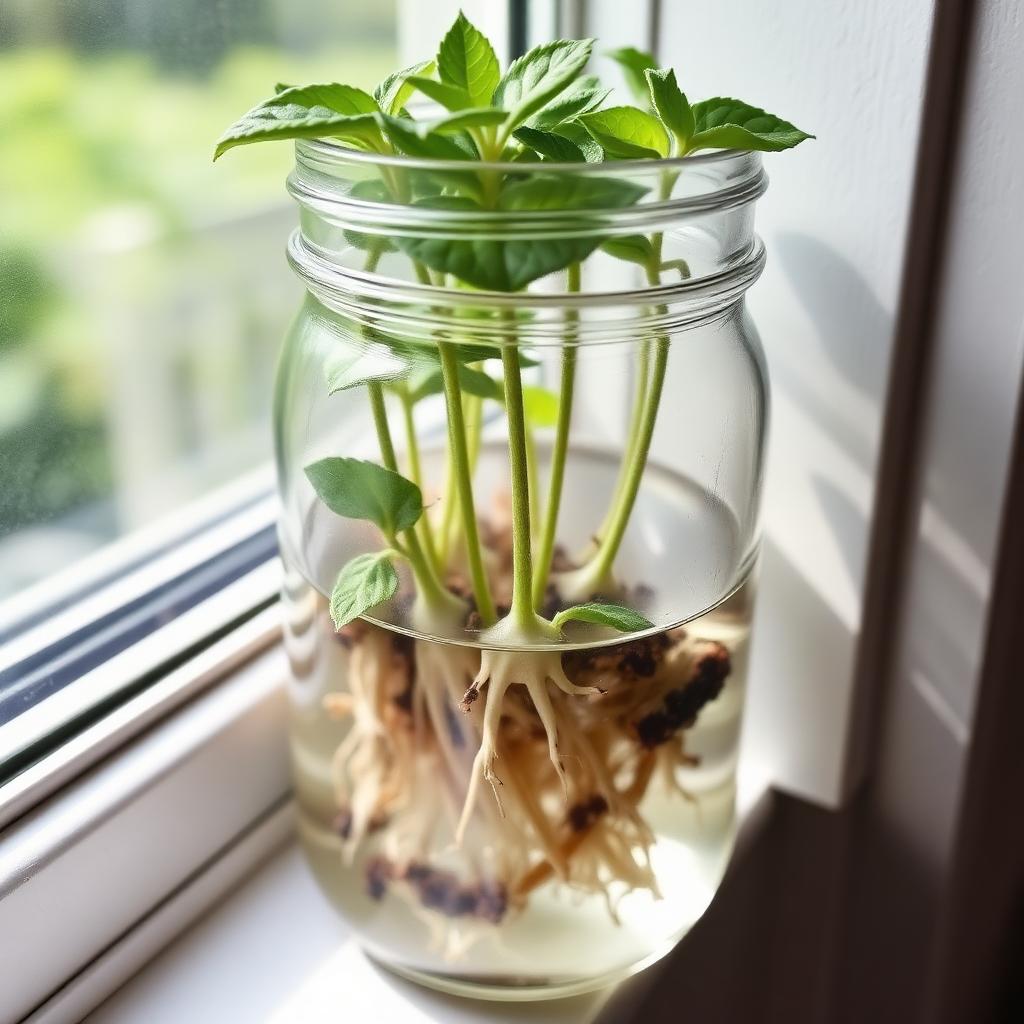
- Use clean room-temperature water in a glass or jar
- Strip leaves below the water line so they do not rot
- Place in bright indirect light, never strong direct sun
- Change the water every few days to keep it fresh
- Move to compost while roots are small but visible, ideally under 2 cm
- Keep the compost evenly moist while the cutting adjusts
- Expect a slower start in the soil as roots adapt
For beginners, compost is usually safer
How long do salvia cuttings take to root?
Many salvia cuttings root in roughly two to six weeks. Warmer conditions and softer summer growth can speed things up; cooler conditions or tougher semi-ripe wood can slow things down. The honest answer is that timing varies by temperature, salvia type, cutting maturity, and your conditions.
New leafy growth on the cutting is a good sign, but roots matter more than top growth. Resist the temptation to pull cuttings up repeatedly to check; each tug damages young roots and slows progress.
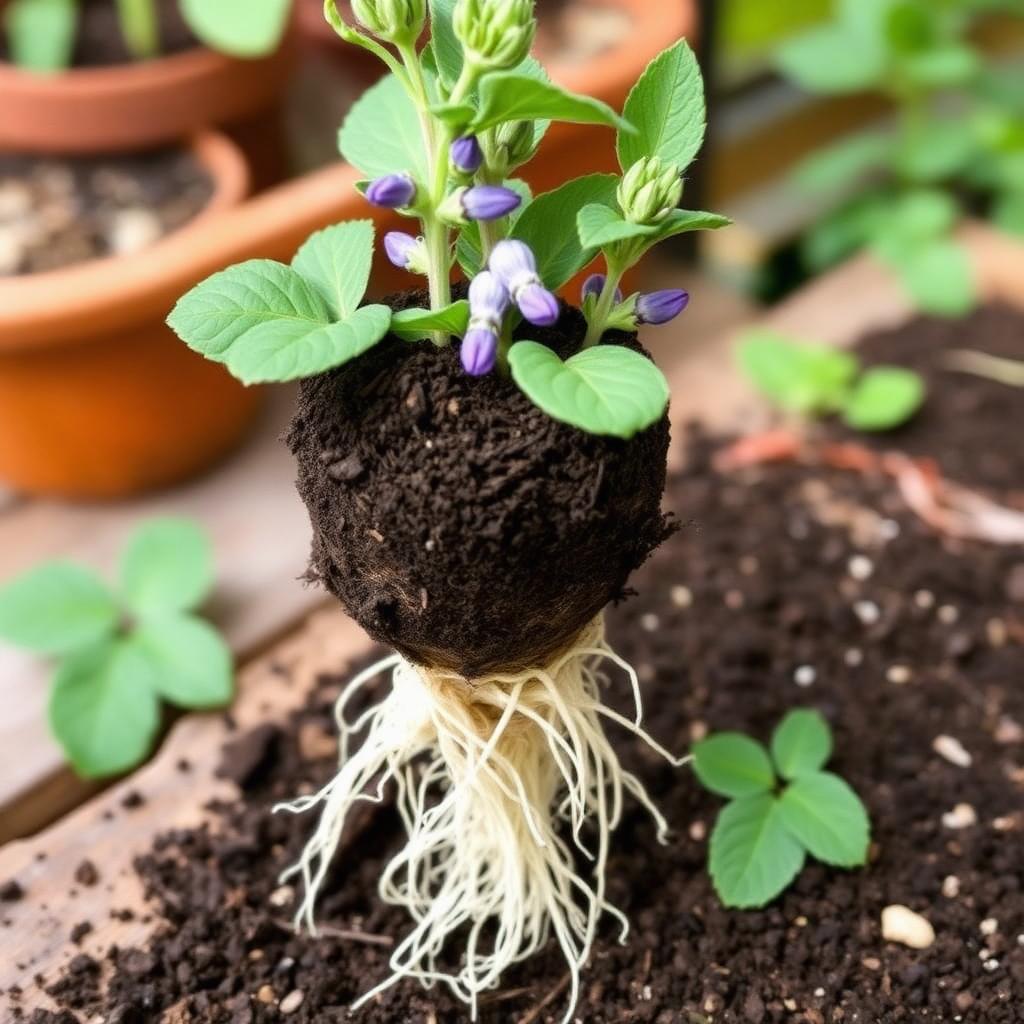
Signs your salvia cuttings are rooting
- The cutting stays firm and upright over time
- New small leaves appear at the tip
- There is gentle resistance when you give a very light tug
- Tiny roots show at the drainage holes underneath
- Older leaves stay reasonably green rather than collapsing
How to care for salvia cuttings after planting
The first few weeks set the tone for whether young plants thrive or struggle. Salvia cuttings prefer gentle, consistent conditions rather than dramatic changes in light, water, or temperature.
Light
Bright indirect light is best while cuttings are rooting. Strong direct sun on unrooted cuttings stresses them quickly. A bright but slightly shaded windowsill, greenhouse bench, or sheltered outdoor spot usually works well.
Watering
Keep compost lightly moist, not soggy. Touch the top of the compost rather than guessing; if it feels damp, leave it alone. Heavy watering on already-wet compost is one of the most common causes of failure.
Humidity
A clear cover or vented propagator can help hold gentle humidity around cuttings, especially in dry indoor air. Too much trapped moisture without airflow encourages rot, so vent the cover daily or use one with built-in ventilation.
Potting on
Move rooted cuttings into individual small pots once they have enough roots to hold a small root ball together. A potting-on compost rather than seed and cutting compost gives young plants more nutrients for the next stage.
Pinching out
Once young plants are growing well, pinch the tips lightly to encourage branching. This usually produces bushier, more flowering-friendly plants than tall single-stemmed ones.
Hardening off
If young plants will eventually live outside, introduce them gradually to outdoor conditions over a week or two rather than putting them straight out. Sudden cold nights or fierce sun can undo weeks of careful aftercare.
How to overwinter salvia cuttings
Young cuttings need protection from cold, wet, and poor light through winter, especially for tender shrubby salvias. The aim is to keep them alive and steady rather than to push new growth in dark conditions.
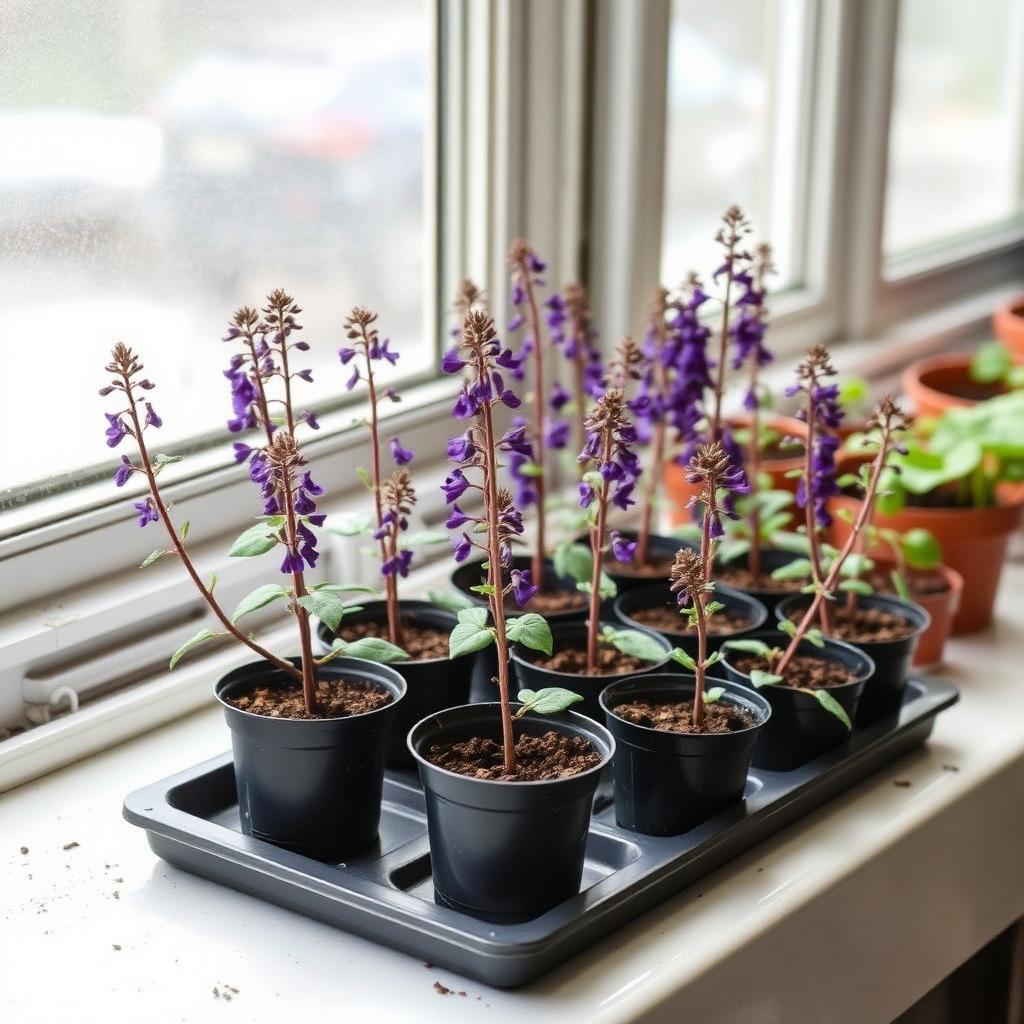
- Keep tender young plants frost-free where the salvia is not reliably hardy
- Avoid overwatering in winter; cool wet compost causes rot
- Give as much light as practical through the dark months
- Keep gentle air movement around pots to reduce mould
- Check regularly for pests such as aphids and whitefly under cover
- Avoid heavy feeding in winter; light feeding only when actively growing
- Pot on or plant out only when conditions are reliably mild
Cool and bright beats warm and dark
When to cut back salvias
Cutting back depends on the type of salvia and your local climate. There is no single correct date that applies to every variety, and treating a tender shrubby salvia like a hardy herbaceous perennial can do real harm.
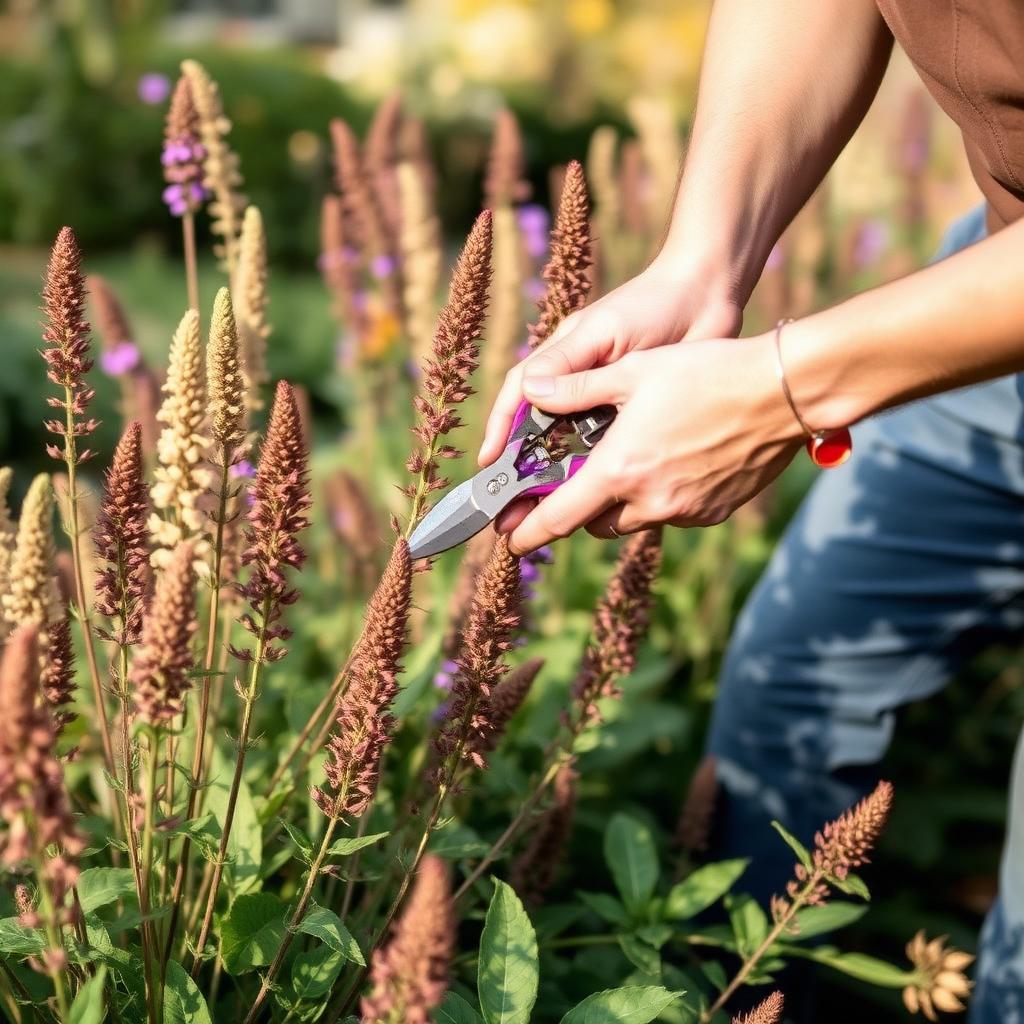
General cut-back patterns
- Herbaceous perennial salvias: often cut back after the main flush, then tidied in autumn or early spring
- Tender shrubby salvias: usually only tidied lightly going into winter, with the main prune in spring once frost risk has passed
- Woody or semi-woody salvias: refresh in spring, avoiding cuts into the oldest hard wood where possible
- Repeat-flowering types: a light tidy after the first flush often encourages a second flush
- Cutting back hard right before cold weather can leave tender salvias vulnerable
- In cold winters, leaving some top growth on shrubby salvias can offer a little protection
If you are unsure how hardy your salvia is
Common salvia cutting mistakes
Most failed cuttings share a small handful of causes. The grid below names the most common ones with a better approach so you can avoid them next time.
Taking cuttings from weak plants
Why it causes problems. Tired, stressed parents do not have the energy to support a cutting through rooting.
Better approach. Choose strong, healthy parent plants with plenty of fresh side shoots.
Using flowering stems without removing buds
Why it causes problems. The cutting keeps trying to flower instead of focusing on making roots.
Better approach. Remove flowers and flower buds and choose non-flowering side shoots where possible.
Leaving too many large leaves
Why it causes problems. Leaves lose water faster than the cut stem can take it up, causing wilt.
Better approach. Strip lower leaves and trim very large remaining leaves in half if needed.
Using soggy compost
Why it causes problems. Airless wet compost suffocates the cut stem and encourages rot.
Better approach. Use free-draining cutting compost and aim for damp, not wet.
Placing cuttings in harsh direct sun
Why it causes problems. Strong sun cooks soft unrooted cuttings and dries them out very quickly.
Better approach. Place in bright indirect light, sheltered from midday sun and hot wind.
Letting cuttings dry out completely
Why it causes problems. Once an unrooted cutting wilts hard, recovery is unlikely.
Better approach. Check regularly and water lightly before the compost surface goes bone dry.
Using dirty tools
Why it causes problems. Dirty blades can transfer disease and damage the stem ends.
Better approach. Wipe pruners clean and use sharp blades that cut rather than crush.
Covering cuttings with no ventilation
Why it causes problems. Sealed clear covers trap moisture and create a perfect environment for mould and rot.
Better approach. Use a vented propagator lid or lift the cover daily to swap the air.
Potting on before roots are ready
Why it causes problems. Disturbing a cutting that has only just rooted can break the new roots and set the plant back.
Better approach. Wait for clear signs of rooting and a small root ball before moving it on.
Leaving tender cuttings cold and wet in winter
Why it causes problems. Combined cold and wet is far harder on young plants than dry cold or mild damp.
Better approach. Keep young tender plants frost-free, with airflow and only light watering.
The two big causes of failure
Which salvias are easiest from cuttings?
The varieties below cover a useful mix of shrubby tender salvias and named hybrids that are commonly grown from cuttings. They are popular for a reason. Always check your variety and your local climate, since salvias vary in hardiness and behaviour.
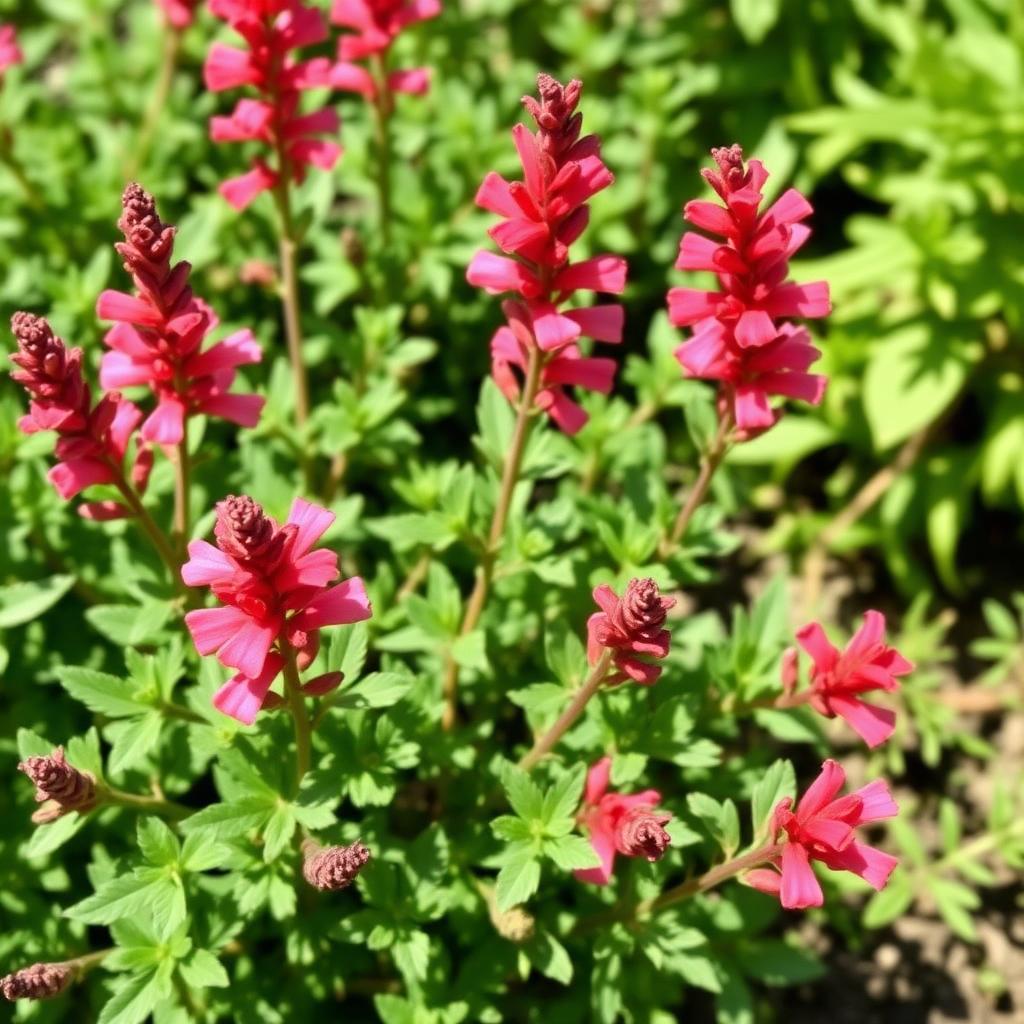
Salvia microphylla
Salvia microphylla
- Best cutting
- Soft tip or semi-ripe side shoot
- Best timing
- Late spring to late summer
- Difficulty
- Easy
- Overwinter
- Often frost tender in cold areas; keep young plants under cover
Why it works. Aromatic shrubby salvia that roots reliably from short healthy side shoots.
Beginner note. A forgiving first choice. Take several short cuttings rather than one long one.
Salvia greggii
Salvia greggii
- Best cutting
- Semi-ripe side shoot
- Best timing
- Summer
- Difficulty
- Easy
- Overwinter
- Tender in cold winters; protect young plants under cover
Why it works. Close cousin of microphylla with similar habit and reliable cutting performance.
Beginner note. Keep cuttings short and trim leaves to reduce water loss.
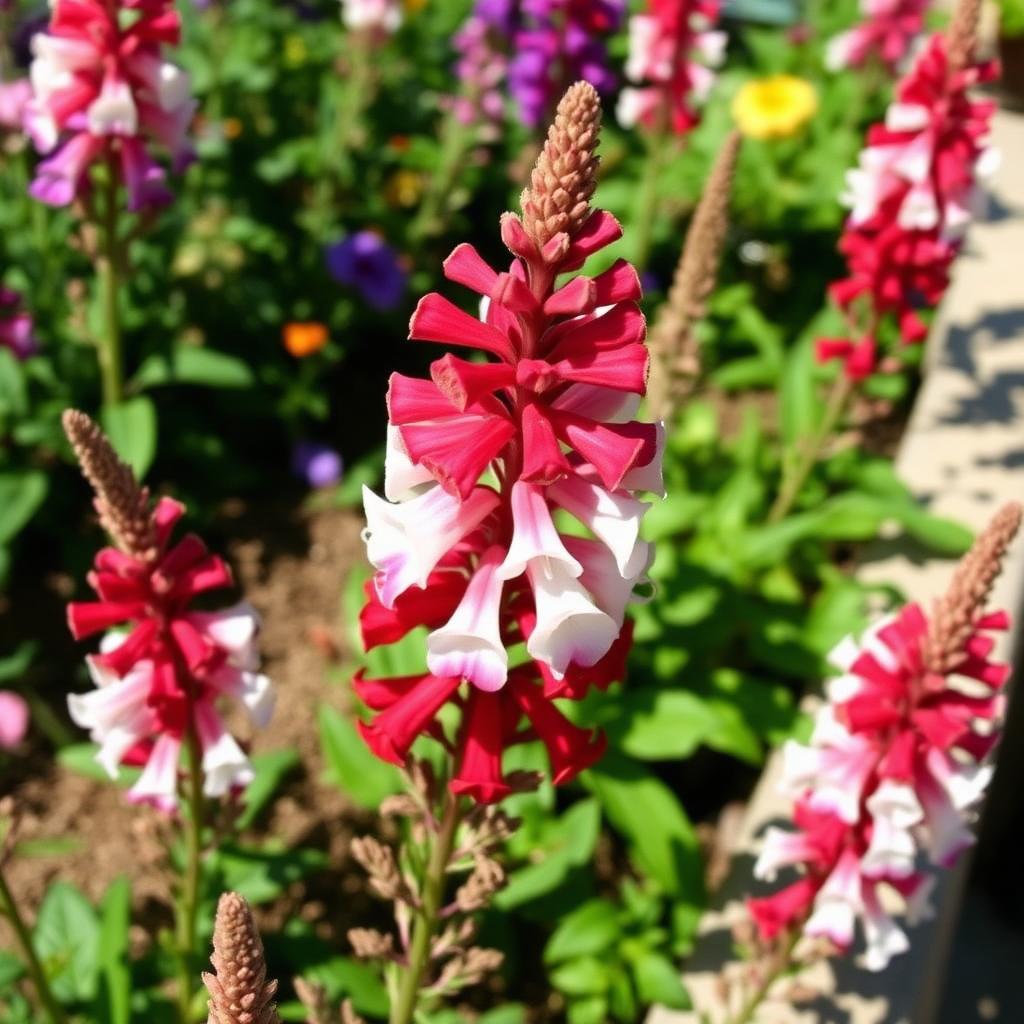
Salvia 'Hot Lips'
Salvia microphylla 'Hot Lips'
- Best cutting
- Soft tip or semi-ripe side shoot
- Best timing
- Late spring to late summer
- Difficulty
- Easy
- Overwinter
- Often borderline hardy; cuttings are good insurance
Why it works. Bicolour red and white flowers on a vigorous, easy-rooting shrubby salvia.
Beginner note. Take cuttings before cold weather so young plants are settled by winter.
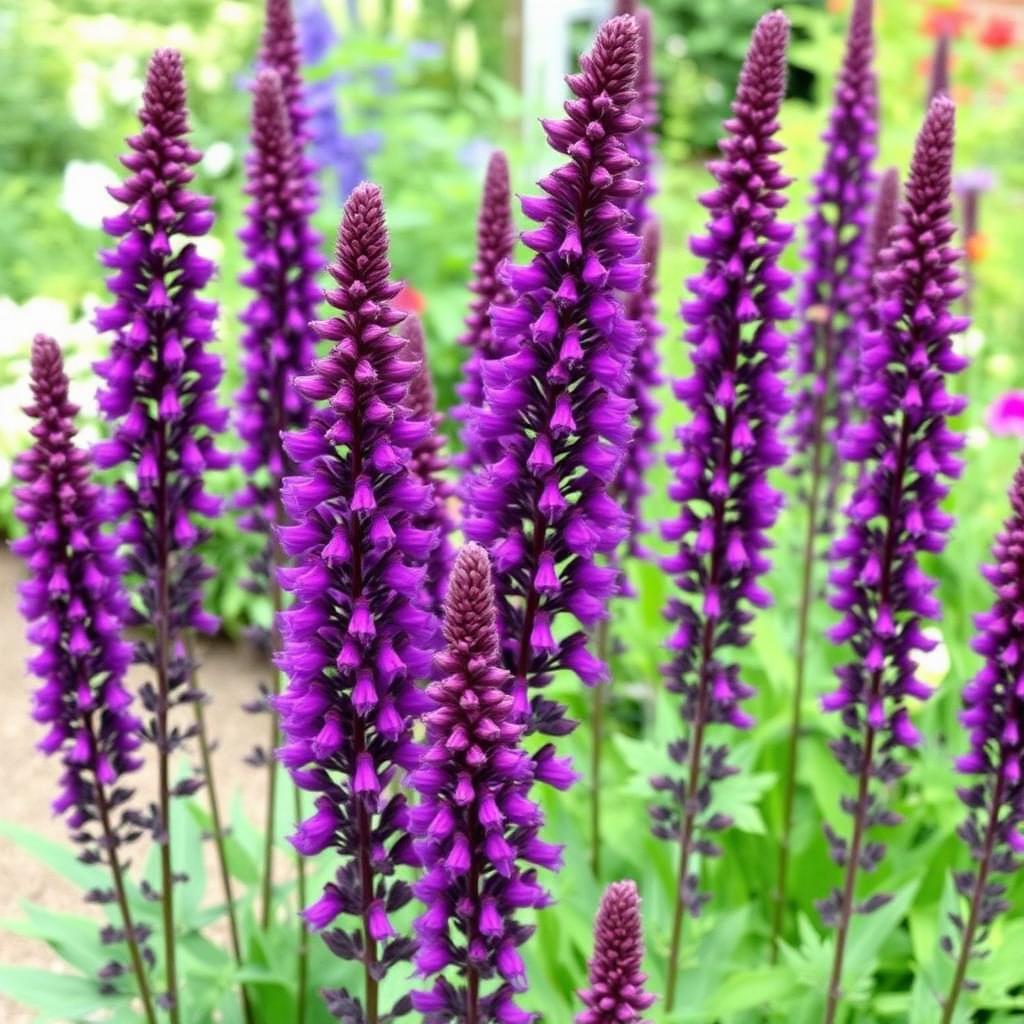
Salvia 'Amistad'
Salvia 'Amistad'
- Best cutting
- Soft tip or semi-ripe side shoot
- Best timing
- Summer to early autumn
- Difficulty
- Easy
- Overwinter
- Often treated as tender; overwinter young plants under cover
Why it works. Tall purple-flowered favourite that grows away from cuttings quickly when warm.
Beginner note. Pinch tips once growing well to encourage bushier young plants.
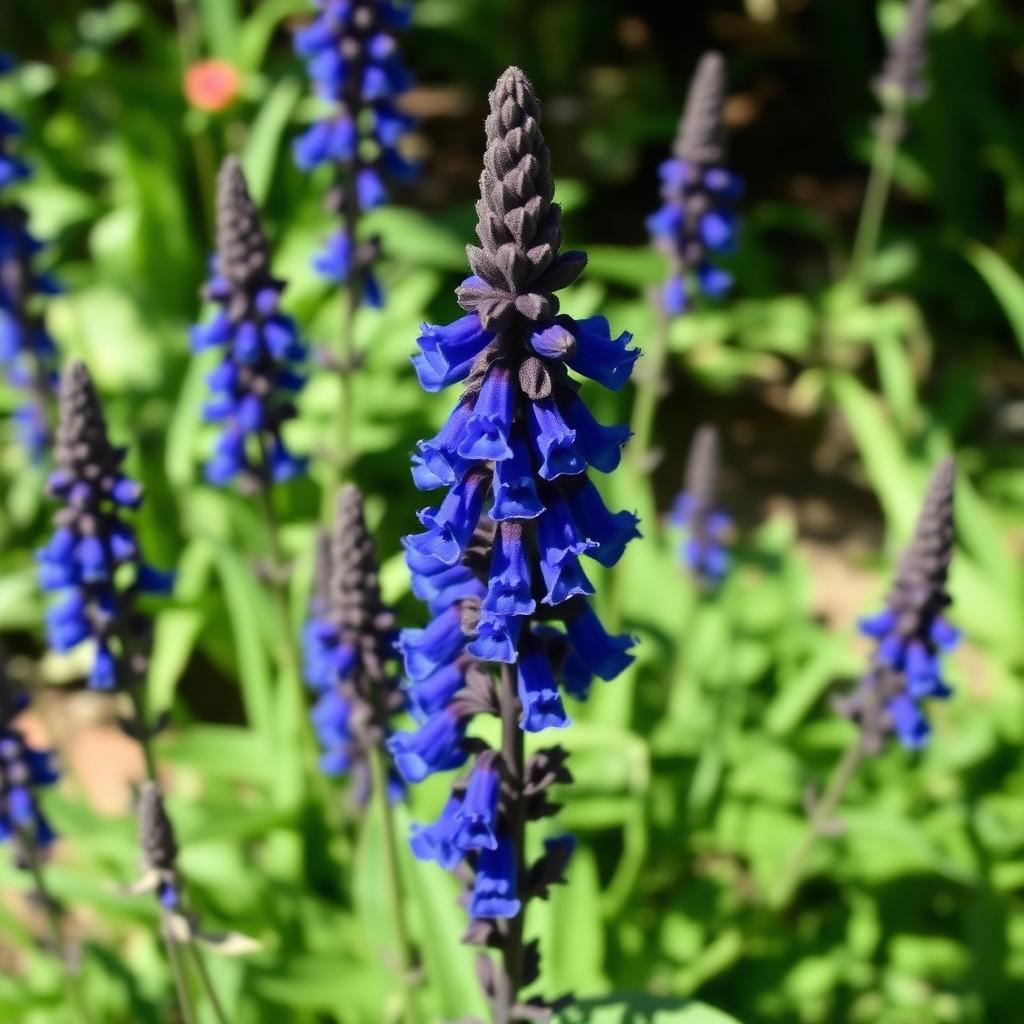
Salvia 'Black and Blue'
Salvia guaranitica 'Black and Blue'
- Best cutting
- Soft tip cutting from non-flowering shoot
- Best timing
- Late spring to summer
- Difficulty
- Easy
- Overwinter
- Tender in cold areas; keep young plants frost-free
Why it works. Vigorous guaranitica type with cobalt blue flowers that takes well from cuttings.
Beginner note. Remove any flower buds so the cutting puts its energy into roots.
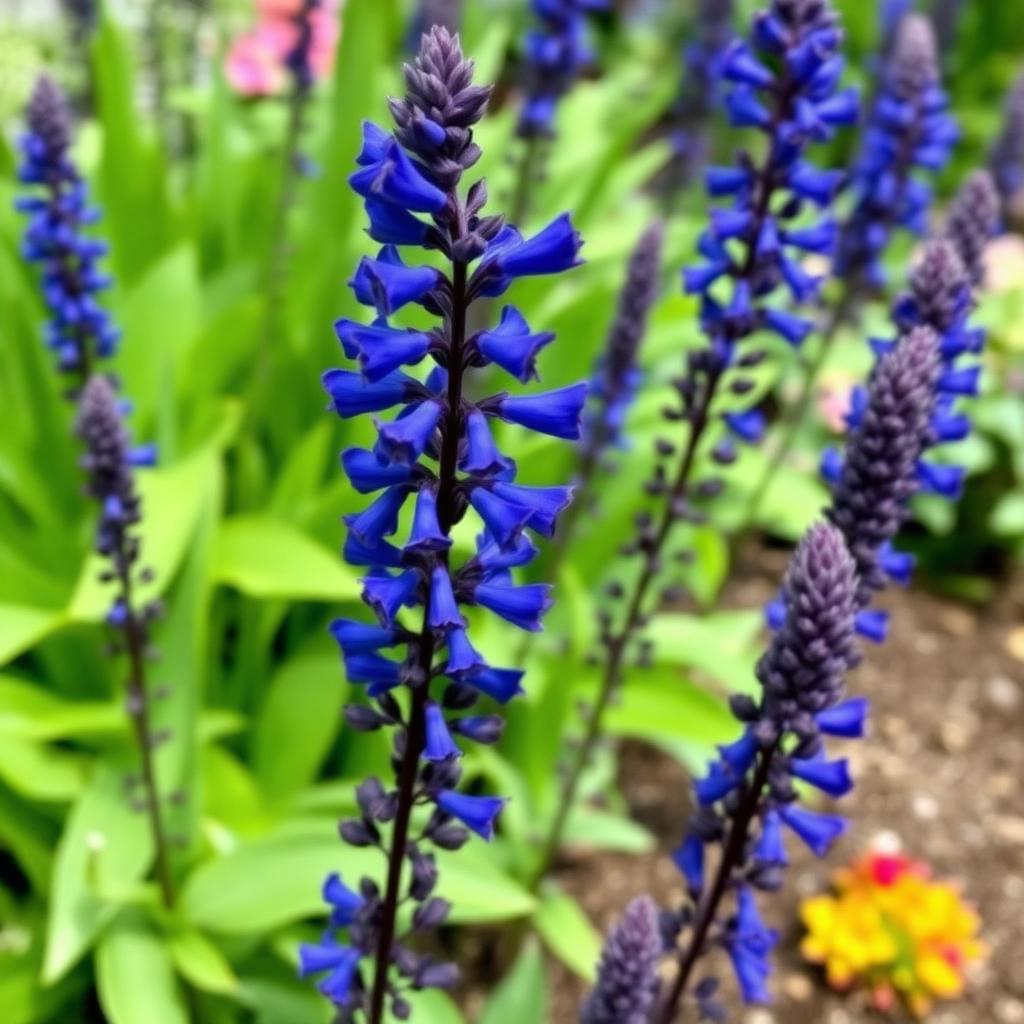
Salvia 'Black and Bloom'
Salvia guaranitica 'Black and Bloom'
- Best cutting
- Soft tip cutting from non-flowering shoot
- Best timing
- Late spring to summer
- Difficulty
- Easy
- Overwinter
- Tender in cold areas; overwinter young plants under cover
Why it works. Similar to 'Black and Blue' with strong cutting performance from healthy growth.
Beginner note. Strip lower leaves cleanly to reduce the chance of rot at the base.
Tender shrubby salvias
- Best cutting
- Soft tip or semi-ripe side shoot
- Best timing
- Mid summer onwards
- Difficulty
- Easy
- Overwinter
- Best kept frost-free under cover where winters are cold
Why it works. Many tender shrubby salvias propagate easily and are commonly grown from cuttings as a way to keep favourite plants from year to year.
Beginner note. Take cuttings before the first frosts so young plants are established for winter.
Woody perennial salvias
- Best cutting
- Semi-ripe cutting from a younger side shoot, not old wood
- Best timing
- Late summer
- Difficulty
- Moderate
- Overwinter
- Vary by type and climate; check your variety
Why it works. Older woody growth roots poorly, but younger semi-ripe pieces lower on a healthy plant can succeed.
Beginner note. Avoid the hardest old wood. Look for firm but not brittle stems with healthy leaves.
Herbaceous perennial salvias
- Best cutting
- Basal cutting in spring or early summer
- Best timing
- Spring to early summer
- Difficulty
- Moderate
- Overwinter
- Many are hardy in the ground; check your variety
Why it works. Many herbaceous salvias respond better to spring basal cuttings or division than to woody-style cuttings later in the year.
Beginner note. If unsure, division of the parent plant can be a simpler way to multiply herbaceous salvias.
A note on hardiness
Troubleshooting salvia cuttings
If something has already gone wrong, work through the most likely cause before changing everything at once. Most issues come down to water, light, or the condition of the cutting material itself.
Cutting wilts immediately
Why it causes problems. Water loss is faster than uptake, often from too many leaves, harsh sun, or hot dry air.
Better approach. Reduce leaf area, move to bright indirect light, and water the compost lightly.
Stem turns black at the base
Why it causes problems. Rot, often from soggy compost, dirty tools, or weak material.
Better approach. Remove the affected cutting, use fresh compost, and aim for damp rather than wet.
Leaves yellow on the cutting
Why it causes problems. Stress from water imbalance, low light, or simple ageing of older leaves.
Better approach. Check moisture and light; remove yellow leaves gently and watch new growth at the tip.
Cutting rots at the base
Why it causes problems. Combined wet compost and poor airflow are the usual culprits.
Better approach. Improve drainage, vent any cover, and try fewer cuttings per pot.
No roots after several weeks
Why it causes problems. Cool temperatures, very woody material, or repeated disturbance can all slow rooting.
Better approach. Be patient, leave the pot alone between gentle checks, and give it warmth and light.
Mould appears on the compost surface
Why it causes problems. Too much trapped moisture and not enough airflow.
Better approach. Lift the cover more often, reduce watering, and remove any visibly mouldy material.
Cutting grows but then suddenly collapses
Why it causes problems. Possible base rot below the surface even though the top looked fine for a while.
Better approach. Check the stem at compost level; healthy material is firm and green, not soft and brown.
Water-rooted cutting struggles in compost
Why it causes problems. Delicate water roots can break, and the cutting must build new soil-style roots.
Better approach. Move while roots are short, keep compost evenly moist, and expect a slower start.
Useful supplies for taking salvia cuttings
Affiliate disclosure. Blooming Lucky may earn a commission if you buy through some links, at no extra cost to you.
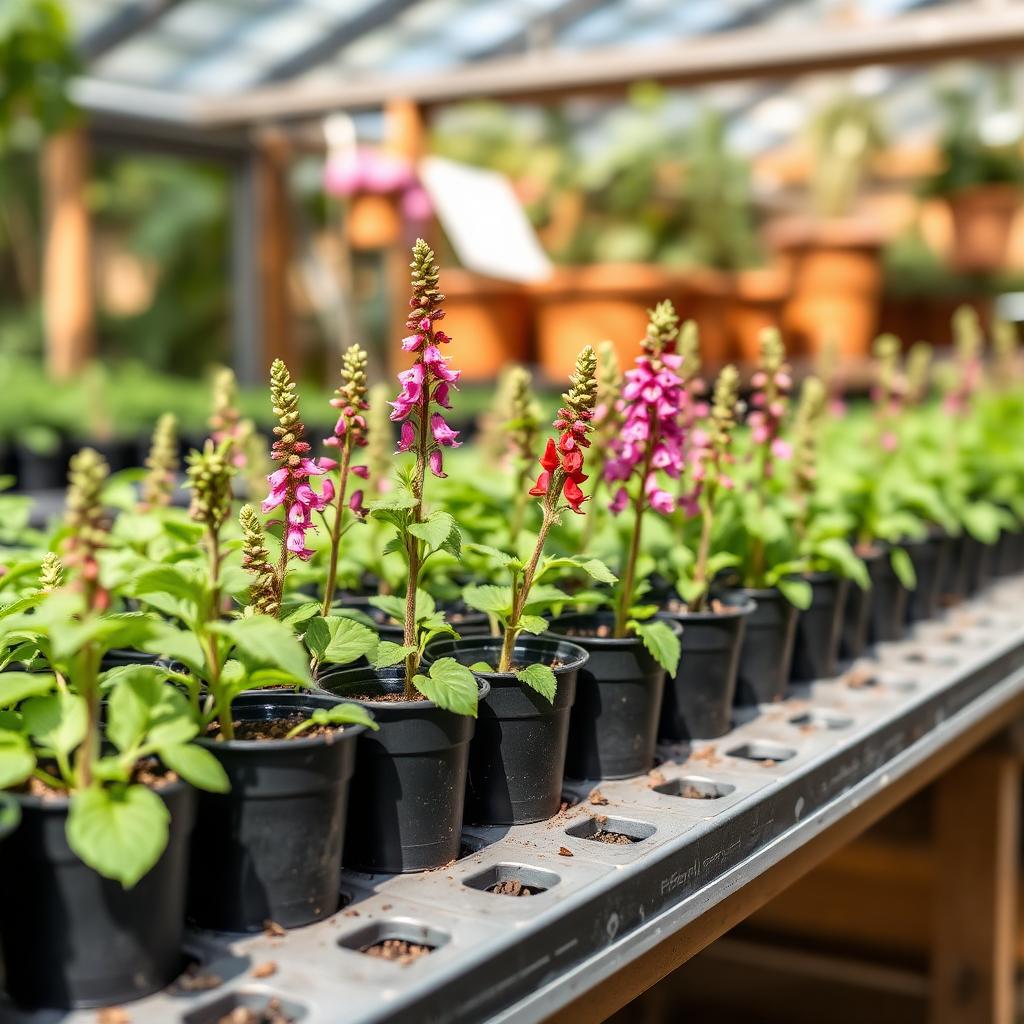
Best beginner salvia cutting setup
Beginners do best with a single calm setup rather than trying every method at once. Choose a healthy parent plant, a small pot of free-draining cutting compost, and a bright sheltered spot. The two cards below cover the simplest reliable approach and a sensible water-rooting experiment to run alongside it.
Compost cuttings setup
- Take several healthy side-shoot cuttings
- Use a small pot of free-draining cutting compost
- Remove lower leaves and any flower buds
- Insert cuttings around the edge of the pot
- Water lightly so the compost is damp, not wet
- Place in bright indirect light, sheltered from harsh sun
- Vent any clear cover to keep airflow
- Pot on individually after rooting
- Keep young plants frost-free if the variety is tender
If you want to try water rooting
- Use clean room-temperature water in a clear jar
- Strip leaves below the water line
- Keep on a bright windowsill out of harsh sun
- Change the water every few days
- Move to compost while roots are small and white
- Keep the compost evenly moist as the cutting adjusts
- Treat it as an experiment, not your main method
- If a cutting starts to rot or smell, remove it
If you are not sure whether your salvia will survive your local winters, take a small batch of cuttings either way. They are the cheapest insurance you can give a favourite variety.
Frequently asked questions
Can you take cuttings from salvias?
When should you take salvia cuttings?
How do you take salvia cuttings?
Can salvia cuttings root in water?
Is it better to root salvia cuttings in water or compost?
How long do salvia cuttings take to root?
Do salvia cuttings need rooting hormone?
Should you remove flowers from salvia cuttings?
How do you overwinter salvia cuttings?
When should salvias be cut back?
Can you cut back salvias in fall?
Why are my salvia cuttings wilting?
Why are my salvia cuttings rotting?
Which salvias are easiest from cuttings?
Final advice
Take cuttings from healthy ornamental salvias when conditions are mild, choose fresh firm side shoots, and remove the lower leaves and any flower buds before they go into compost. Use free-draining compost, keep cuttings bright but out of harsh sun, and aim for steady gentle moisture rather than swinging between bone dry and soaking wet.
Take a few extra cuttings because some losses are normal, protect young tender plants through winter, and start with the simple compost method before experimenting with water rooting or trickier woody material. With a calm setup and a little patience, propagating salvias quickly stops feeling like a gamble and starts feeling like a useful gardening habit.
Related reads
Keep reading
- PlantsAll Blooming Lucky plant guidesBrowse the full library of plant guides for every part of the garden.Read guide
- How-ToHow-to gardening guidesStep-by-step gardening guides for real homes and gardens.Read guide
- ToolsTools and productsPractical gardening tools and supplies that make everyday jobs easier.Read guide
- PlantsHow to grow clematisCare, pruning groups, pots, and common clematis problems explained.Read guide
- PlantsPlants for under treesBest shade plants for dry, root-filled ground beneath mature trees.Read guide
- PlantsHow to grow sunflowersA practical guide to growing sunflowers and choosing the right variety.Read guide
Looking for more practical gardening guides? Visit the How-To Guides hub.